
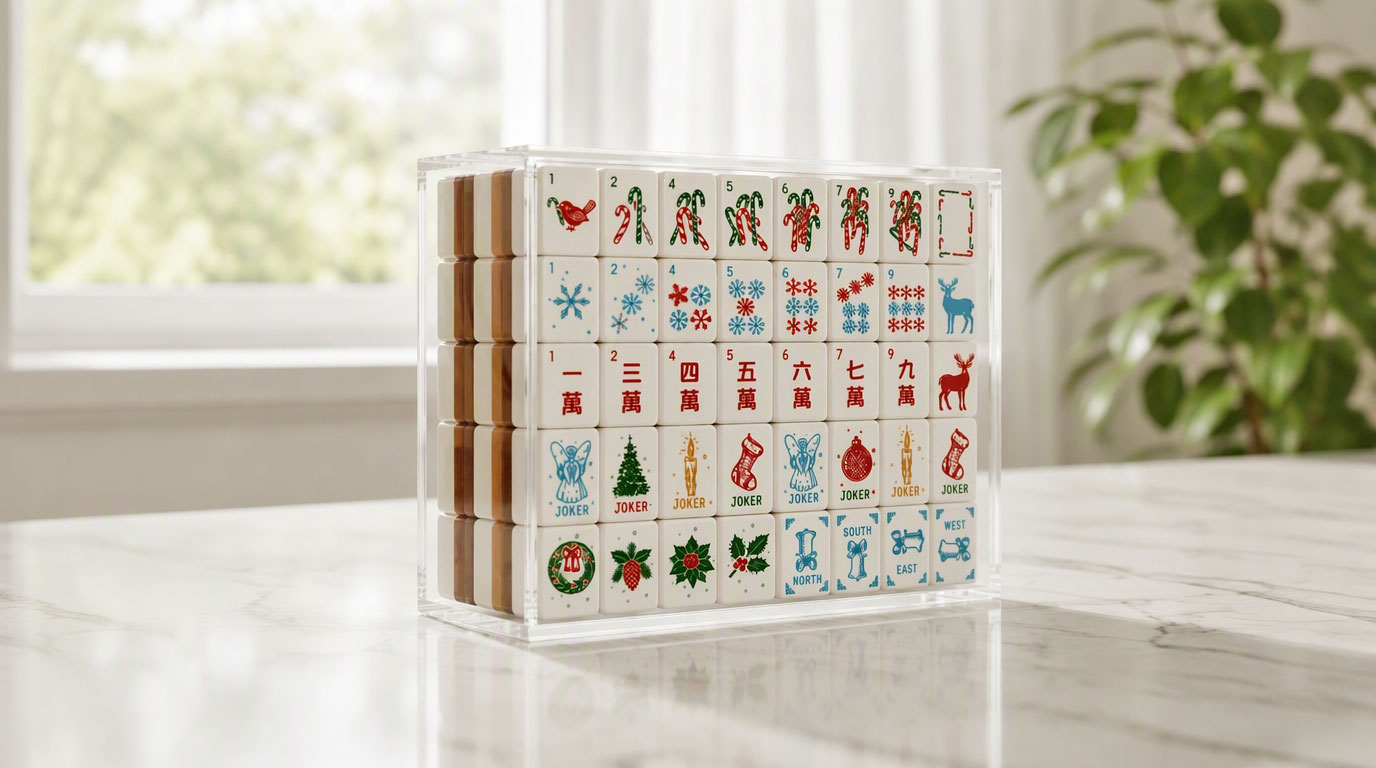
Buying a custom American mahjong set for a corporate gift program or a wedding favor line is a bigger decision than it looks. It is not just a game — it is a branded keepsake, a photo moment, and a conversation starter that guests and clients actually keep. Get it right, and it pays off for years.
Get it wrong, and you end up with a warehouse full of tiles nobody plays, a logo that fades after three games, or a favor that guests politely leave behind. That risk is real, and it is why this guide exists. It walks you through everything to check before you order: your goal, the right material, customization options, quality and compliance, logistics, and the mistakes that quietly eat your budget.
By the end, you will know exactly what to ask a supplier — and how to spot a partner you can trust. The advice here works whether you are sourcing 150 favors for a fall wedding or 3,000 branded sets for a client appreciation campaign. The same checklist applies to both an American mahjong gift for one VIP and a full favor line for hundreds of guests.
Why American Mahjong Works as a Premium Gift
American Mahjong is different from other versions. It uses colorful tiles, jokers, and a card-based scoring system, which makes it easy to learn and fast to play. That casual, social feel is exactly why it keeps showing up in gift catalogs and wedding tables.
It also has a low barrier for guests. Unlike chess or backgammon, which take time to learn, most people can sit down and start a friendly game within one round. That makes it a gift that actually gets used — and a favor that sparks the kind of shared moment hosts want at a wedding.
For buyers, three things make an American mahjong gift attractive:
● High perceived value — a quality set looks and feels expensive.
● Strong customization surface — logo, names, colors, packaging all leave room for branding.
● Long shelf life — it is a reusable product, not a disposable trinket.
Because of that, it holds up across both markets. A corporate client remembers a branded set on their desk. A wedding guest keeps a personalized tile set on the shelf for a decade. That longevity is exactly what premium gift buyers look for.
There is also a growing event angle. Mahjong tables are becoming a fun addition to corporate parties, holiday mixers, and even wedding receptions as a "game corner" for guests between dances. When you plan a gift or favor line, it is worth asking whether your set will double as an activity piece at the event itself. That single question can change your quantity and your packaging needs.
The trend is visible in consumer retail too — colored, modern tile sets are frequent bestsellers on US shelves. When retail demand is strong, gift and favor buyers feel safer investing in the category. You are not betting on an unproven product; you are riding a familiar game that already has a loyal fan base.
Define Your Goal First: Corporate Gift vs. Wedding Favor
Your end user decides everything downstream. A corporate gift and a wedding favor ask for different budgets, quantities, and design logic. Nail the goal before you talk to any factory — it saves you from quoting the wrong product twice.
Here is a quick side-by-side to shape your thinking:
|
Decision Point
|
Corporate Gift Line
|
Wedding Favor Line
|
|
Primary goal
|
Brand recall, client loyalty, employee recognition
|
Thank-you keepsake, photo-worthy decor, sentimental value
|
|
Typical quantity
|
Bulk, often 300–5,000 sets with one design
|
Small to medium, often 100–800 sets, multiple designs
|
|
Customization focus
|
Logo, slogan, brand colors
|
Couple names, wedding date, theme colors
|
|
Budget per unit
|
Middle to high, value-driven
|
Tighter, often fixed per-guest cost
|
|
MOQ tolerance
|
Flexible, favors volume discounts
|
Strict; small-batch friendly is essential
|
Notice how the two lines pull in opposite directions. Corporate buyers care about brand consistency and volume pricing. Wedding buyers care about small-batch flexibility and personalization. A good supplier should handle both — and be honest about which they are best at.
If you run both programs, think about whether they can share a base set with different packaging. A common tile set with two box designs is often cheaper than two completely separate products. That kind of planning is exactly where experienced B2B sourcing saves real money.
Pick the Right Material for Your American Mahjong Gift
Material is the first thing a client touches, and it sets the quality impression. For gifting, three materials dominate the market, and each has a trade-off you should know before you ask for a quote.
|
Material
|
Pros
|
Cons
|
|
Acrylic
|
Clear, modern look; crisp printing; light; durable; Customizable
|
Higher unit cost than melamine
|
|
Melamine
|
Cost-effective; good for large volume
|
Less premium feel; limited visual depth
|
|
Wood
|
Classic, warm, heirloom feel
|
Heavier; cost varies with wood grade; harder to print cleanly
|
Wood, by contrast, suits brands that want tradition — a heritage company, an anniversary gift, a rustic wedding theme. Melamine makes sense when volume is huge and budget is tight, but you trade away that premium feel. Ask yourself which impression your recipient should carry.
Plan Your Customization: Logo, Names, and Packaging
Engraving vs. UV Printing
Engraving gives a deeper, longer-lasting mark — ideal for a corporate logo that needs to survive years of play. UV printing gives full color and fine detail — ideal for couple names, dates, or colorful artwork. Many sets combine both, using engraving for the main logo and printing for decorative elements.
When you compare quotes, always ask which method the price covers. A logo printed flat and a logo engraved into the tile are two different products at two different price points. If you only find out at the sample stage, you lose both time and trust.
Packaging Completes the Gift
The box is part of the gift, not an afterthought. A beautiful set in a plain box feels unfinished, while decent tiles in a great box feel premium. Think about:
● Acrylic or wooden storage case with tray and lid.
● Printed gift box, sleeve, or velvet pouch.
● Accessories: racks, pushers, dice, score cards, instruction booklet.
Packaging is often where a personalized mahjong set becomes truly memorable — a printed sleeve with a couple’s names or a company logo turns a game into a keepsake. It also affects freight cost, so treat it as a design decision, not a default. Choose packaging that protects the tiles in transit and looks good on a table or a shelf.
Quality and Compliance Checks That Matter
For an American mahjong gift shipped to the US or Canada, quality is not only about looks. You are importing a consumer product, and buyers increasingly ask about safety and durability. Ignoring this step can stall your shipment or worse.
Check these four things with any supplier:
● Tile hardness and wear resistance — will the print fade or chip?
● Color fastness — do colors stay true after handling?
● Certifications — SGS, RoHS, REACH, and any US import documentation.
● Pre-production sample — never approve a bulk run on a render alone.
Ask for a physical sample before mass production. It is the only way to confirm weight, feel, print quality, and packaging in your hand — not just on a screen. A trustworthy factory will insist on it too, because a bad sample protects you from a worse shipment.
Also confirm who holds the compliance paperwork. Some factories keep test reports on file and issue them on request; others charge extra per batch. Clarify this early so your customs broker is never caught off guard.
If your target market is North America, check whether the factory has shipped there before. Experience with US and Canada import paperwork means fewer surprises on your side. A factory that has handled hundreds of gift and favor shipments already knows which certifications buyers in that region expect to see in the quotation.
Vet the Supplier Like a Partner, Not a Vendor
Price gets you the shortlist; trust gets you the order. Before you commit, look for evidence that the factory can actually deliver what it promises at scale.
Three questions separate a serious supplier from a middleman:
● Do they show real product photos and videos of American mahjong sets, not just renders?
● Can they name the materials and processes behind their quote?
● Do they answer specific questions about MOQ, lead time, and sample policy in writing?
A factory that takes OEM/ODM work seriously will usually offer design help, honest lead times, and a clear sample path. Vagueness on any of those three points is a warning sign — it usually means the person quoting you is guessing.
Ask for a short call or video walkthrough of the workshop if your order size justifies it. Seeing how tiles are cut, printed, and packed tells you more than any brochure about whether this partner will deliver on time.
Logistics, Lead Time, and Practical Planning
Gift programs run on dates. A conference, a wedding, a holiday campaign — none of them can slip. So plan the timeline backwards from your event, not forwards from today. A set that arrives two weeks late is worthless no matter how well it is made.
Keep these numbers in mind when you brief a factory:
● Sample lead time — usually 35-45 days, and delivery by UPS takes 7 days.
● Bulk production — For UV printing, the bulk lead time is 90-120 days, and for painting, it takes more than 120 days.
● Ocean vs. air freight — affects both cost and arrival date.
● Package weight and size — drives per-unit shipping cost.
Ask about assembly and ready-to-gift packing. If the factory packs each set complete with tray, racks, and booklet, it saves you a step — and a potential quality gap on your side. The fewer hands between the factory and your event, the fewer ways for something to go wrong.
Common Pitfalls to Avoid When Sourcing
Most sourcing problems are avoidable if you know they exist. Watch for these five — they are the ones we see trip up both first-time buyers and seasoned procurement teams.
● Confusing American Mahjong rules with other versions — confirm the tile set and card version.
● Over-complicating artwork — every extra color or finish raises unit cost.
● Ignoring MOQ for small wedding batches — confirm small-batch flexibility early.
● Skipping proof and revision time — logo engraving and printing need approval rounds.
● Choosing price over proof — cheap quotes often mean thin tiles or no certifications.
Each of these is a small decision, but together they decide whether your personalized mahjong set lands on time, on budget, and on brand. Budget for one or two design revision rounds in your timeline — they are normal, not a sign of a bad supplier.
One more tip that saves countless headaches: put your acceptance criteria in writing before production. Define what counts as "acceptable color match," how many defective tiles are tolerated per box, and who reviews the final sample. Clear expectations agreed up front beat emotional negotiation after a shipment arrives.
Real-World Ways These Sets Get Used
It helps to picture how buyers actually deploy these gifts so you can brief your factory with confidence.
For a corporate account, a common play is a branded set for VIP clients at the holidays or a thank-you after a big renewal. The logo goes on the tiles, the box, and sometimes the booklet. Companies pick a premium material because the set sits on a client's shelf for years — every game is a reminder of the relationship.
For a wedding, the favor often becomes a personalized mini set with the couple's names and wedding date. It doubles as table decor before it becomes a take-home gift, which is why packaging and color theme matter so much. Some couples order a full-size family set as a keepsake of the celebration — a personalized mahjong set that later becomes part of their game nights at home.
Both patterns share one trait: the buyer needs the factory to deliver a product that looks finished and feels thoughtful, not a blank game with a sticker slapped on.
FAQ
Can you mix multiple designs in one small wedding order?
Yes, many suppliers accept mixed designs for wedding favor batches. Confirm the minimum per design and how it affects pricing before you lock the order. This is often the deciding factor for wedding planners working with a tight budget.
What is your typical MOQ for a custom American mahjong set?
MOQ depends on material and customization. Standard sets often start around 100–300 units, while fully engraved acrylic sets may require more. Ask the factory for their exact number for your design rather than assuming a universal rule. Small wedding favor batches often get a lower MOQ than a corporate American mahjong gift run.
Can I get a physical sample before bulk production?
Usually yes, and you should. A pre-production sample confirms weight, feel, print, and packaging. Budget for sample cost and shipping time — it is the cheapest insurance you will buy in this whole project.
How do you handle defects after the bulk shipment arrives?
Reputable suppliers offer a replacement or repair policy for defective tiles. Clarify the threshold and process in writing before you pay the balance, so there is no ambiguity when a box finally arrives.
Can you help with the artwork and proof files?
Many factories provide design support for logo engraving and printing. Ask whether a designer is included or charged separately, and always approve a digital proof first. Good artwork files cut revision rounds and keep costs down.
What certifications do you provide for US and Canada imports?
Ask for SGS, RoHS, and REACH test reports, plus any import documentation your customs broker needs. Confirm what is included before production, not after — this single step avoids expensive surprises at customs.
Conclusion
Choosing the right custom American mahjong set comes down to a clear sequence: define the use case, pick the material, plan the customization, verify quality and compliance, then validate with a physical sample. Each step protects your budget and your reputation.
When you are ready to move, work with a factory that treats small wedding batches and large corporate runs with the same care — and that can prove its quality with samples and certifications. The right partner answers your questions before you ask, not after a problem surfaces.

JAYI Acrylic is a custom mahjong set manufacturer founded in 2004, specializing in OEM/ODM custom American mahjong set production for B2B buyers.
We help corporate gift programs and wedding favor lines go from concept to shelf — with quality samples, clear MOQs, and dependable lead times. Tell us about your project, and we will help you pick the right set for it.

Cathy Qin works at Jayi Acrylic Industry Limited, focusing on custom acrylic product management and SEO-driven content marketing for B2B wholesale and retail applications. Her work includes designing display solutions, managing customization projects, and optimizing website content to promote Jayi’s high-quality acrylic products across global digital channels.
Post time: Oct-16-2026