
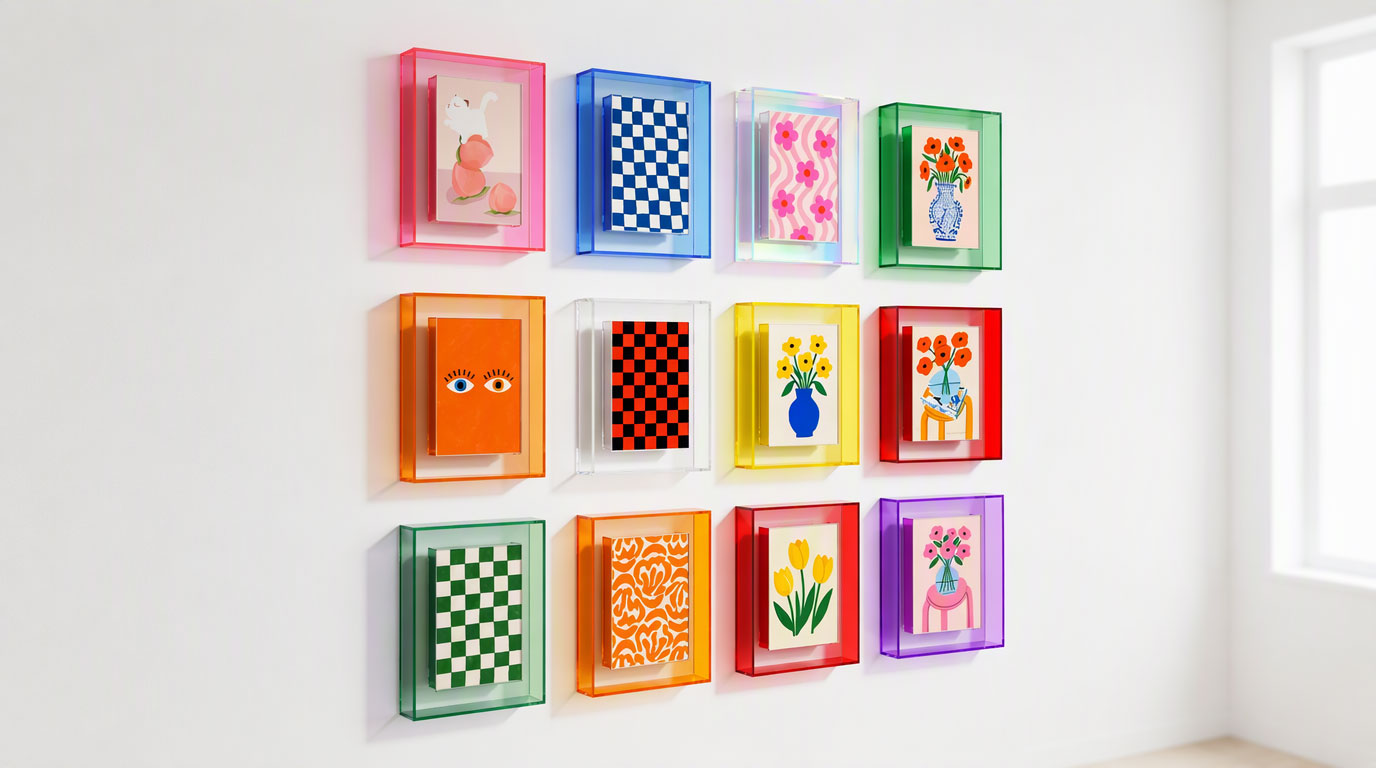
If you have ever walked into a boutique and felt instantly drawn to a beautifully framed poster or product story, you already know how much the right picture frame matters. Today, more retail buyers are swapping heavy wood and metal frames for custom acrylic picture frames. Acrylic is lighter, shatter-resistant, and much easier to brand. But picking the wrong thickness, ignoring UV protection, or choosing a supplier with weak after-sales can turn a simple display upgrade into a costly, time-wasting mess.
This guide walks you through the practical decisions you actually face as a retail buyer: what thickness to use, how to match the frame style to your store layout, which custom options are worth paying for, and which red flags tell you a supplier is not ready for wholesale. By the end, you will have a clear shortlist of questions to send to any acrylic manufacturer — and you will understand why so many store owners treat custom acrylic picture frames for retail shop interiors as a long-term brand investment, not a one-off purchase.
Whether you are refreshing a single boutique or rolling out a new visual merchandising standard across a chain, the principles below are the same. Get them right once, and you will reuse the same supplier, specs, and artwork templates for years.
Why Retail Shops Prefer Custom Acrylic Picture Frames Over Traditional Frames
Lightweight & Shatterproof — Safe for High-Traffic Retail Spaces
Acrylic is roughly half the weight of glass and will not shatter into sharp shards if knocked off a shelf. In a store where customers, strollers, and shopping bags brush against displays every day, that alone is reason enough. It also means wall-mounted frames put far less stress on drywall and hardware, so you can hang more of them without a costly reinforcement job.
For staff, the safety benefit shows up even more clearly. Hanging, moving, and swapping frames becomes a one-person job instead of a two-person glass-handling exercise. That cuts install time and lowers the chance of a worker getting cut during a busy turnover.
Clear, Modern Aesthetic That Highlights Your Artwork & Brand Posters
High-grade acrylic has around 92% light transmission, close to optical glass. The frameless, floating look makes posters, product shots, and signage feel clean and contemporary. It pairs naturally with minimalist boutiques, tech stores, jewelry counters, and modern brand flagships that want the artwork — not the frame — to dominate the eye.
Flexible Customization Options to Match Unique Store Merchandising Needs
Unlike off-the-shelf wood frames, acrylic can be laser-cut into almost any shape, edge-polished, frosted, tinted, or printed with your logo. If your store uses non-standard poster sizes, irregular wall openings, or a specific brand color, a custom acrylic photo frame wholesale run is usually the only practical route. Stock sizes simply will not solve that problem.
Cost-Effective for Bulk In-Store Display Projects
For multi-location rollouts, acrylic frames ship flat, require less protective packaging, and install faster than assembled wood or metal frames. Over a chain of 10 or 20 stores, those savings in freight, labor, and replacement parts add up quickly. Acrylic also scratches less noticeably than painted wood, which means displays stay looking fresh for longer between refreshes.
7 Critical Factors to Evaluate When Selecting Custom Acrylic Picture Frames
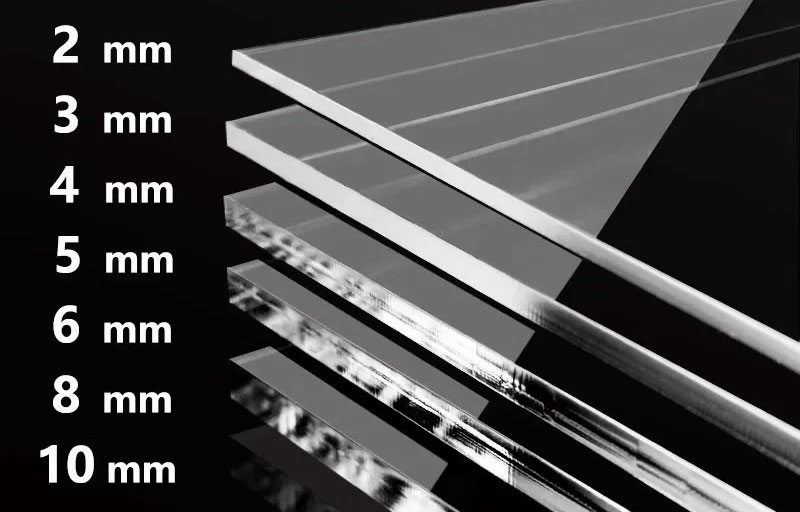
#1 Acrylic Sheet Thickness Based on Display Location & Load
|
Display Location
|
Recommended Acrylic Thickness
|
Why It Matters
|
|---|---|---|
|
Tabletop/countertop frames
|
2–3 mm
|
Light, low-cost, easy for staff to swap inserts
|
|
Wall-mounted small/medium posters
|
3–5 mm
|
Stiff enough to stay flat against the wall
|
|
Large murals or window frames
|
5–8 mm
|
Resists bowing under size, tension, and wind pressure
|
|
Freestanding menu / A-sign stands
|
5–10 mm
|
Needs to support its own weight on a busy floor
|
Indoor window displays should also specify UV-protective acrylic. Standard acrylic yellows under direct sun within 1–2 years; a UV-filtering sheet slows that dramatically and keeps your acrylic display frames for retail store windows looking clear season after season.
#2 Frame Structure & Mounting Styles for Different Retail Layouts
There is no "one-size-fits-all." Match the structure to where it actually lives in the store:
• Freestanding tabletop acrylic frames — best for counters, checkout desks, and small product signage.
• Wall-mounted acrylic picture frames — ideal for gallery walls, brand story corners, and framed product posters.
• Double-sided floating acrylic frames — used in windows or hanging from ceilings, visible from both sides.
• Magnetic acrylic photo frames — let staff swap inserts quickly during promotions; a hot-selling retail option.
#3 Customization Features You Can Request From Your Acrylic Manufacturer
Before you ask for a quote, decide which of these you actually need. It saves weeks of back-and-forth later:
• Custom size & aspect ratio (most retail stores use non-standard sizes).
• Edge finishing: flame-polished, matte, or frosted edges.
• Logo printing: UV print, silk screen, or laser engraving.
• Backboard options: MDF, black acrylic, or foam backing.
• Hardware: standoff mounts, magnetic closures, or adhesive strips.
#4 Acrylic Material Grade & Certifications (SGS, RoHS, REACH)
Virgin acrylic is clearer, more durable, and less prone to cracking than recycled material. For retail environments where customers handle displays, ask for documentation, not just verbal claims:
• SGS or equivalent material test reports.
• RoHS / REACH compliance, especially if you ship to the EU.
• A clear written statement on whether the sheet is virgin or recycled.
#5 Color & Clarity: Clear, Frosted, Tinted Acrylic for Brand Styling
Color sets the mood more than most buyers expect. Clear acrylic is the default and lets the artwork speak. Frosted acrylic softens light and works beautifully for backlit signs or privacy panels. Tinted acrylic — smoke, black, bronze — fits high-end, tech, or industrial branding. Pick one consistent color system across your store so the display set reads as one family.
#6 MOQ, Lead Time & Packaging for Bulk Retail Orders
Do not compare quotes on unit price alone. Factor in the total landed cost:
•MOQ flexibility — can you mix sizes in one run, and is there a setup fee per size?
•Lead time — sample 7–15 days, bulk 15–30 days is typical.
•Packaging — custom cartons, edge protectors, and foam inserts; damaged displays cost more than the freight you saved.
#7 Budget Planning: Balancing Quality & Wholesale Price
A common mistake is chasing the lowest per-unit price and landing on thin, yellow-prone acrylic that has to be replaced within a year. Build your budget around total cost: unit price + sample cost + freight + packaging + expected reorders. A slightly more expensive sheet that lasts 3 years is cheaper than a cheap one that fails in 12 months.
When comparing two quotes that look close, ask the supplier to break out thickness, edge finish, print method, and packaging separately. That is where the real price difference hides — and that is also where most cheap quotes quietly downgrade your spec without telling you.
Common Mistakes Retail Buyers Make When Ordering Custom Acrylic Frames
Skipping Pre-Production Sample Confirmation
Never approve bulk production based on a 2D artwork file. A physical sample shows you the real edge finish, actual thickness, logo color against the acrylic, and how the backboard feels in hand. The sample stage is where most "I didn't expect it to look like this" moments happen — and that is exactly where you want them.
Ignoring UV Resistance for Window Displays
Standard acrylic placed in direct sun yellows fast, often within one retail season. If the frame lives in a window, on a storefront ledge, or next to a glass door, ask specifically for UV-filtering / anti-UV sheet. It is a small upcharge that prevents an embarrassing reorder.
Overlooking Packaging Protection for Inbound Store Shipment
Acrylic scratches easily, especially during ocean freight with long port handling. Ask for individual film protection on both sides, corner foam blocks, and a double-wall carton. If the supplier ships without those, you will be cleaning scratches off every piece on the receiving end.
Selecting Too Thin Acrylic for Heavy Large-Size Poster Frames
A 5 mm sheet looks stiff as an A4 frame but bows badly as a 60 × 90 cm piece. Always size thickness to the largest dimension, not the smallest. When in doubt, go one step thicker — the visual difference is small, the structural difference is huge.
How to Pick a Reliable Custom Acrylic Frame Supplier for Your Retail Business
Confirm OEM & ODM Capabilities
A supplier that only sells stock sizes cannot truly "custom" anything. Ask whether they have in-house laser cutting, edge polishing, printing, and assembly — not just a trading desk. The fewer hands the piece passes through, the fewer defects you inherit.
Check Past Retail Project Portfolio
Ask for photos of past retail, boutique, or chain-store projects. A real portfolio tells you more than a spec sheet. Look for stores that resemble your own aesthetic, since factories tend to get better at the style they already make.
Clarify Quality Inspection & After-Sales Policy
Get in writing: what defect rate is covered, how replacements are shipped, and who pays for freight on damaged units. Without that, a 2% defect rate on a 1,000-piece order becomes your problem, not theirs.
Communication: Artwork File Requirements & Design Support
A good supplier will tell you the exact file format (AI, PDF, vector), bleed size, and DPI they need. If they cannot explain that clearly, they probably cannot execute your artwork cleanly either. Natural mention here: JAYI Acrylic supports custom acrylic picture frames for retail shops with full OEM/ODM service, in-house cutting, polishing, UV printing, and a documented sample-first workflow.
Practical Tips to Use Acrylic Display Frames for Retail Store Visual Merchandising
Combine Different Frame Sizes for Gallery Wall Displays
Mix 2–3 sizes on one wall to create rhythm and eye movement. Keep thickness and edge finish consistent so the wall reads as a set, not a random pile of frames. This is one of the fastest ways to make a plain wall feel like a curated brand moment.
Use Double-Sided Acrylic Frames in Shop Windows
Hanging double-sided floating frames in the window creates depth and catches pedestrians walking in both directions. Layer 2–3 frames at different heights instead of a flat row — it draws the eye inward and slows foot traffic for a few extra seconds.
Branded Acrylic Frames for Product Story & Promotion Signage
Put your logo on the lower corner of a branded frame. It costs almost nothing extra per unit and turns every display into a small brand touchpoint. During seasonal promotions, simply swap the insert and keep the frame — that is the real long-term value of investing in custom acrylic photo frames wholesale.
Many retail buyers also use the same frame family for price signage, size charts, and in-store QR codes. Once the thickness, edge finish, and hardware are standardized, you have a repeatable system that any new store manager can order from without re-designing every sign.
FAQ

What is the typical MOQ for custom acrylic picture frames?
Most factories start around 100–300 pieces per size, but many will accept a lower trial MOQ of 50–100 pieces, especially if you mix sizes. Ask whether mixed sizes share one setup fee or trigger a fresh setup cost per size — that changes the math a lot.
Can I order mixed sizes and styles in one wholesale batch?
Yes, but each new size usually triggers a separate cutting setup fee. If you plan to test 3 sizes across a store, ask the factory to quote a combined setup fee before committing — many will consolidate to win the order.
Are acrylic frames easy to clean and maintain inside retail stores?
Yes. Use a microfiber cloth with mild soap or a dedicated acrylic cleaner. Avoid paper towels and alcohol-based sprays — they can cloud the surface over time and leave micro-scratches that show under store lighting.
Can acrylic frames be customized with my shop logo engraved?
Absolutely. Your logo can be laser-engraved (looks premium on frosted or black acrylic), UV-printed (full color, great for detailed brand marks), or silk-screened (best for simple one-color logos on larger runs). Pick the method that matches the logo you already use in-store.
What happens if some frames arrive scratched or cracked?
Reputable factories cover a small defect rate — commonly 0.3%–1% — with free replacements shipped with your next order. Always confirm this in writing before payment, and photograph every carton on arrival before the courier leaves, so claims are clean.
Conclusion
Choosing the right custom acrylic picture frames for your retail shop comes down to four decisions:
thickness matched to location, customization matched to brand, a supplier that can execute cleanly, and a sample-first workflow that removes risk before bulk.
Do not rush the quote stage — the cheapest per-unit price almost always hides higher reorder, freight, and damage costs.

If you are planning a chain rollout or a flagship store refresh, work with a manufacturer that already serves retail brands.
JAYI Acrylic has been producing custom acrylic displays and frames for retail clients since 2004, with in-house laser cutting, edge polishing, UV printing, and a strict sample-approval process.
Send us your sizes, artwork, and store photos — we will help you spec the right acrylic display frames for your retail store the first time, not the third.

Cathy Qin works at Jayi Acrylic Industry Limited, focusing on custom acrylic product management and SEO-driven content marketing for B2B wholesale and retail applications. Her work includes designing display solutions, managing customization projects, and optimizing website content to promote Jayi’s high-quality acrylic products across global digital channels.
Post time: Oct-15-2026