
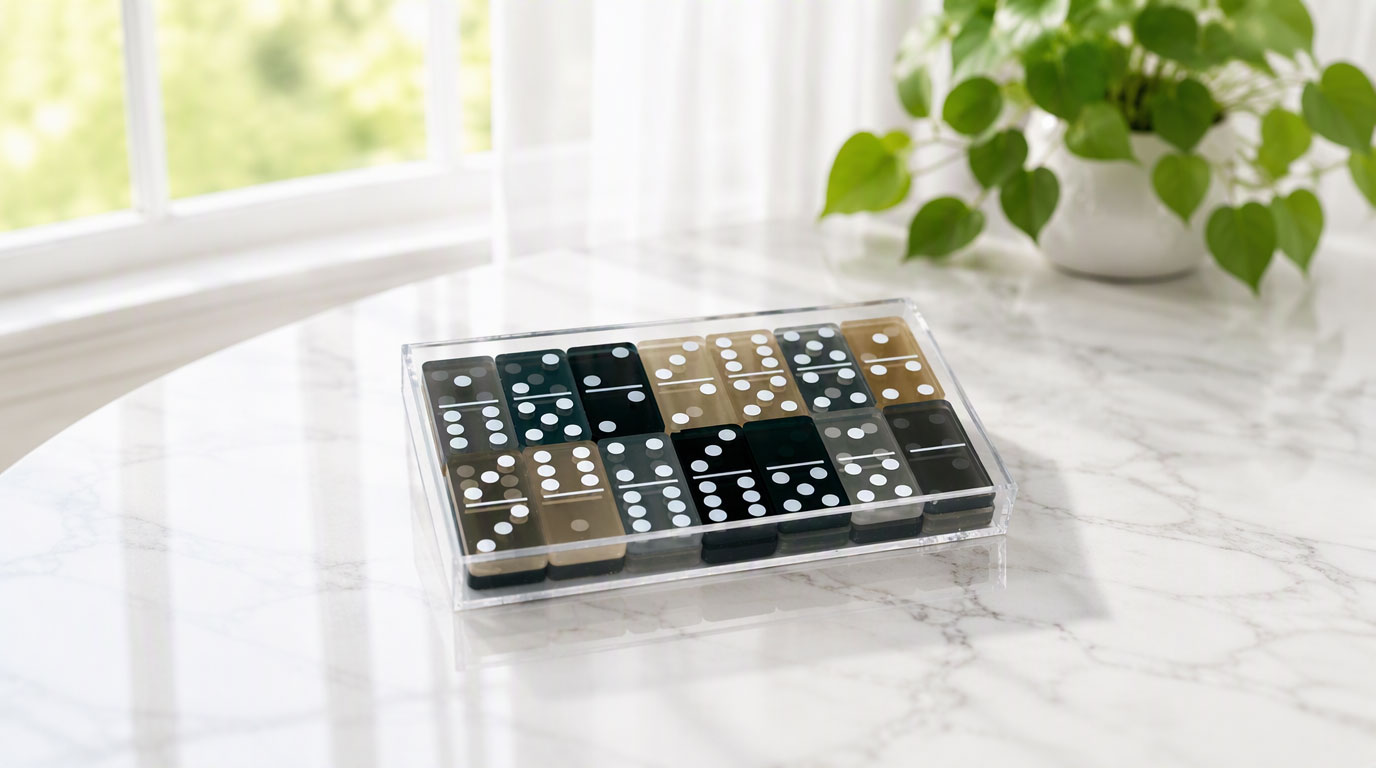
If you run a game store, a gift shop, or an online store, you have probably seen both sets sitting side by side in a catalog. Double 6 is the classic family set. Double 9 is the bigger board that grabs attention on a shelf. The honest question most retail buyers ask is not "which one is more fun to play" but "which acrylic domino set for retail will actually make me money."
This guide answers that from a retail point of view. We compare who buys each set, what they cost, how fast they turn over, and which one fits your shelf and your budget. By the end, you will know which SKU to stock — and when stocking both is the smarter move.
What Are Double 6 and Double 9 Acrylic Domino Sets?
Before comparing sales, let us clear up what the names mean. A Double 6 domino set has 28 tiles, and the highest pip value is 6. It is the everyday set that most players already know. A Double 9 set has 55 tiles, going up to 9 pips. That extra size supports more players and longer games.
Core Specs and Gameplay Differences
• Tiles: Double 6 has 28 tiles; Double 9 has 55 tiles.
• Max pips: Double 6 tops out at 6; Double 9 reaches 9.
• Players: Double 6 suits 2–4 players; Double 9 fits 4–8 or more.
• Games: Both play classic dominoes and Mexican Train, but Double 9 handles bigger tables.
Why Acrylic Dominates for Retail
Acrylic brings a clean, modern look that wood and melamine sets struggle to match. The tiles are crisp, glossy, and easy to wipe clean after use. Retailers like that they photograph well for online listings and stay scratch-free in a display case.
Customization is another retail edge. Acrylic accepts printed or engraved logos, brand colors, and custom packaging. That turns a plain game into a product only your store sells — a real advantage when you want to stand apart from competitors.
Acrylic also holds up better in a busy store. Wood sets can chip and absorb stains; melamine can feel cheap in the hand. Acrylic stays smooth, bright, and consistent across a whole batch, so every unit on your shelf looks like the photo on the box. That consistency matters a lot when a shopper picks up three boxes and turns them over before deciding.
Retail Market and Target Customer Breakdown
Different stores attract different shoppers. Matching the right set to your channel is where most of the sales difference comes from. Let us look at who buys each acrylic domino set for retail.
Who Buys a Double 6 Acrylic Domino Set
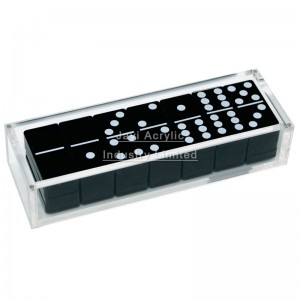
Double 6 is the impulse buy. It is small, affordable, and familiar, so it works best in shops where people grab a gift on the way out.
• Gift and tourist shops: Shoppers want a small, easy gift.
• Big-box and general retailers: Double 6 fits a standard shelf.
• Family casual buyers: Low price means low risk to try.
• Online sellers: Lighter box, cheaper to ship and store.
Who Buys a Double 9 Acrylic Domino Set
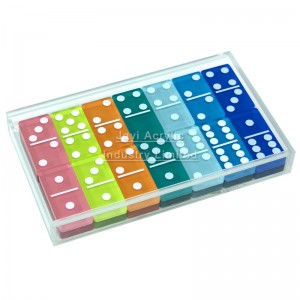
Double 9 sells to shoppers who want something more serious. It reads as a premium product and justifies a higher price tag.
• Specialty game stores: Enthusiast buyers know the bigger set by name.
• Premium gift sections: A larger box feels like a bigger present.
• Clubs, schools, senior centers: Large groups need more tiles.
• Wholesale buyers: Great for events and group play orders.
Retail Channel Fit Comparison
|
Retail channel
|
Better fit
|
Why
|
|---|---|---|
|
Tourist & gift shop
|
Double 6
|
Small, cheap, easy impulse gift.
|
|
Big-box retailer
|
Double 6
|
Fits standard shelf, fast sell-through.
|
|
Specialty game store
|
Double 9
|
Enthusiasts want the bigger set.
|
|
Premium gift section
|
Double 9
|
Larger box supports a higher price.
|
|
Online / Amazon
|
Double 6
|
Lighter, cheaper to ship and store.
|
One thing to watch: online shoppers often judge a game by box weight and size because they cannot feel the tiles. A light, small Double 6 box ships cheaply and arrives without damage, which keeps your reviews positive. Double 9 is more impressive in person, so it performs better in physical stores where the larger box becomes part of the appeal.
If you sell on multiple channels, let each channel pick its own winner. A shelf in a mall kiosk and a listing on your web store serve different buyers, and trying to force one set into both usually leaves one channel underperforming.
Key Retail Business Metrics: Cost, Turnover, and Profit
This is the part that decides whether a SKU helps or hurts your cash flow. Let us compare the acrylic domino sets, where it counts for retail.
Double-6 vs Double-9 Acrylic Domino Set: Retail-Side Comparison
Higher bar = bigger value on that dimension. Relative comparison, not exact specs.
Double-9
| Tiles in set |
Double-6: 28 tiles
|
Double-9: 55 tiles
|
| Max pips |
Double-6: 6
|
Double-9: 9
|
| Retail price point |
Double-6: Entry / lower ticket
|
Double-9: Premium / higher ticket
|
| Inventory turnover |
Double-6: Faster, lighter stock
|
Double-9: Slower, heavier stock
|
| Shipping weight |
Double-6: Lighter
|
Double-9: Heavier
|
| Shelf space needed |
Double-6: Compact
|
Double-9: Larger display
|
Quick read: Double-6 wins on turnover, cost and shelf fit; Double-9 wins on price point and premium appeal.
Pick by your channel, not by the tiles alone.
The chart above sums up the trade-off. Double 6 wins on turnover, cost, and shelf fit. Double 9 wins on price point and premium appeal. Keep that split in mind as you read the details below.
• Product cost: Double 6 uses fewer tiles, so it costs less per unit. Double 9 is pricier to make.
• Shipping weight: Double 6 is light and compact. Double 9 is heavier, so freight eats more margin.
• Inventory turnover: Double 6 sells faster and ties up less cash. Double 9 turns slower.
• Retail price and margin: Double 6 competes at entry prices with thinner margin per unit. Double 9 sells higher with fatter per-box margin — if it moves.
• Shelf space: Double 6 earns its spot with quick sales; Double 9 needs premium display space to justify its size.
Cost and Packaging Differences
Double 6 comes in a small box that is easy to stack and cheap to ship. Double 9 needs a larger box, more acrylic, and more freight. When you compare landed cost across dozens or hundreds of units, Double 6 wins on the money side of every shipment.
Packaging is a cost you can control. A Double 6 set in a compact acrylic box lowers your freight bill and fits more units per carton. That matters most for online sellers, where shipping cost is often the difference between a profitable listing and one that barely breaks even. Ask your supplier for packed dimensions and carton quantity before you commit.
Inventory Turnover and Stock Risk
Inventory is cash sitting on a shelf. Double 6 moves quickly, so you can reorder often and never tie up too much capital. Double 9 is a bigger bet: it can sit for weeks if your audience does not match. That makes stock risk a real factor in the Double 6 vs Double 9 domino set choice.
Slow stock has hidden costs beyond the purchase price. It eats storage space, needs dusting, and ties up money that could be turning in another product. For this reason, many new retailers start with Double 6, prove the demand, and only add Double 9 once they see consistent sales. It is a low-risk way to build the category.
Price and Margin Performance
There is a classic trade-off here. Double 6 makes money by moving fast at a low ticket. Double 9 makes money per unit at a higher ticket but sells more slowly. Neither is better on its own — the winner depends on your sales speed and your target customer.
Pros and Cons for Retail: Double 6 vs Double 9
Here is the honest list every buyer wants before placing an order. Keep your channel and your cash flow in mind while you read it.
Double 6 Acrylic Domino: Pros and Cons
Pros:
• Fastest seller with the broadest customer base.
• Lower cost and cheaper shipping, ideal for online.
• Great for gift shops and impulse sections.
Cons:
• Thinner margin per unit.
• Can read as "common," so it is harder to charge a premium.
Double 9 Acrylic Domino: Pros and Cons
Pros:
• Higher price point and better per-unit margin.
• Premium look drives gift sales.
• Appeals to enthusiasts and group buyers.
Cons:
• Slower turnover and higher inventory risk.
• Heavier, so freight costs more.
• Needs display space to sell well.
Another practical difference is returns. A heavier, larger Double 9 box costs more to ship back if a buyer changes their mind. Double 6 is cheaper to fulfill both ways, so its lower return cost quietly protects your margin. Factor return risk into your pricing, not just the upfront cost.
Which Should You Stock? A Simple Retail Strategy
There is no single right answer, but there is a pattern that works for most stores. Use these quick rules to match the acrylic domino set for retail to your business.
Stock Double 6 First If You Want
• A safe, fast-moving SKU while you are new to Domino's.
• Tourists, families, or impulse buyers as your main crowd.
• Light, cheap shipping for online orders.
• Tight inventory budget that favors quick turnover.
Stock Double 9 If You Want
• Higher-ticket gift items for holidays or premium seasons.
• Enthusiast buyers who already love dominoes.
• Group, event, or wholesale accounts that need more tiles.
• Plenty of shelf space and patience for slower sales.
Hybrid Strategy: Stock Both for Maximum Revenue
Most profitable retailers do not pick one. They stock Double 6 as the everyday seller, and Double 9 as the premium upsell. A simple bundle — "Double 6 for family night, Double 9 for game night with friends" — lifts your average order value without adding much risk.
Think of it as a traffic-and-upsell pair. Double 6 brings price-sensitive shoppers in and builds trust with easy first purchases. Double 9 gives you a reason to suggest an upgrade at the register or in a bundle deal. The two sets work together instead of competing, and together they cover a much wider slice of your customers.
You can also use the pair for seasonal planning. Keep Double 6 in steady stock all year, then bring in Double 9 ahead of holidays and gifting seasons when shoppers are willing to spend more. This lets you time your inventory to when each set sells best.
Custom Acrylic Domino Sets for Retail Success
A custom acrylic domino set for retail is a strong way to stand apart. When you order wholesale acrylic dominoes from a factory, the same set becomes your own product instead of a generic box. Customization turns commodity stock into a branded item that is harder for a competitor to copy.
• Custom printing and engraving: Add your store name, logo, or a local design.
• Colored acrylic: Match your brand colors or a seasonal theme.
• Custom packaging: An acrylic storage box turns a plain game into a premium gift.
• MOQ and lead time: Flexible minimums make it easy to test a new design.
Custom branding does more than look nice. It builds repeat customers: someone who buys a set with your logo is more likely to remember your store and come back. It also protects your price. A generic acrylic domino set for retail gets compared on price alone; a custom one lets you set the value you want.
When you go custom, tell your supplier your retail channel up front. Online sellers may want FBA-friendly packaging and exact packed dimensions, while physical stores might prefer a display-ready box. A good factory fits the packaging to the way you actually sell.
FAQ

Can I get samples before placing a bulk order?
Yes. Sampling lets you check the feel, weight, and print quality of the acrylic tiles first. It is the safest way to judge the product before spending on inventory.
Is engraved or UV-printed artwork better for my store?
Engraving is durable and feels premium, while UV printing gives full-color branding. Pick by your design: simple logos work well engraved; colorful artwork suits UV print.
How long does a wholesale order take?
Production time depends on quantity and customization. Most orders ship within a few weeks once the design is confirmed. Ask for a lead time quote on your specific order.
Can I mix Double 6 and Double 9 in one order?
Yes. You can combine both sizes in a single shipment to test the market and spread your risk across two price points.
Do you offer packaging that is ready for Amazon FBA?
We can prepare retail-ready and FBA-friendly packaging. Just share your target listing and size requirements, and we will match the box to your channel.
What quality checks do you run before shipping?
Every batch is inspected for color consistency, edge smoothness, and print accuracy before it leaves the factory. This keeps returns low for retailers.
Conclusion
Here is the bottom line. Double 6 is your steady, fast-moving seller. Double 9 is your higher-margin premium set. Most stores that succeed carry both, using Double 6 to pull traffic and Double 9 to lift order value.
The winner is not decided by the tiles — it is decided by your customer and your cash flow. If you want wholesale acrylic dominoes built for retail, a custom approach lets you control both price and packaging.

That is where JAYI Acrylic comes in. As a custom acrylic games factory with over 20 years of experience, we manufacture domino sets, acrylic packaging, and display solutions designed for retail sales.
Send us your target price and quantity, and we will recommend the right set and quote a wholesale price that protects your margin.
Contact JAYI Acrylic today for samples, a catalog, or a free consultation.

Cathy Qin works at Jayi Acrylic Industry Limited, focusing on custom acrylic product management and SEO-driven content marketing for B2B wholesale and retail applications. Her work includes designing display solutions, managing customization projects, and optimizing website content to promote Jayi’s high-quality acrylic products across global digital channels.
Post time: Oct-17-2026