
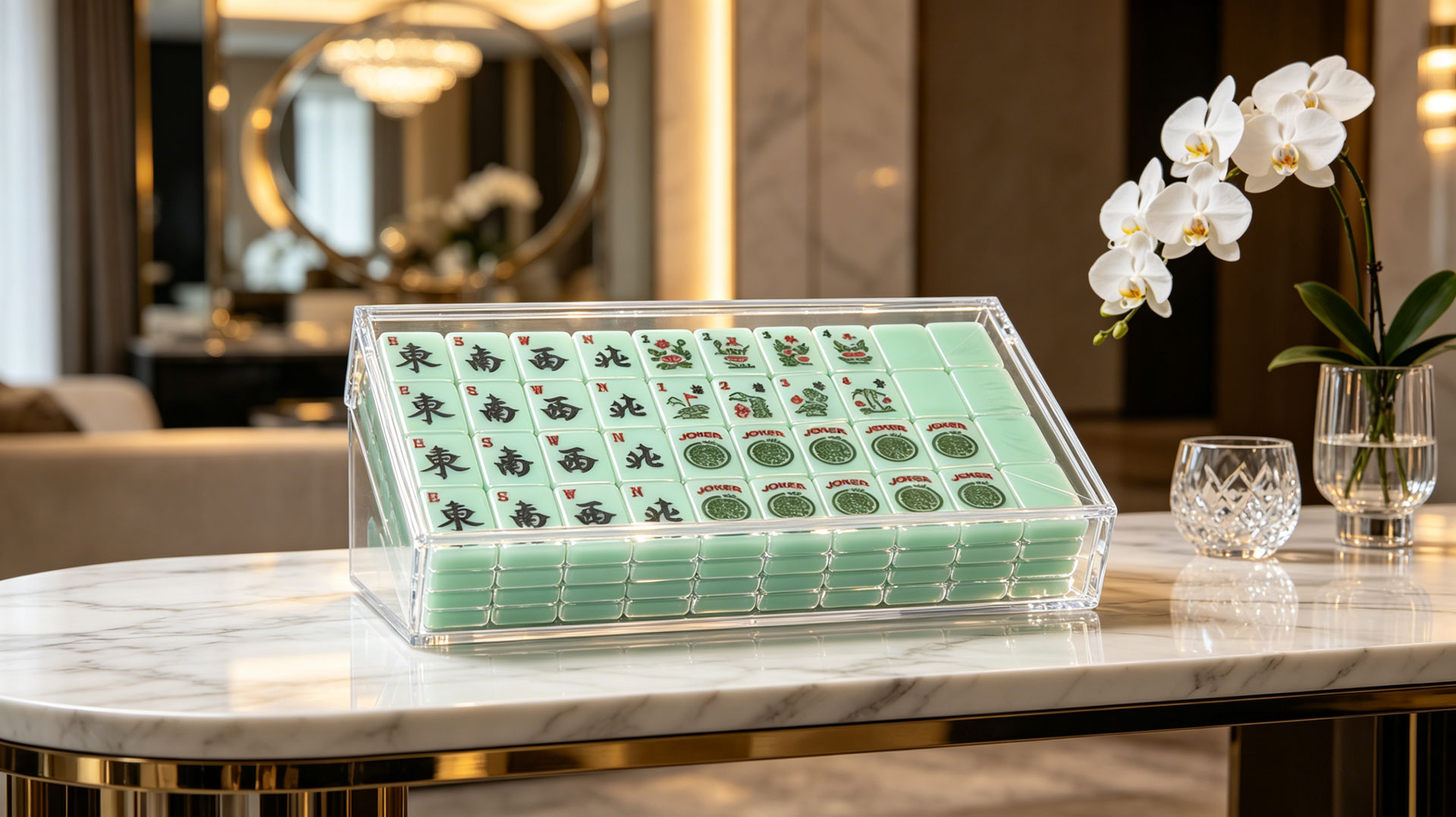
For brands developing or refreshing a custom mahjong set line, the material decision is rarely simple. You are not choosing a tile—you are choosing a production foundation that affects color consistency across batches, tactile feel your customers associate with your brand, long-term durability in high-humidity markets, and the customization range your design team can execute.
For 22 years, JAYI has operated an acrylic manufacturing facility in China, producing over 300,000 game products annually. Across hundreds of projects with brands including Target, Sam's Club, the material question comes up every time: why acrylic? This article breaks down the material science, production realities, and customization freedom that make acrylic the preferred choice for brands building serious mahjong programs.
Key Points:
• Acrylic's material properties—95% light transmittance, <0.5% water absorption, and 100% virgin resin—deliver measurable consistency advantages over bone, bamboo, and injection-molded plastics
• Density and dimensional stability directly translate to tile weight, hand feel, and long-term size accuracy
• CNC precision cutting and diamond-edge polishing transform raw acrylic sheets into tiles that meet exacting tolerance specifications
• Brands gain full control over color systems, surface finishes, logo integration, and packaging through a single manufacturing partner
• Sourcing acrylic mahjong components from an experienced factory reduces the risk of batch-to-batch color deviation and supplier-side quality failures
Why Mahjong Brands Need Material Certainty
Every brand carrying a mahjong product faces a version of the same risk: the material misbehaves after production begins. A bone-based tile develops hairline cracks across humid summers. A plastic tile shows visible gate marks on the face. A bamboo rack warps during ocean freight transit. Each failure cascades into customer returns, reputation damage, and re-order hesitation.
These are not exotic failure modes. They are predictable consequences of mismatched material selection. Brands that avoid them treat material choice as a product specification, not a supplier formality.
Acrylic reduces that uncertainty window. When you specify acrylic for a custom mahjong set, you are selecting a material with well-documented physical properties, a mature supply chain, and a processing track record spanning decades. You know what you are getting before the first sample arrives—and that predictability compounds at scale. When your re-order arrives six months after the initial run, the material behavior mirrors the first batch: same density, same color response under printing, same edge quality after diamond polishing.
Acrylic vs Traditional Mahjong Materials — A Production Perspective
Bone and Bamboo — Heritage Limits
Bone and bamboo tiles carry genuine heritage value that no synthetic material fully replicates, but from a manufacturing standpoint, they present structural limitations.
Bone is a natural composite with inherent variability—no two bone sections produce identical tiles.
Color variation creates challenges for brands seeking visual uniformity, and bone is porous, requiring sealing treatments that add processing steps and failure points.
Bamboo introduces dimensional instability in humid conditions and requires protective coatings that wear over extended use.
Injection-Molded Plastic — Cost at What Quality
Injection-molded plastic tiles are the cost-optimized choice and serve a market segment well.
The trade-off appears in visual quality: commodity injection polymers produce tiles with visible gate marks, and thin-section tiles commonly warp during ejection and cooling.
Acrylic tiles are machined from sheet stock—there is no gate, no gate mark, and no injection-related stress. CNC routing delivers consistent tile dimensions within ±0.05 mm tolerances.
Melamine — The Middle Ground's Ceiling
Melamine resin tiles are more durable than ABS plastic and more dimensionally stable than bamboo, but melamine's ceiling appears in customization depth.
Surface printing requires heat-transfer or pad-printing processes that limit color range and design complexity.
Acrylic supports screen printing with up to 8 colors, UV digital printing, laser engraving, and foil stamping within a single facility—giving brands design freedom that melamine production lines cannot match.
Customization Freedom That Acrylic Unlocks for Mahjong Brands
Color Systems and Pantone Matching
Acrylic tile bodies can be produced in virtually any color through masterbatch compounding during sheet extrusion or through surface coating before printing.
With calibrated color references and our in-house quality process, we achieve tight tolerances on hue, saturation, and lightness across production batches.
A brand that specifies Pantone 187 C for its tile bodies can expect that color to remain consistent from the first run through the fifth re-order.
Surface Finishing Options
Acrylic supports a range of surface finishes that directly affect product feel and perceived value:
| Finish Type | Visual Effect | Tactile Quality | Application |
|---|---|---|---|
| Diamond Polish | High gloss, mirror-like | Smooth, glassy | Premium tile faces |
| Matte / Frosted | Soft diffusion, reduced glare | Satin, tactile | Non-slip tile backs |
| Laser-Engraved | Raised or recessed patterns | Textured depth | Tile symbols, logos |
| Silk-Screen Printed | Multi-color flat graphics | Smooth overlay | Number/symbol faces |
| UV Digital Print | Photographic detail, gradients | Smooth, high detail | Complex artwork tiles |
Brand Integration — Logos, Engraving, and Packaging
Acrylic's compatibility with multiple printing and marking technologies enables layered brand integration across tile programs, including standard mahjong, travel formats, and custom American mahjong set configurations:
• Laser-engraved logos on tile backs or rack surfaces provide permanent, non-wear branding that survives years of use
• Screen-printed logos on tile faces offer high color saturation and Pantone accuracy for prominent placement
• UV-printed artwork supports photographic detail and complex multi-color designs on tile faces
• Custom packaging includes branded boxes, foam inserts, and instructional materials coordinated with tile and rack specifications
For a brand launching or refreshing a custom mahjong set, these integration options mean the product itself becomes the primary brand touchpoint.
Mahjong Material Comparison Specification Table
| Specification | Acrylic | Bone | Bamboo | Injection Plastic (ABS) |
|---|---|---|---|---|
| Light Transmittance | 95% | N/A (opaque) | N/A (opaque) | 10–30% (translucent) |
| Density (g/cm³) | ~1.19 | ~1.8–2.0 | ~0.6–0.8 | ~1.04–1.08 |
| Water Absorption | <0.5% | 12–18% | 8–14% | 0.1–0.3% |
| Dimensional Stability | Excellent | Moderate (humidity-dependent) | Low (hygroscopic) | Good (thermal stress risk) |
| Batch Color Consistency | High (Pantone-matched) | Low (natural variation) | Low (grain variation) | Moderate |
| Customization Depth | High (8-color print, laser, UV) | Low (engraving only) | Low (staining, engraving) | Low–Moderate |
| Edge Quality | Precision-cut, diamond-polished | Hand-finished, variable | Sanded, variable | Mold-gate artifacts |
| Tactile Feel | Dense, smooth, consistent | Porous, temperature-sensitive | Light, fibrous | Light, hollow-sounding |
| Typical Product Lifespan | 10–15+ years | 5–10 years (sealing-dependent) | 3–7 years | 3–8 years |
| Moisture Resistance | Excellent | Poor (requires sealing) | Poor | Good |
| Environmental Profile | Recyclable (#5 PP-compatible) | Natural, biodegradable | Renewable, requires coating | Petroleum-based |
| Design Freedom | Full color + surface + finish | Natural aesthetic only | Organic aesthetic only | Limited to mold design |
JAYI Acrylic Manufacturing Capabilities for Mahjong Programs
Every material advantage provided by Jayi Acrylic can only be realized when precisely implemented during the manufacturing process.
CNC Precision Machining
We run professional CNC routers to precisely cut acrylic sheets into standard mahjong tile blanks, with a tight tolerance of ±0.05 mm.
This ultra‑high precision ensures perfect tile stacking, stable fitting in acrylic mahjong racks, and smooth gameplay for users.
It eliminates size deviation and uneven surfaces, laying a solid foundation for premium, durable, and consistent mahjong sets that meet global brand quality standards.
Diamond-Edge Polishing
After CNC processing, all tile edges go through multi-stage diamond polishing.
This process creates crystal‑clear, smooth, and burr-free edges, removing micro‑fractures and rough textures caused by ordinary processing.
The polished edges deliver an upscale, solid handfeel, enhance appearance, and extend service life, making each tile look and feel high-end for brand-name products.
Full-Process In-House Control
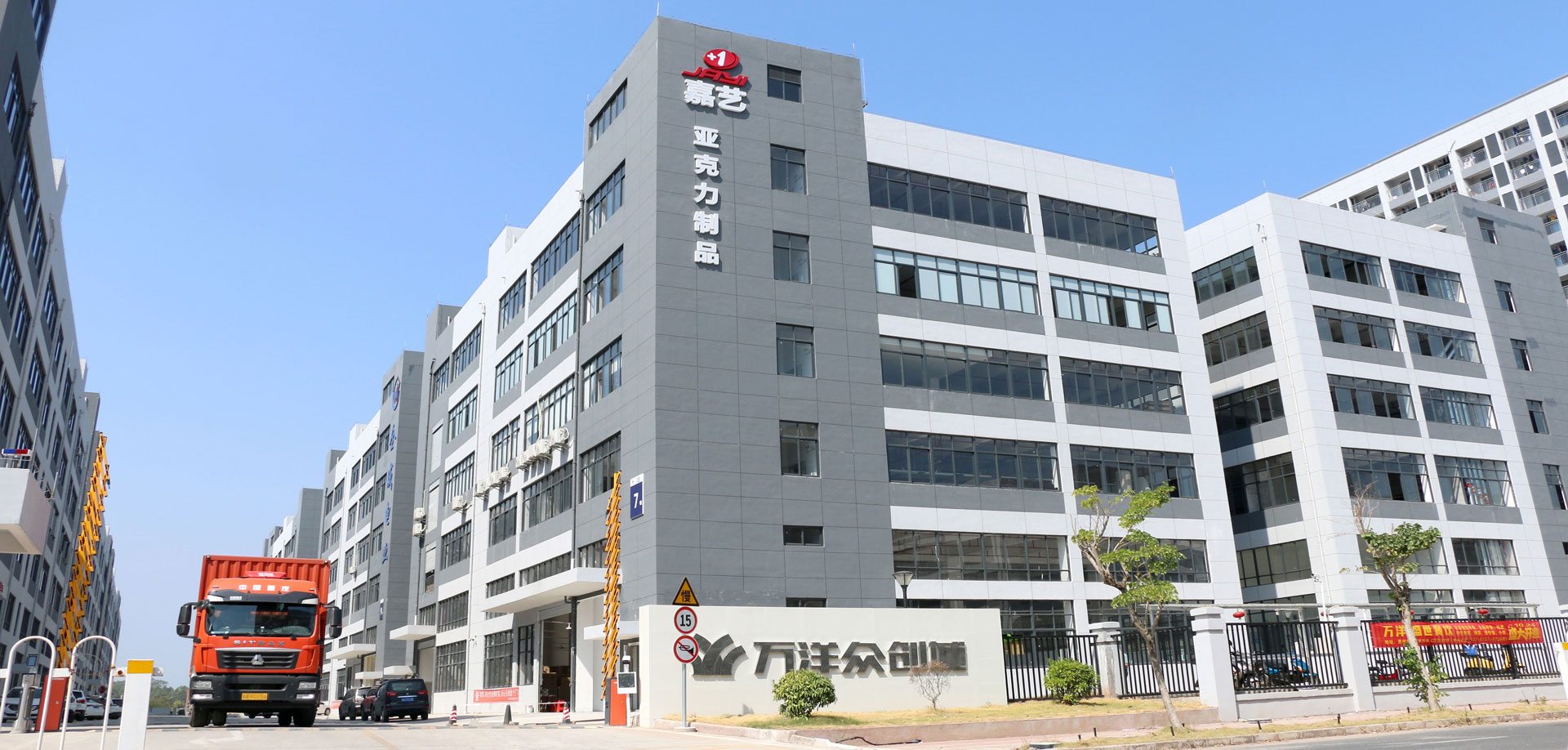
Our 10,000-square-foot ㎡ factory integrates every production step in‑house: sheet cutting, CNC machining, diamond polishing, solvent bonding, screen printing, UV digital printing, laser engraving, foil stamping, and final packaging.
No outsourcing ensures full quality control, consistent color matching, stable production rhythm, and unified accountability for finished mahjong sets and board game products.
Quality Verification
We implement 100% full inspection for every batch before shipment, covering dimensional accuracy, surface finish, color consistency, and assembly fit for racks and cases.
Third‑party inspections by SGS, TUV, or CTI are available upon request.
We hold ISO9001, BSCI, and SEDEX certifications and have passed official audits by Walmart and Target, ensuring reliable export‑grade quality.
FAQ
What is acrylic's role in custom mahjong set manufacturing?
Acrylic serves as the primary tile body material and structural component in modern custom mahjong production.
It provides a dimensionally stable, optically clear, and highly customizable base that accepts printing, engraving, and surface finishing within a controlled factory environment.
How does acrylic compare to bone tiles for commercial mahjong use?
Acrylic tiles offer superior batch-to-batch color consistency compared to bone, which exhibits natural variation across pieces.
Acrylic is dimensionally stable across humidity ranges where bone absorbs moisture and may crack or warp.
Bone carries heritage value; acrylic delivers reproducible quality at scale.
What surface finishes are available for acrylic mahjong tiles?
Available finishes include diamond-edge polishing for high-gloss faces, frosted or matte treatment for reduced glare, laser engraving for raised or recessed symbol work, screen printing for multi-color graphics, UV digital printing for photographic detail, and foil stamping for metallic accents.
Does JAYI offer full-package customization for mahjong programs?
Yes. Beyond tile production, we provide custom acrylic mahjong racks, acrylic mahjong storage boxes, mahjong mat, floating mahjong table, gift packaging, and printed materials—coordinated with your brand color system, logo specifications, and packaging design.
All components are produced in our facility, ensuring color and quality consistency across the entire set.
Can JAYI produce both standard Chinese and American mahjong tile formats?
Yes. We have produced both standard Chinese mahjong tile configurations and American mahjong tile layouts with their distinct character sets and tile dimensions.
The production process—CNC routing, diamond polishing, and surface finishing—is identical for either format, with specifications adjusted to match the relevant tile standard.
Conclusion
Acrylic stands out as the optimal material for custom mahjong sets, balancing superior optical clarity, stable physical properties, rich customization, and scalable production.
Partnering with JAYI Acrylic, you get consistent quality, precise craftsmanship, and one-stop OEM/ODM service, helping your mahjong products stand out in global markets.

Cathy Qin
Cathy Qin works at Jayi Acrylic Industry Limited, focusing on custom acrylic game product management and SEO-driven content marketing for B2B wholesale and retail applications. Her work includes designing display solutions, managing customization projects, and optimizing website content to promote Jayi’s high-quality acrylic products across global digital channels.
Post time: May-26-2026