
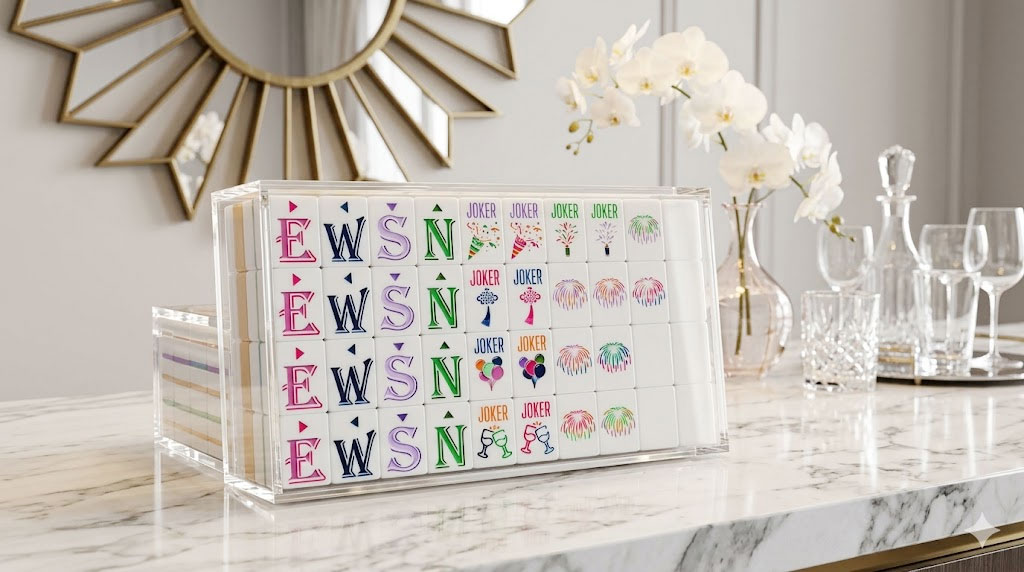
Not every company that quotes you on mahjong sets actually makes them. Trading companies repackaging factory prices with their own margins and adding layers of communication lag between you and the production floor. The result: slower response on quality issues, no direct control over production schedules, and no way to verify what actually happens to your order. This article gives you 10 concrete factors to evaluate — so you can tell a manufacturer from a middleman before you commit volume.
Key Points:
• Factory ownership and vertical integration are the two fastest indicators of whether you are dealing with a manufacturer or a trading company
• In-house production capability (cutting, polishing, printing, packaging) determines quality consistency and lead time reliability
• Certifications, retailer audit history, and material transparency separate qualified factories from price-only competitors
• A structured evaluation across these 10 factors reduces the risk of post-shipment quality disputes and supply chain surprises
Factory Ownership — Are You Talking to the Factory or a Middleman?
The single most important question in any supplier conversation: does the company own the production facility? Trading companies list factory photos and certifications on their profiles, but they cannot grant you factory access, customize production schedules, or resolve quality issues on the line — because they do not control the line.
| Indicator | Manufacturer | Trading Company |
|---|---|---|
| Business license scope | Includes "manufacturing" or "production" | Lists "trading," "import/export," or "sourcing" only |
| Factory visit | Welcomes on-site visits; provides facility tour | Offers showroom only; deflects production floor visits |
| Price structure | Quotes based on material, process, and volume | Adds margin on top of factory price; cannot break down costs |
| Quality issue response | Can pull production records and investigate the same day | Must relay to factory; response takes days with information loss |
| Customization depth | Discusses technical trade-offs (print method, material grade) | Takes specs and passes along; cannot advise on manufacturability |
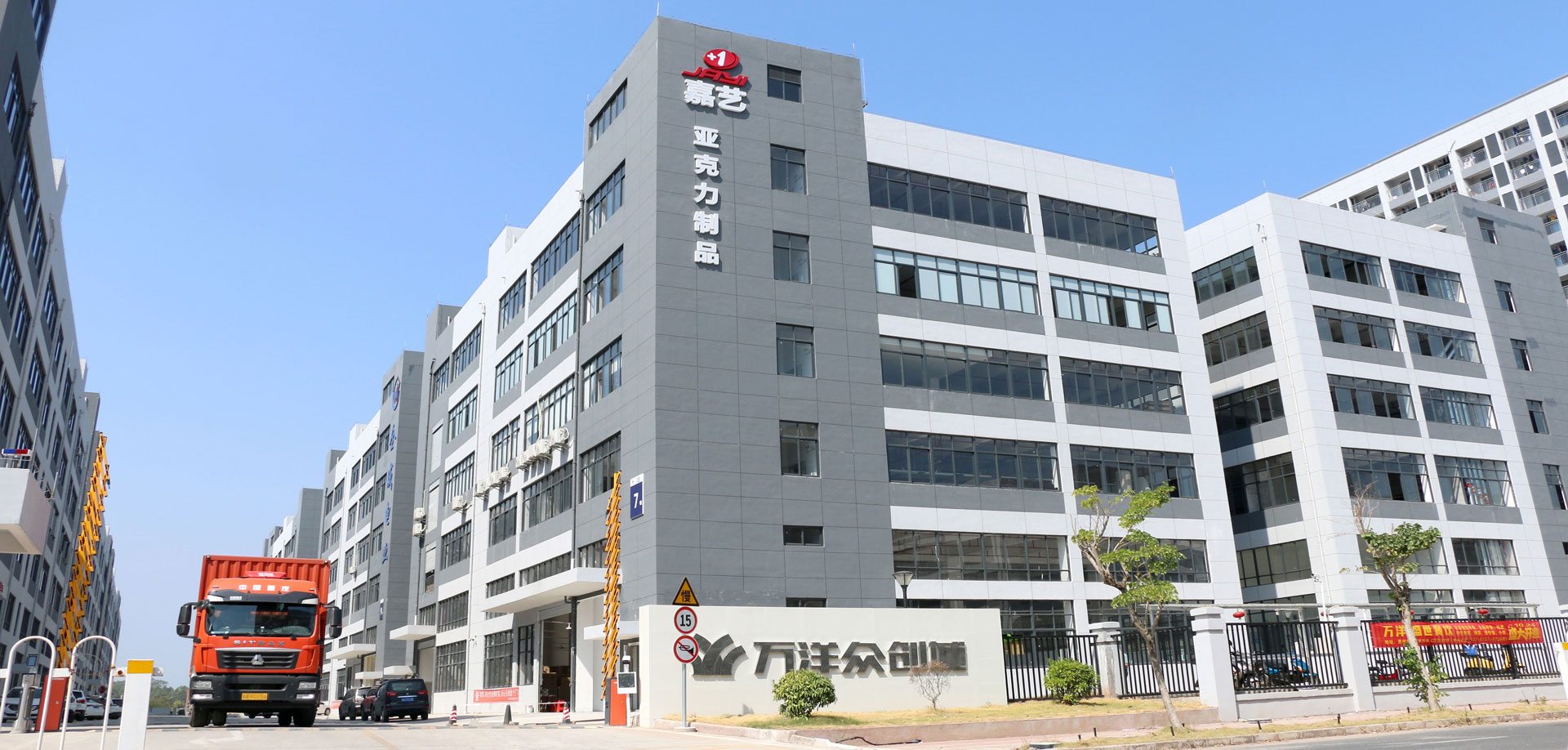
At JAYI Acrylic, we operate a 10,000㎡ self-owned facility in China. Every production step — from raw acrylic sheet intake to final inspection — runs under our roof. When you raise a quality question, the person answering can walk to the production line and check.
Vertical Integration — How Much Does the Factory Do In-House?
A mahjong set requires cutting, CNC carving, polishing, bonding, printing, assembly, and packaging. Each step outsourced to a subcontractor introduces a coordination risk: schedule misalignment, quality drift between vendors, and accountability gaps when something goes wrong.
Green flags for vertical integration:
• All major production steps listed under one facility address
• Equipment list includes CNC machines, polishing stations, printing equipment, and packaging lines
• One quality management system covers the entire process chain
Red flags:
• "We have partner factories for printing/packaging" — this means outsourcing
• Production flow diagrams show multiple company names or addresses
• Sample and mass production come from different locations
JAYI production chain processes custom mahjong sets through cutting → CNC carving → diamond polishing → bonding → screen printing / laser engraving / UV digital printing → assembly → 100% inspection — all in one facility. No subcontracting, no handoffs, no accountability gaps.
This vertical integration also extends to our acrylic board game collection, where tumbling tower, domino, chess, and backgammon sets follow the same in-house workflow.
Material Quality and Transparency
Acrylic quality varies dramatically between virgin and recycled resin. Virgin acrylic delivers 95% light transmittance, consistent color density, and dimensional stability. Recycled material introduces cloudiness, color variation between batches, and lower impact resistance — problems that do not show up in a sample but emerge after months of use.
Questions to ask:
• Do you use 100% virgin acrylic? Can you provide material certificates or mill test reports?
• What is the light transmittance of your standard acrylic sheet?
• How do you handle material lot traceability — can you trace a finished set back to the raw material batch?
If a supplier cannot answer these questions directly, they likely do not control the material sourcing — another sign of a trading company layer.
JAYI use 100% virgin acrylic across all custom American mahjong tiles, with material lot traceability from raw sheet to finished carton. Our standard acrylic achieves 95% light transmittance with consistent color density across production runs.
Certifications and Compliance Depth
A factory's certification profile tells you two things: what quality systems they follow, and what markets they are qualified to serve. For mahjong sets entering regulated retail channels, certification depth is not optional — it is a gatekeeping requirement.
| Certification | What It Covers | Why It Matters for Mahjong |
|---|---|---|
| ISO 9001 | Quality management system | Process control and documentation structure |
| BSCI / SEDEX | Social compliance | Required by most US and EU retailers for vendor qualification |
| SGS / TÜV audit | Third-party factory verification | Independent validation of manufacturing capability |
| CPSIA / ASTM F963 | Product safety (US) | Required if the set classification includes age ≤12 |
| CE / EN-71 | Toy safety (EU) | Required for EU market entry |
Beyond the certificates themselves, verify: Is the certification scope current? Does it cover game products specifically? When was the last audit, and were there unresolved findings? JAYI maintains ISO 9001, BSCI, SEDEX, SGS, TUV, and CTI certifications — continuously audited, not one-time achievements.
Production Capacity and Scalability
Capacity claims without context are unreliable. A factory quoting "100,000 units per month" may be aggregating across all product lines and all clients — your mahjong allocation could be a small fraction.
Capacity evaluation framework:
| What to Ask | What the Answer Tells You |
|---|---|
| Dedicated mahjong line output per month | Your realistic allocation, not shared capacity |
| Current utilization rate | Whether the factory can absorb surge orders without extending lead times |
| Maximum capacity with overtime | Ceiling for peak season scaling |
| Reorder lead time vs. first-run lead time | Whether process learning is captured (reorder should be 30–40% faster) |
JAYI produces over 300,000 game units annually across our facility, with dedicated production lines for mahjong products. Our acrylic mahjong set standard lead time runs 80–90 days, depending on customization depth and volume, with reorder cycles significantly shorter than first-run timelines.
Customization Range and Technical Capability
A manufacturer's customization range determines what you can sell. Limited customization constrains your product to look like every other set on the market; deep customization lets you build a differentiated brand.
Customization dimensions to evaluate:
• Tile body: Solid colors, translucent, marble-effect, gradient — Pantone-matched
• Face artwork: Laser engraving, screen printing (up to 8 colors), UV digital printing, hot stamping
• Dimensions: Standard or custom profiles; non-standard sizes may require new mold tooling
• Accessories: Racks, dice, cases — color-matched and brand-customized
• Packaging: Custom retail boxes, inserts, instruction booklets with brand identity
When evaluating technical capability, ask whether the factory can advise on print method trade-offs for your specific artwork complexity. A real manufacturer will explain why screen printing works better for your volume and design, or why UV printing suits a complex multi-color pattern — a trading company will simply say "we can do it."
Quality Control Rigor
Quality control separates a factory that inspects from a factory that prevents. The question is not whether QC exists — it is whether checkpoints are embedded at every production stage or only applied at final inspection.
In-process QC structure to look for:
| Stage | Checkpoint | Failure Action |
|---|---|---|
| Raw material | Sheet thickness, color ΔE vs. reference | Reject lot |
| CNC cutting | Dimensions ±0.1mm | Recut; adjust parameters |
| Polishing | Edge smoothness, chip-free | Repolish or reject |
| Printing | Symbol clarity, color accuracy | Reprint |
| Assembly | Tile count, completeness per set | Repack |
| Final | 100% unit-by-unit inspection | Reject non-conforming sets |
For mahjong specifically, 100% final inspection is critical. A single missing tile renders the set unusable. Ask whether the factory applies per-set 100% inspection or statistical sampling (AQL). We inspect every set — tile count, dimensional compliance, and visual quality — before it leaves the facility.
Retailer Audit Track Record
Passing a retailer audit is a higher bar than holding certifications. Retailers like Walmart and Target send their own auditors to verify not just product quality but documentation systems, traceability, labor compliance, and corrective action processes. A factory that has passed these audits has demonstrated capability at a level your brand may need.
What retailer audit experience signals:
• The factory understands vendor qualification requirements, not just product specs
• Documentation and traceability systems meet major retail chain standards
• Social compliance practices have been verified by third-party auditors
• The factory can support your own retail buyer's vendor qualification process
JAYI has passed supplier audits from Walmart and Target — two of the most rigorous retail audit programs globally. This means when your retail buyer asks for compliance documentation, factory audit reports, or traceability records, we can provide them without scrambling.
Sampling Speed and Communication Quality
Sampling speed reveals how organized a factory's process really is. A manufacturer with pre-configured tooling and a dedicated sampling line produces samples in 25–30 business days. Longer timelines suggest either tooling inefficiency or queuing behind higher-priority clients.
Communication quality matters equally. In custom production, ambiguous responses create expensive misunderstandings. Evaluate whether your contact:
• Responds within one business day with substantive answers
• Raises potential issues proactively instead of confirming everything is fine
• Provides technical explanations, not just "yes, we can"
• Sends photos of sample progress without being asked
A factory contact who says "no problem" to every request is either not understanding your specs or not passing them to engineering. A real manufacturer asks clarifying questions — because they know the cost of getting it wrong.
IP Protection and Long-Term Partnership Readiness
Your tile artwork, color system, and packaging design are brand assets. Before sharing them with any supplier, verify that IP protection practices are in place — not as a verbal promise but as a documented process.
IP protection checklist:
• Mutual NDA signed before any design discussion
• Design files stored with restricted access — not shared across sales teams
• Production records for your SKU are separated from other clients' records
• Tooling and mold ownership terms are documented in the contract
• The factory does not produce identical products under different brand names using your designs
Long-term partnership readiness goes beyond IP. A factory structured for ongoing collaboration will offer:
• Golden sample archiving so reorders match the original without re-approval
• Replacement tile production without requiring full-set reorders
• Proactive compliance documentation updates when regulations change
• Capacity reservation for your peak season windows
JAYI archives golden samples for every custom project and supports reorder production referencing the original specifications. Our acrylic mahjong racks are produced on the same floor as the tile sets, ensuring dimensional compatibility without cross-supplier coordination.
FAQ

How can I tell if a mahjong supplier is a manufacturer or a trading company?
Check the business license scope — manufacturers list "production" or "manufacturing"; trading companies list "trading" or "import/export." Request a factory visit: manufacturers welcome production floor tours; trading companies offer showrooms only. Ask for a cost breakdown by material and process — manufacturers can provide it; trading companies typically cannot.
What certifications should a mahjong set manufacturer hold?
At minimum, ISO 9001 for quality management. For US and EU retail channels, BSCI or SEDEX social compliance certification is commonly required. Product safety certifications (CPSIA/ASTM F963 for the US, CE/EN-71 for the EU) apply depending on age classification. Verify that certification scope covers game products specifically.
Why does vertical integration matter for mahjong production?
Vertical integration means all production steps — cutting, polishing, printing, assembly, inspection — happen under one roof. This reduces coordination failures between subcontractors, shortens lead times, and creates a single point of accountability for quality. Outsourced steps introduce handoff risks that compound with each additional vendor.
Can a mahjong manufacturer produce replacement tiles without a full reorder?
An integrated manufacturer can produce replacement tiles in small quantities because tooling and artwork are archived on-site. Trading companies typically cannot offer this because they must coordinate with their factory partner, making small runs uneconomical. Confirm replacement tile availability before your first order.
What should I verify during a factory audit for mahjong production?
Focus on CNC machine calibration records, acrylic sheet storage conditions, work instructions at each station, in-process and final inspection logs, batch traceability to raw material lots, and non-conformance corrective action processes. A showroom tour is not a factory audit — request access to the actual production floor.
Conclusion
Selecting a reliable mahjong set manufacturer requires a comprehensive evaluation of factory qualification, production capability, quality control, and compliance credentials to avoid middleman risks and quality instability.
As a vertically integrated, fully certified mahjong manufacturer with global retail audit experience, JAYI Acrylic delivers consistent quality, flexible customization, and transparent supply chain services.
Evaluate suppliers with the above 10 key factors to build a stable, long-term cooperative supply chain for your mahjong product business.

Cathy Qin
Cathy Qin works at Jayi Acrylic Industry Limited, focusing on custom acrylic game product management and SEO-driven content marketing for B2B wholesale and retail applications. Her work includes designing display solutions, managing customization projects, and optimizing website content to promote Jayi’s high-quality acrylic products across global digital channels.
Post time: Jun-17-2026