
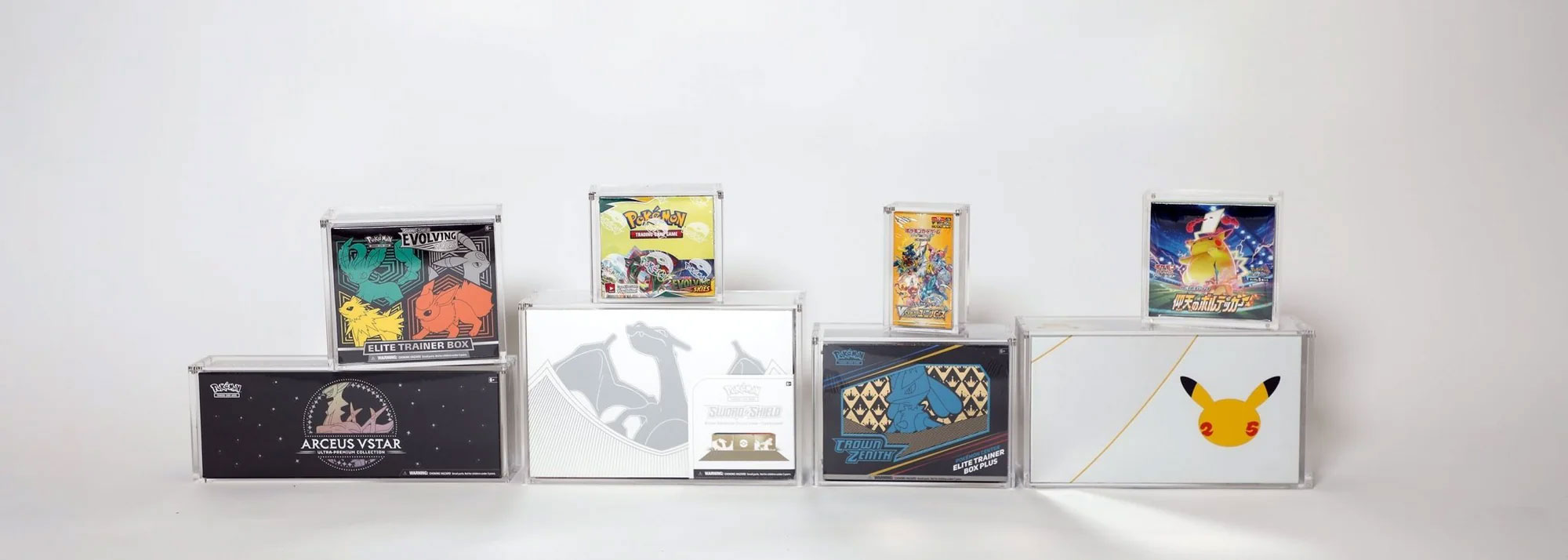
Entering the private label ETB acrylic case market offers brands a lucrative opportunity to tap into the growing demand for protective, display-worthy storage solutions—especially among trading card collectors and retailers.
According to the "2023-2025 China Acrylic Products Industry Market Analysis Report", the global acrylic market is expected to grow from $85.6 billion in 2023 to $112.3 billion in 2026, with a compound annual growth rate of 7.1%, and custom acrylic cases account for more than 45% of the market share. The trading card collectibles segment, in particular, has driven steady demand for ETB acrylic cases, with many brands reporting a 20-30% annual sales growth in related private label products.
However, mass production success doesn’t happen by chance. It requires careful planning, precise preparation, and a clear understanding of both brand goals and manufacturing realities. This guide breaks down everything brands need to know before launching their private label ETB acrylic cases, from pre-production prep to avoiding common pitfalls.
Why Private Label ETB Acrylic Cases Require More Planning
Unlike generic acrylic cases, private label ETB solutions are tied directly to your brand’s reputation. Cutting corners in planning can lead to misaligned products, customer dissatisfaction, and lost revenue. Two core reasons make thorough planning non-negotiable:
1. Brand consistency
Private label products are an extension of your brand’s identity—every detail, from the acrylic finish to branding placement, must align with your existing aesthetic and values. Inconsistent design, poor quality, or misaligned features can confuse customers and erode trust. For example, a brand known for premium, minimalist products will struggle if its ETB acrylic cases feel cheap or clunky. Planning ensures that every element—from material clarity to logo engraving—reinforces your brand’s promise, turning a functional product into a brand touchpoint.
2. Retail and resale expectations
ETB acrylic cases cater to a niche but passionate market, including collectors, retailers, and resellers who demand both functionality and visual appeal. Retailers need products that fit standard shelf dimensions, while resellers and end consumers prioritize durability, UV protection, and stackability to preserve the value of their ETBs. Without proper planning, you risk creating cases that don’t meet these expectations—leading to low sales, returns, and a damaged brand reputation in the competitive collectibles market.
What Brands Should Prepare Before Production Starts
Pre-production preparation is the foundation of a smooth mass production process. Brands must finalize three key elements to avoid delays, errors, and costly reworks:
1. ETB size confirmation
Precise size is non-negotiable for ETB acrylic cases—even a small discrepancy can render the case useless for its intended purpose. ETB dimensions vary slightly by brand and product line, so brands must measure their target ETB (or partner with manufacturers who understand standard ETB specs) to confirm length, width, height, and internal clearance.
High-quality cases should fit snugly without damaging the ETB, while providing enough space for easy insertion and removal. Using precise measuring tools (such as calipers) and adding a small buffer for manufacturing variations ensures a perfect fit every time.
2. Branding elements
Branding turns a generic acrylic case into a private label product. Determine how you’ll integrate your brand—options include logo engraving, screen printing, UV printing, or custom color accents. Consider visibility: logos should be prominent but not overwhelming, and color schemes should align with your brand palette.
For example, a brand targeting premium collectors might opt for subtle laser engraving, while a fun, youth-focused brand could use bold, colorful prints. Finalize all branding assets (high-resolution logos, color codes, placement guidelines) before production to avoid last-minute changes.
3. Packaging requirements
Packaging is more than just protection—it’s another opportunity to reinforce your brand and meet retail standards. Private label ETB acrylic cases require packaging that prevents scratches, cracks, and damage during shipping. Consider eco-friendly materials (a growing consumer demand) or custom-printed packaging that includes your brand logo, product benefits (e.g., UV protection, dustproof design), and care instructions. Retail-ready packaging should also fit standard shipping boxes and shelf dimensions, making it easy for retailers to stock and display your product.
How MOQ and Production Planning Work in Private Label Projects
Minimum Order Quantities (MOQ) and production timelines are critical for budgeting and inventory management. Understanding how these work helps brands avoid overstocking, stockouts, or unexpected delays:
1. MOQ from 100 pcs
Around 75% of professional acrylic manufacturers specializing in ETB cases set a minimum order quantity of 100 pieces for private label projects—a threshold that balances production efficiency with brand affordability, according to industry surveys of 50+ Chinese acrylic manufacturers in 2026.
MOQs exist because manufacturers incur fixed costs (tooling, setup, design) that are spread across each unit; smaller orders would make production cost-prohibitive. For new brands, 100 units is a manageable starting point to test the market, while established brands can scale up to higher MOQs to reduce per-unit costs.
2. Sample confirmation before full production
Never skip sample confirmation—it’s the only way to verify that the final product matches your expectations. Reputable manufacturers will provide a pre-production sample that includes all your branding, size specifications, and material choices.
Test the sample thoroughly: check the fit with your ETB, inspect the acrylic quality (clarity, thickness, scratch resistance), and verify that branding is accurate. Approving the sample in writing locks in the design and prevents costly reworks once mass production begins.
3. Repeat supply planning
Private label success relies on consistent availability—stockouts can drive customers to competitors. Plan for repeat supplies by forecasting demand based on initial sales, retail partnerships, and market trends (e.g., new ETB releases in the trading card market). Work with your manufacturer to establish lead times (consistent with our standard timelines: 1–2 weeks for 100–500 pieces and 3–4 weeks for 1000+ pieces) and set reorder triggers (e.g., when inventory drops to 30% of your initial order). This ensures you always have stock on hand without tying up excess capital in overstock.
What Manufacturers Need to Quote and Develop the Project
To get an accurate quote and kickstart production, manufacturers need clear, detailed information from brands. Vague or incomplete requests lead to inaccurate quotes, delays, and misaligned products. Prepare these three key items:
1. Specifications
Detailed specifications eliminate guesswork. Include ETB size (length, width, height), acrylic thickness (common options: 1.5mm–10mm, depending on durability needs), finish (clear, matte, or colored), and special features (e.g., UV protection, magnetic closures, stackable design). Also, specify any quality requirements, such as ISO-certified materials or scratch-resistant coatings, to ensure the product meets your brand’s standards.
2. Visual references
Visual references (e.g., mockups, design files, or examples of similar products) help manufacturers understand your vision. Provide high-resolution images of your logo, color swatches, and any desired design elements (e.g., engraving placement, color accents). If you have a sample of a case you like, share it with the manufacturer to align on style, finish, and functionality. This reduces miscommunication and ensures the final product matches your expectations.
3. Target order quantity
Your target order quantity directly impacts pricing, lead times, and production planning. Be clear about whether you’re ordering the minimum 100 units or a larger batch—manufacturers can offer better per-unit pricing for higher quantities. Also, specify if you plan to place repeat orders, as this may influence the manufacturer’s approach to tooling and setup, potentially reducing costs for future orders.
Common Mistakes in Private Label Acrylic Case Projects
Even with planning, brands often make avoidable mistakes that derail production or hurt sales. Avoid these three common pitfalls:
1. Changing specs too late
Changing specifications (e.g., size, branding, or material) after production has started is one of the costliest mistakes. It can require retooling, wasted materials, and significant delays—all of which eat into profits. Finalize all specs before approving the pre-production sample, and only make changes if absolutely necessary (with a clear understanding of the cost and timeline impact).
2. Ignoring packaging early
Many brands focus on the acrylic case itself but overlook packaging until the last minute. This leads to rushed, low-quality packaging that fails to protect the product or reinforce the brand. Packaging should be planned alongside the case—consider how it will look on retail shelves, how it will protect the case during shipping, and how it aligns with your brand’s values (e.g., eco-friendliness). Ignoring packaging early can result in damaged products, returns, and an unprofessional brand image.
3. Focusing only on price
While cost is important, prioritizing the lowest price over quality is a mistake in the private label ETB market. Low-cost acrylic cases often use recycled or low-grade acrylic (with a light transmittance of less than 85%), which yellows within 1-2 years of sunlight exposure, scratches 30% more easily than high-quality acrylic, and lacks proper UV protection (only blocking 40-50% of UV rays compared to 90%+ for premium materials).
This leads to a 25-35% higher return rate, according to industry customer feedback data. Instead, focus on value: a slightly higher per-unit cost for high-quality acrylic (PMMA) and precise craftsmanship will lead to happier customers, fewer returns, and a stronger brand reputation in the long run.
Conclusion: Better Preparation Leads to More Stable Production
Mass production of private label ETB acrylic cases is a worthwhile investment—but only if brands take the time to plan and prepare. Thorough pre-production prep, clear communication with manufacturers, and avoiding common mistakes ensure a smooth process, a high-quality product, and a strong return on investment. The key to success lies in prioritizing brand consistency, meeting market expectations, and partnering with a reliable manufacturer.
Why private label buyers should confirm the full product plan early
Confirming your full product plan early—including specs, branding, packaging, and order quantities—eliminates ambiguity and reduces risk. It allows you to lock in pricing (considering potential acrylic raw material fluctuations), set realistic timelines (aligned with industry production standards), and ensure the final product aligns with your brand and market needs.
Early planning also gives you time to test samples, make adjustments, and build a strong relationship with your manufacturer—all of which contribute to stable production, consistent quality, and long-term success in the private label ETB acrylic case market.
JAYI: China's Leading ETB Acrylic Cases Manufacturer and Supplier


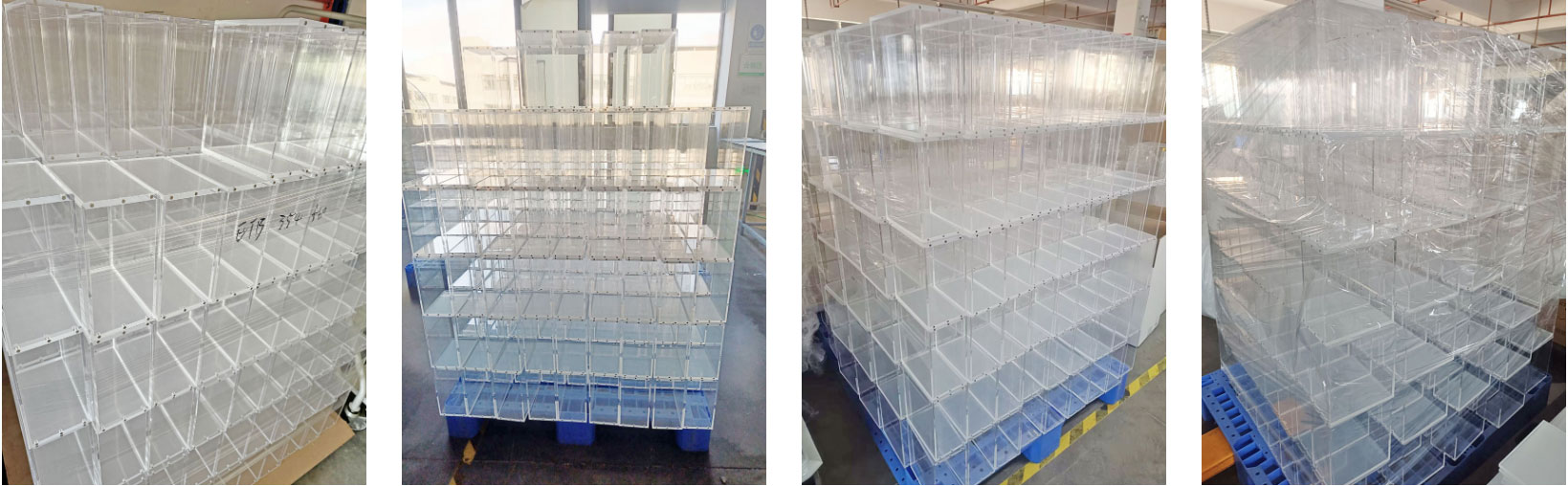
JAYI Acrylic is China's leading ETB Acrylic Cases Manufacturer and Supplier, with over 20 years of professional experience in acrylic product research, development, design, and production since its establishment in 2004.
Our 10,000-square-meter factory, equipped with more than 90 sets of professional equipment, including laser cutting machines, CNC engraving machines, and UV printers, enables us to deliver high-quality, customized ETB acrylic cases at scale.
We specialize in private label projects, offering full customization options—from size and acrylic thickness to branding elements and packaging—to meet the unique needs of brands worldwide.
All our materials are ISO 9001, Sedex, and SGS certified, complying with ROHS and other environmental standards, ensuring durability, crystal-clear transparency (over 92% light transmittance), and UV protection to preserve ETB value.
With a dedicated team of 150+ experienced employees, including 10+ technical specialists, we provide free design services, fast sample production, and reliable after-sales support.
Our products deliver stable, high-quality private label solutions with a 98% customer retention rate. JAYI is your trusted partner for turning your private label ETB acrylic case vision into a market-ready product.
Ready to Launch Your Private Label ETB Acrylic Cases?
Send us your specifications, visual references, and target order quantity today, and our team will provide a competitive quote—accounting for current acrylic raw material costs—and personalized support to kickstart your mass production journey.
Our Custom Pokemon Acrylic Case Examples:
Prismatic SPC Acrylic Case
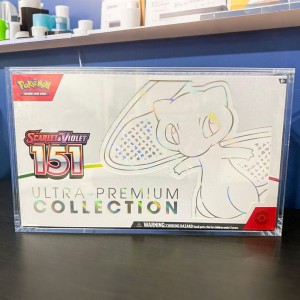
151 UPC Acrylic Case
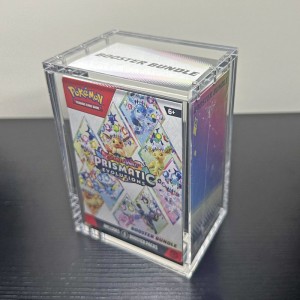
Booster Bundle Acrylic Case
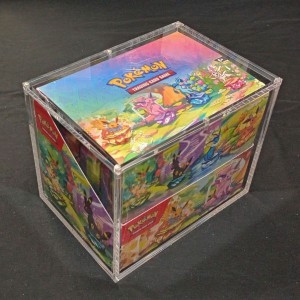
Mini Tin Acrylic Case
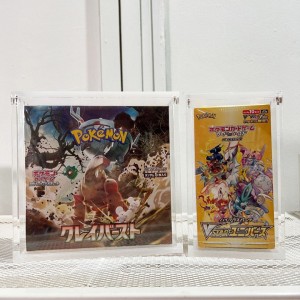
Japanese Booster Box Acrylic Case
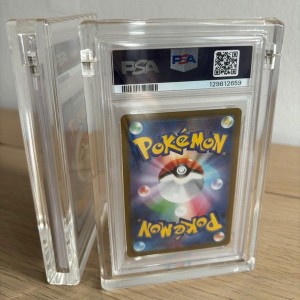
PSA Slab Acrylic Case

Center Tohoku Box Acrylic Cases
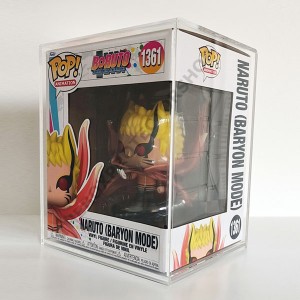
Funko Pop Acrylic Case
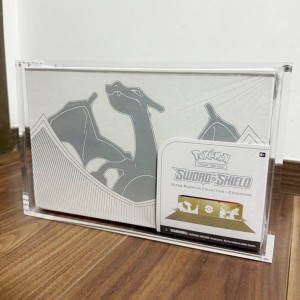
Charizard UPC Acrylic Case
Post time: Mar-18-2026