
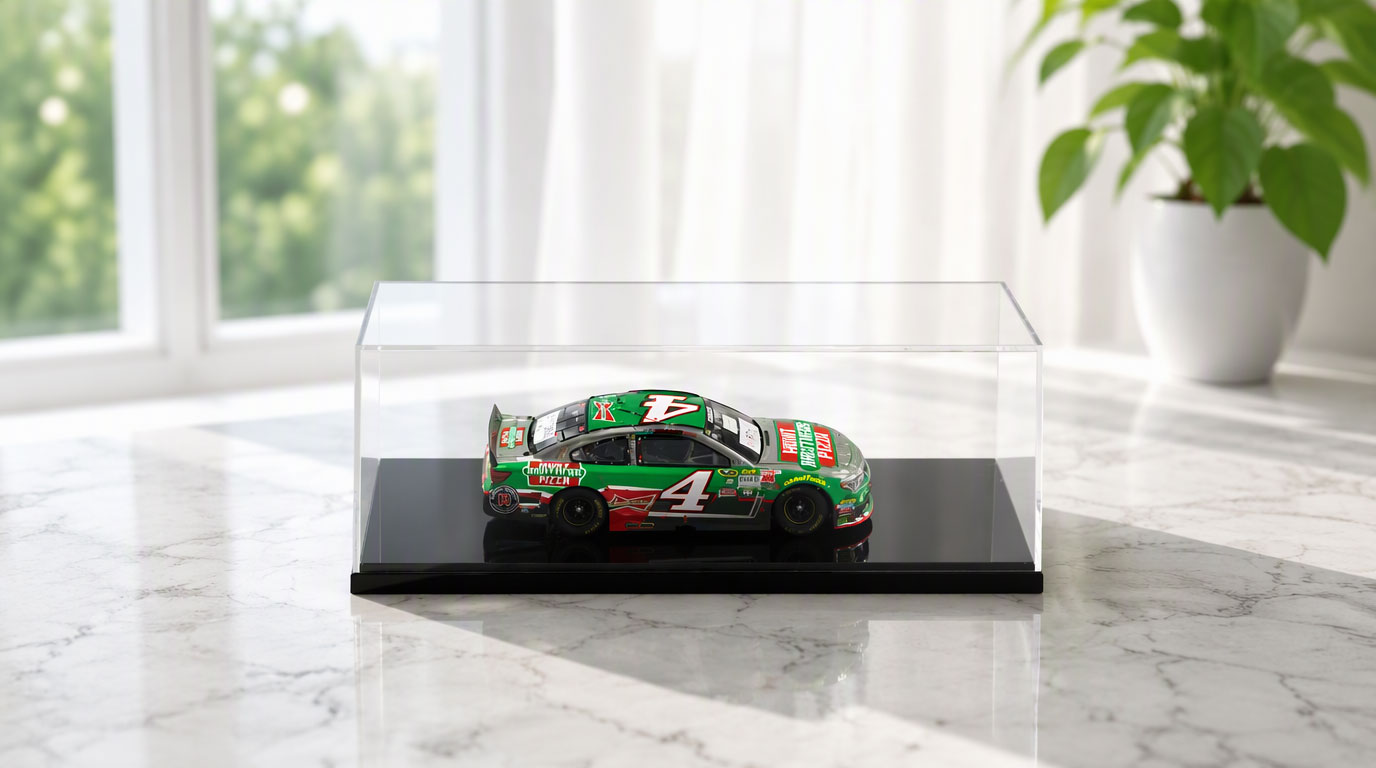
If you collect trading cards, graded cards, comics, autographs, vintage toys, or model figures, you already know the worry. You walk into the room one day and notice the colors on a favorite piece look a little lighter than they did last year. The corner of a comic cover seems washed out. A signature is not as dark as it used to be. That is UV damage, and once it happens, it is permanent. No cleaning or repainting brings the original look back.
Choosing an acrylic display case for collectibles starts with understanding what you are protecting. When it is time to protect your collection, most buyers get stuck on one simple question: should I pick a clear acrylic case or a UV-protective acrylic display case? On a shelf, the two look almost identical. Both are clear, both keep dust out, both show your item beautifully. So how do you actually choose?
This guide answers that in plain language, with no confusing jargon. You will learn what really differs between the two, which collectibles genuinely need UV protection, what the price gap looks like, and how to order with confidence from a manufacturer such as JAYI Acrylic.
Clear Acrylic vs UV-Protective Acrylic: What's Actually Different?
What a Standard Clear Acrylic Display Case Is
A standard clear acrylic display case is what most people picture when they think of an acrylic box. It is crystal clear, lightweight, and much harder to break than glass. It does a great job of keeping dust, fingerprints, and accidental bumps away from your item. If you just want something clean and affordable to show a toy or a small piece, this is usually enough.
What it does not do is block UV light. Sunlight and even some indoor lighting still pass through the panels. That means your collectible keeps getting exposed to the same rays that cause colors to fade over months and years. The case protects the item physically, but it does not protect the color.
Think of it this way. A clear acrylic case is a shield against dust and knocks. A UV-protective acrylic display case is a shield against dust, knocks, and the silent fading caused by light.
What a UV-Protective Acrylic Display Case Is
A UV-protective acrylic display case adds a special UV-blocking layer or additive to the material itself. This layer filters out the harmful part of sunlight before it reaches your collectible. The item inside still looks bright and natural to your eyes because visible light passes through normally. The difference is that the damaging ultraviolet part is stopped at the panel.
For trading cards, prints, posters, and anything with ink or dye, this one change matters a lot. It is the difference between a piece that keeps its value for decades and one that slowly washes out while you watch. Many serious collectors treat this as a non-negotiable step, and importers who resell to them quickly learn to offer it.
How UV-Blocking Acrylic Actually Works
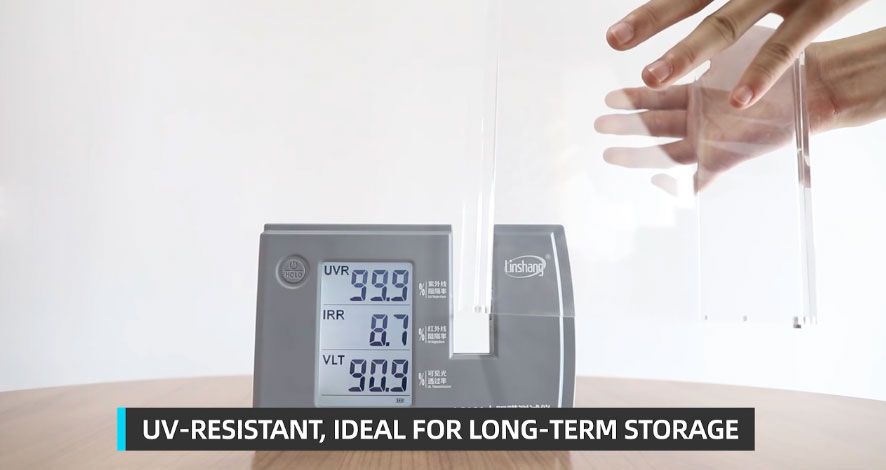
Plain acrylic blocks a small portion of UV naturally, mostly the shorter wavelengths. Premium UV-protective acrylic adds a filter or a coating that blocks a much higher share, often 99 percent or more of UV. Visible light still passes through, so your display stays bright, and colors look natural.
Three things to remember here.
• Plain acrylic gives you a little UV protection, but not enough for light-sensitive items.
• UV-protective acrylic is engineered to stop nearly all harmful UV.
• Both look the same to your eye, so you cannot tell them apart by sight alone. You have to ask the factory.
The short version is simple. A clear acrylic case shows your item well. A UV-protective one shows it well and protects it from fading at the same time.
Side-by-Side Comparison
Quick Comparison
When the Extra Cost Is Worth It
If your collection falls into any of these groups, spending a little more on the UV-protective version usually pays for itself.
• Graded or autographed trading cards.
• Comic books and art prints.
• Signed photos and sports memorabilia.
• Vintage toys with original paint or packaging.
For these items, the value lives in the color and the print. Once that fades, the resale value drops fast. An acrylic display case for collectibles with UV protection keeps the piece looking original for years, which matters whether you plan to keep it or sell it later. Compared to the value of a single graded card, the difference in case price is tiny. In most cases, the protection costs less than one damaged card would cost you to replace.
Does Your Room Lighting Matter?
Many buyers only think about direct sunlight, but indoor lights matter too. Regular bulbs emit a small amount of UV, and display spotlights are often the worst. If your room has strong spotlights aimed at the shelves, light-sensitive items still fade over time. This is easy to overlook, because the room looks perfectly normal to you.
The good news is you do not need to redecorate. You only need to match the case to the light level in that spot. Move the most fragile pieces into protected cases and keep the tough ones on the open shelves, and you get protection where it counts without spending on every single case.
Natural Sunlight Exposure
A case near a window gets the most exposure, especially during the afternoon. Even indirect daylight through glass still carries UV. For any item in this spot, the UV-protective version is the clear choice. If you cannot move the shelf, the next best step is putting the fragile pieces in the protected cases.
Indoor and Museum-Style Lights
Gallery spotlights and LED strips placed close to items are a hidden risk. They look pretty, but they add up over months. If you use accent lighting, pair it with a UV protective acrylic display case so the display stays bright and the item stays safe. A dimmer switch or warm-toned bulbs also cut down on the exposure.
Humidity and Dust
Acrylic cases also protect against dust and moisture. A sealed lid keeps fingerprints and airborne dirt off the surface, which is another reason collectors prefer cases over open shelves. This benefit is the same for both versions, so it does not help you choose. It just explains why a case is worth having at all.
Which Collectibles Really Need UV Protection
Not every collectible needs UV protection. The honest answer depends on the material and the ink, not on how expensive the item is. A cheap printed poster can fade as fast as an expensive graded card, while a solid metal trophy may stay perfect for decades.
Items That Fade Fast, Go UV-Protective
• Trading cards and Pokémon cards.
• Comics, posters, and art prints.
• Autographs and signed photos.
• Anything with dye-based ink or paint.
• Vintage toys kept in their original boxes.
These items are printed or painted, and that color is exactly what UV attacks first. If you display them near a window or under bright lights, choose the UV-protective version without thinking twice.
Items That Are Fine in a Clear Case
• Solid metal, stone, or ceramic pieces.
• Toys that are not color-sensitive.
• Items displayed in a dark or low-light room.
• Budget-friendly displays for everyday pieces.
The rule of thumb is easy. If the value sits in the color or the print, protect it from UV. If the item is light-safe or lives in a dark corner, a clear acrylic display case is a smart budget choice.
3 Quick Questions to Ask Yourself Before You Buy
• Where will this case sit? If it is near a window or under bright lights, choose UV.
• How valuable or light-sensitive is the item? Valuable and light-sensitive means UV.
• How long do you want it to stay perfect? If the answer is years, choose UV.
If you answer all three in favor of protection, the extra cost is an easy decision. If the item is tucked away and light-safe, save the budget. If you are still unsure, buy a sample of each version, put both near your shelf, and judge with your own eyes.
Common Myths About UV-Protective Acrylic
A few myths keep buyers confused, so let us clear them up.
Myth one: all clear acrylic blocks UV. Not true. Standard clear acrylic blocks only a small natural portion, which is rarely enough for printed or inked items.
Myth two: UV acrylic looks yellow or cloudy. Good UV-protective acrylic stays just as clear as the standard version. Cloudy or yellow panels usually mean poor material quality, not UV protection itself.
Myth three: UV acrylic makes my display darker. It filters UV, not visible light. Your display stays bright, and colors still look natural.
Once you know these, you can compare quotes with more confidence instead of guessing from photos.
Buying Tips for Importers and Wholesale Buyers
If you buy in bulk, the choice is also about supply, testing, and shipping. A few practical tips help you avoid problems later.
• Ask for the UV-blocking rate and any test reports, such as SGS or RoHS.
• Request samples before you commit to a large order.
• Confirm custom sizes, lids, mounting, and engraving options.
• Ask about MOQ and whether you can mix clear and UV cases in one order.
• Check how cases are packed so they survive long-distance shipping.
These points matter because a UV-protective panel only helps if the material is consistent across the whole batch. Good factories share test data and show you a sample first, so you can verify the clarity and the UV rate before you scale up. It also helps to ask for the production lead time in writing, so your stock arrives when you need it for a launch or a seasonal push.
It also pays to know how the factory treats the material. Ask whether the UV layer is applied as a coating or mixed into the acrylic, and how that affects the thickness and the price. A good supplier explains this without going silent, and a clear answer tells you a lot about whether they are a real factory or just a middleman.
FAQ

How do I verify the acrylic really blocks UV?
Ask the manufacturer for the UV-blocking rate and a test report, such as SGS, RoHS, or a third-party lab. A real UV-protective acrylic display case should list a clear percentage, usually 99 percent or more. If the seller cannot show a number, treat the claim with caution.
What is your MOQ for custom UV acrylic display cases?
MOQ depends on the size and design. Share your spec sheet, and we will confirm the quantity and lead time before you commit. Flexible MOQ is common for standard sizes, and we can talk about a trial quantity first.
Can I mix clear and UV cases in one order?
Yes. Most manufacturers, including JAYI Acrylic, combine both types in one shipment. This lets you test demand for each without committing to a huge quantity of either.
What if a batch arrives scratched or cloudy?
Reputable factories inspect every panel before packing and replace defective pieces under warranty. Confirm the replacement policy in writing before you order, not after.
How do you pack cases so they do not crack in shipping?
Each case is wrapped with protective film and foam, then boxed in cartons designed for long-distance freight. Ask how the factory packs before you confirm the order, and request photos of the packing line if you want extra confidence.
Can I get a sample before bulk production?
Yes, samples are strongly recommended before bulk. Lead time is typically one to two weeks depending on the design, and the cost is usually credited against your first order. This way, you check the finish, the UV rate, and the fit before you commit.
Conclusion
Choosing between a clear acrylic display case and a UV-protective one does not have to be complicated. Start with the item, not the price. If the value sits in colors, ink, or printed art, spend a little more on UV protection. If the item is light-safe or lives in a dark room, a clear case is a smart budget choice. Both options have a place, and the right one depends on what you are actually protecting.
For importers and wholesalers, working with a factory that makes both types under one roof makes the decision easier. You get honest advice, test-backed materials, and flexible mixed orders, all from a single supplier. That removes the guesswork from a decision that affects how well your stock keeps its value.

That is why JAYI Acrylic has served collectors and distributors for over 20 years.
We custom-build clear and UV-protective acrylic display cases to your exact size, lid, and mounting needs, with factory-direct pricing, flexible MOQ, and reliable packaging for global shipping.
If you are looking for a trusted acrylic display case for collectibles, send us your item size, and we will recommend the right case and provide a quote within one business day.

Cathy Qin works at Jayi Acrylic Industry Limited, focusing on custom acrylic product management and SEO-driven content marketing for B2B wholesale and retail applications. Her work includes designing display solutions, managing customization projects, and optimizing website content to promote Jayi’s high-quality acrylic products across global digital channels.
Post time: Oct-19-2026