
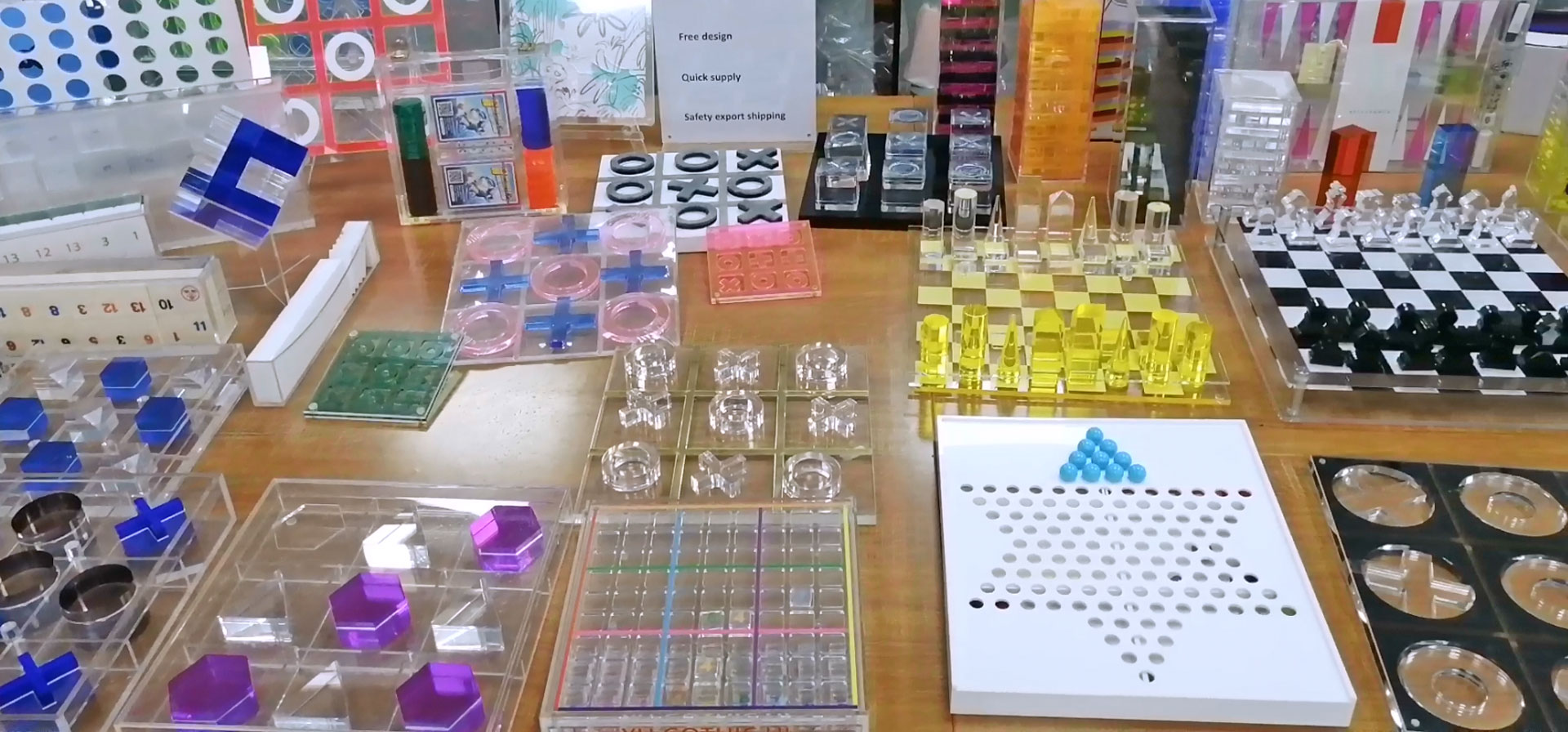
Custom acrylic game products are increasingly popular among board game brands, small business sellers, and creative retailers worldwide. Featuring crystal-clear transparency, sturdy durability, and highly customizable designs, custom acrylic games outperform traditional paper, wood, and plastic game components in texture, appearance, and service life.
However, most first-time buyers face unnecessary setbacks, including mismatched designs, overspent budgets, delayed deliveries, and inconsistent product quality, due to insufficient pre-project preparation. A well-planned preparation process is the key to smooth mass production and high-end finished products.
This complete guide will walk you through all essential pre-production steps for custom acrylic game projects, helping you avoid common mistakes, optimize your customization process, and deliver products that meet market and brand standards.
Confirm Core Project Goals & Application Scenarios
Clarify Product Usage and Target Audience
The first step of custom acrylic game production is defining core usage scenarios and target users, which lays the foundation for all design, material, and process decisions.
Custom acrylic games serve multiple purposes, including commercial retail sales, brand promotional giveaways, corporate team-building supplies, personal collection pieces, and tourist souvenirs. Each scenario requires distinct product positioning.
For retail products targeting ordinary game lovers, the design needs to balance aesthetics, playability, and cost-effectiveness. For high-end customized gifts for enterprise clients, premium texture and brand display effects become the core priorities.
Clearing your target audience helps you avoid over-customization or oversimplification, ensuring the final product fits market demands perfectly.
Define Project Scale and Commercial Positioning
Buyers must confirm project scale and commercial positioning before launching production.
Common project types include small-batch trial customization for market testing, large-batch mass production for official sales, and limited-edition high-end customization for brand promotion.
Large-scale wholesale projects focus on stable batch consistency and controlled costs, suitable for long-term market sales. Small-batch customized projects prioritize unique design and fine craftsmanship to meet niche market needs.
Clear commercial positioning allows you to formulate targeted production plans and avoid resource waste caused by unclear project orientation.
Set Clear Project Expected Outcomes
Quantifiable project expectations are essential for standardized production and inspection.
You need to define clear goals, such as whether the products need to support long-term market sales, whether they require international quality certification, and whether the design files can be reused for secondary batch production.
Clear expected outcomes unify the evaluation standards for you and your supplier, effectively reducing communication barriers and product revision rates during the customization process.
Finalize Detailed Product Design Requirements
Confirm Acrylic Product Types and Structures
Custom acrylic game products cover a wide range of categories, including acrylic chess boards, mahjong sets, backgammon sets, Connect 4, tic tac toe, tumbling tower, and full-set board game accessories.
Different product types have unique structural design requirements. Integrated acrylic game boards require overall flatness and structural stability, while assembled game sets need precise splicing structures for easy assembly and disassembly.
Confirming product types and structural styles in advance can prevent structural defects that affect product use and user experience.
Determine Size, Thickness and Dimensional Tolerance
Specifications are the most basic and critical design details for custom acrylic games. You need to confirm the exact length, width, height, and plate thickness of each component according to usage scenarios.
Thin acrylic plates are ideal for lightweight decorative game accessories, while thick plates are required for frequently used game boards to ensure compression resistance and durability.
Meanwhile, it is necessary to clarify strict dimensional tolerance standards to avoid assembly failures caused by excessive errors, ensuring every component fits perfectly.
Settle Printing, Engraving and Surface Process Requirements
Surface technology determines the visual grade and wear resistance of acrylic game products. Mainstream processes include UV printing, laser engraving, edge polishing, frosted treatment, and matte coating.
UV printing delivers bright, full-color patterns suitable for complex game designs and brand patterns. Laser engraving features high precision and strong wear resistance, perfect for logo, text, and minimalist pattern customization.
Buyers need to confirm process details such as color accuracy, engraving depth, and surface smoothness to ensure uniform product style and exquisite appearance.
Sort Out Material and Quality Standards
Select Qualified Acrylic Material Grades
Material quality directly determines the service life and grade of custom acrylic games.
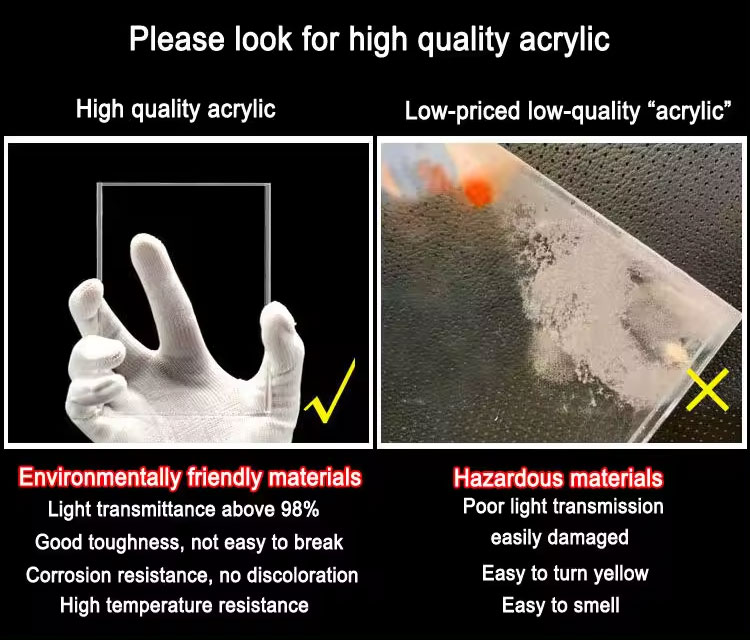
High-quality virgin acrylic materials feature high light transmittance, no bubbles, no impurities, good toughness, and resistance to cracking and yellowing. In contrast, recycled acrylic materials are low-cost but prone to deformation, yellowing, and brittle fracture, which is not suitable for commercial formal products.
For official sales and high-end customized projects, it is recommended to choose high-purity virgin acrylic plates; for low-budget promotional gifts, qualified cost-effective materials can be selected on the premise of basic quality assurance.
Confirm Transparency, Color and Texture Requirements
Unified color and texture standards are key to batch product consistency.
You need to clarify customized requirements such as full transparency, semi-transparency, solid color, and gradient color, and confirm color samples with suppliers before mass production.
This avoids batch color difference, uneven gloss, and inconsistent texture, ensuring all finished products maintain a unified high-grade visual effect.

Define Quality Inspection and Durability Standards
Establish clear quality inspection rules for finished products, covering flatness, edge smoothness, printing firmness, and assembly accuracy.
In addition, formulate durability standards including scratch resistance, anti-yellowing, and drop resistance.
Standardized inspection rules can help suppliers strictly control production quality, reduce defective products, and ensure the games can withstand long-term daily use and storage.
Formulate Budget and Quantity Planning
Calculate Unit Price and Total Project Budget
The unit price of custom acrylic games is affected by material grade, product size, process complexity, and order quantity.
You need to communicate with suppliers to sort out detailed quotation items including material cost, processing cost, printing cost, and labor cost, and calculate the accurate total budget.
Detailed budget sorting can effectively avoid hidden costs and ensure the project is carried out within the planned fund range.
Determine Order Quantity and Batch Production Plan
Reasonable quantity planning can reduce inventory risks and capital pressure.
For new customized products without market verification, it is advisable to arrange small-batch trial production first to test market feedback and product quality.
After confirming market acceptance, carry out large-batch mass production. For mature customized products, formulate batch production plans according to sales volume to balance inventory and supply.
Reserve Contingency Cost for Adjustments
Minor design adjustments, process optimization, and material fine-tuning are inevitable in customization.
It is necessary to reserve 5% to 10% contingency cost for the project to deal with temporary adjustment demands.
This can ensure the project progress is not affected by fund problems and improve the flexibility of project operation.
Prepare Supplier Cooperation & Project Timeline Plan
Screen and Verify Qualified Acrylic Manufacturers
Choosing a reliable manufacturer is the core guarantee of product quality and delivery.
When screening suppliers, prioritize manufacturers with rich acrylic game customization experience, complete production equipment, and formal qualification certificates.
Verify their production capacity, sample making level, and after-sales service through sample evaluation and customer case checking to avoid quality and delivery risks caused by unqualified manufacturers.
Confirm Production Cycle, Sample and Mass Production Time
Clarify clear time nodes for the whole production process, including design confirmation, sample production, sample revision, and mass production.
Normally, custom acrylic game samples take 3 to 7 working days, and mass production takes 15 to 30 working days according to quantity and process difficulty.
Clear time scheduling can effectively avoid project delays and help you arrange subsequent sales and delivery plans in advance.
Arrange Delivery, Logistics and Lead Time Schedule
Finally, confirm product packaging standards, logistics methods, and delivery cycle with suppliers.
Reserve sufficient logistics lead time to cope with unexpected situations such as logistics delays and customs clearance inspections, ensuring the finished products are delivered on schedule and meet market sales and delivery requirements.
FAQ

What design files are required for custom acrylic game products?
Professional acrylic customization manufacturers prefer vector files including AI, CDR, and SVG, which support high-precision printing and laser engraving without blurring.
For simple patterns and pictures, high-resolution PNG and JPG files with more than 300 DPI are also acceptable.
Providing editable layered files can greatly improve production efficiency and reduce revision costs.
How to balance product quality and custom project budget?
The best way to balance quality and budget is classified optimization.
Prioritize high-quality materials and fine processes for core functional and visual parts, and adopt cost-effective conventional processes for non-key decorative parts.
In addition, increasing single-batch order quantity can reduce unit production costs, realizing high-quality and low-cost customization.
What should I do if I need to modify the design after sample confirmation?
Once you need to adjust the design after sample confirmation, suspend mass production immediately and communicate with the supplier in a timely manner.
Minor pattern and color adjustments can be completed with low revision costs, while structural and process changes require re-confirming the quotation and production cycle to avoid unnecessary production losses.
Conclusion
A successful custom acrylic game project relies on systematic and comprehensive pre-project preparation.
From clarifying project goals and refining design standards to optimizing budget planning and confirming supplier schedules, every preparation link determines the final product quality and project benefit.
Adequate pre-production preparation can effectively avoid common problems such as repeated revisions, cost overruns, and delivery delays.
By following this standardized preparation process, buyers can efficiently complete acrylic game customization, create high-quality personalized game products, and gain stable competitiveness in the global customized game market.
JAYI: Custom Acrylic Games Manufacturer and Supplier in China
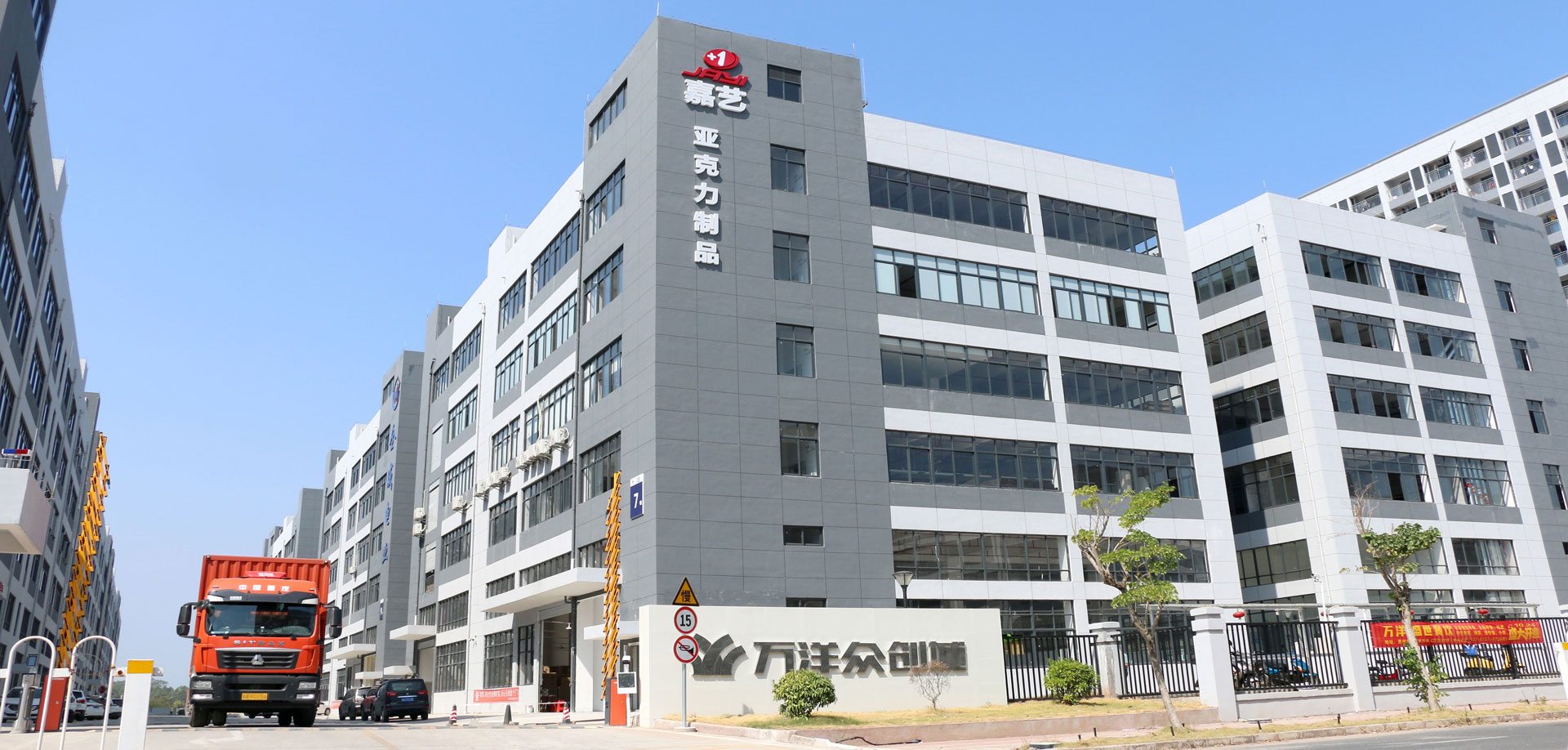
JAYI Acrylic is a professional custom acrylic games manufacturer and supplier based in China, specializing in high-end acrylic board games.
We provide full OEM & ODM services using premium virgin acrylic, precision cutting, polishing, laser engraving, and strong adhesive bonding to ensure crystal clarity, durability, and luxury texture.
Equipped with advanced production lines and strict quality control, we offer fast sample making, stable mass production, and on-time delivery for global brands, wholesalers, and retailers.
Committed to superior quality and flexible customization, JAYI is your reliable long-term partner for premium acrylic game solutions.

Cathy Qin
Cathy Qin works at Jayi Acrylic Industry Limited, focusing on custom acrylic game product management and SEO-driven content marketing for B2B wholesale and retail applications. Her work includes designing display solutions, managing customization projects, and optimizing website content to promote Jayi’s high-quality acrylic products across global digital channels.
Post time: May-09-2026