
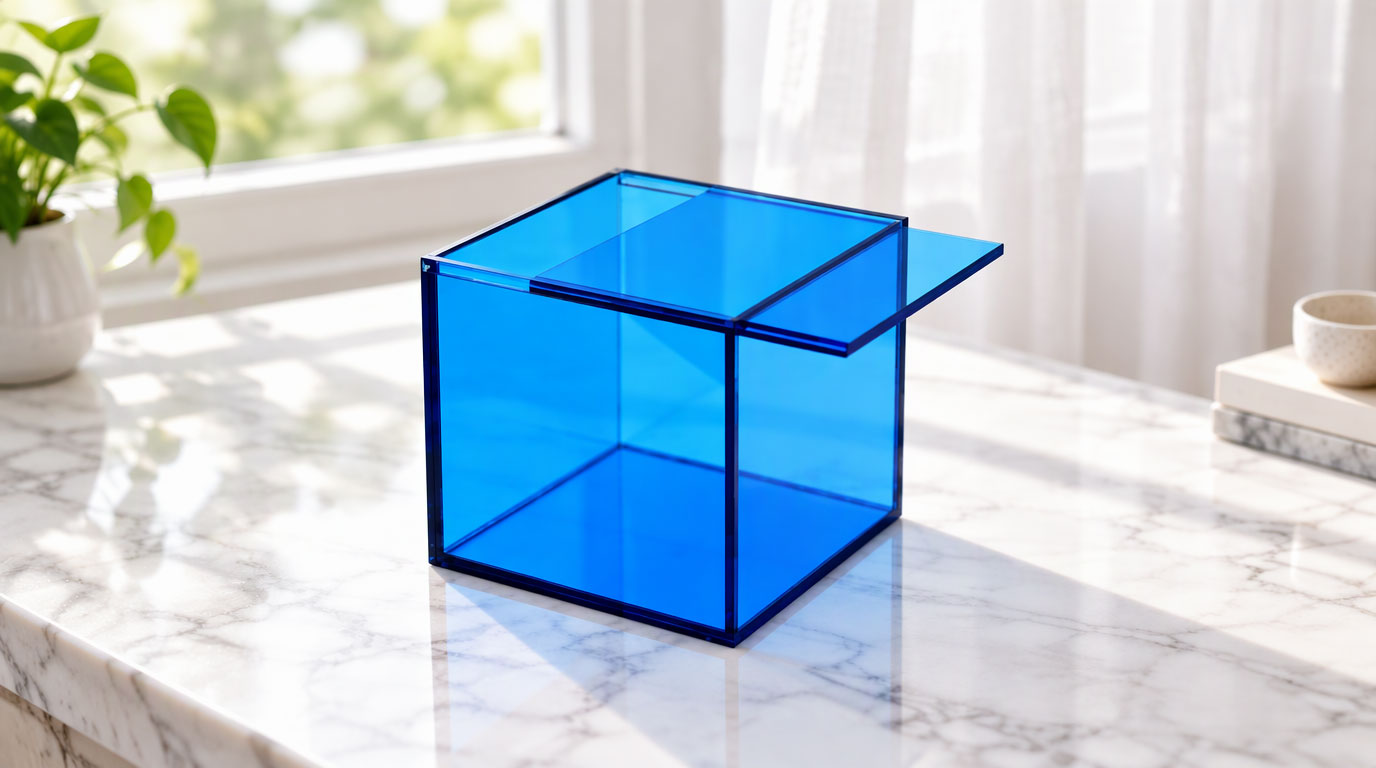
Choose the lid by how the acrylic box gets opened, not by how it looks in a supplier’s photo. For shelf display and one-off gifting, a 3–5 mm slip-on lid is the cheapest, cleanest option. If staff or shoppers open the box dozens of times a day, a hinged or magnetic lid is worth the extra cost because it stops the cover from being dropped, chipped, or lost. Everything else — size, thickness, edge polish, printing, dust seal — is refinement on top of that first decision.
This guide covers the lid types factories really produce, the size and thickness rules that stop a lid from sticking or sliding, what pushes the price up, and how to judge a sample before you commit to a wholesale run. JAYI Acrylic makes custom acrylic boxes with lids in-house, so the notes below are based on production experience rather than a spec sheet.
Why the Lid Design Matters for Your Custom Acrylic Box with Lid
Most buyers spend weeks on box dimensions and settle on the lid at the last minute. That is backwards. The lid is the part your customer touches first and last, the part that decides whether the box survives a store fixture, and the part that quietly moves your unit cost up or down.
Protection and Product Display Balance for Retail Use
A lid has two jobs that pull in opposite directions: keeping dust, fingerprints, and handling marks off the product, and letting the product be seen. A full clear cover protects best but adds a reflective layer that dulls the goods underneath. A raised frame lid, or a cover with a smaller viewing panel, cuts glare and gives the display some breathing room — usually the look buyers ask for on premium retail items.
How Lid Style Impacts Usability and Customer Experience
Ask who opens the box and how often. A slip-on lid is fine when the box is opened once, at the counter, by a salesperson with clean hands. It becomes a problem in a store where shoppers pick the box up, lift the lid, and put it down somewhere else. Hinged and magnetic lids keep the cover attached, feel deliberate in the hand, and reduce the “cheap plastic” impression that a loose, rattling cover creates.
Common Lid Types for Custom Acrylic Box with Lid
These five styles cover almost every inquiry we get, from a Pokémon card display box to a candy or cosmetics storage.
|
Lid type
|
How it opens
|
Best for
|
Typical thickness
|
|---|---|---|---|
|
Slip-on (press fit)
|
Lift straight up
|
Display, gifting, storage
|
3–5 mm
|
|
Hinged
|
Swing open on a pin
|
Repeat-use retail, sampling
|
4–6 mm
|
|
Magnetic
|
Lift or swing, magnet hold
|
Premium retail, collectibles
|
4–8 mm
|
|
Screw-top / buckle
|
Twist or snap lock
|
Shipping, samples, valuables
|
5–10 mm
|
|
Raised frame
|
Lift frame, open top
|
Museum-style display, trophies
|
5–8 mm
|
Key Factors to Select the Best Custom Acrylic Box Lid
Once you know the opening style, the remaining choices are mechanical. Get these five right, and the sample usually passes on the first round.
Your Application: Retail Display, Storage, or Collectible Packaging
Retail display values look and quick access, so a clear slip-on or hinged lid wins. Storage and shipping value protection, so a thicker cover with a seal or buckle is the safer buy. Collectible packaging sits in between and usually justifies a magnetic lid: the box is part of the product, and buyers keep it.
Size, Thickness and Specification Matching Between Box and Lid
Lid size is not the same as box size. A press-fit cover needs internal dimensions matched to the box’s outer dimensions with a controlled clearance, and that clearance changes with the material thickness.
|
Box footprint
|
Suggested lid thickness
|
Rule of thumb
|
|---|---|---|
|
Under 150 mm
|
3 mm
|
Light cover; keep clearance tight so it does not slide
|
|
150–300 mm
|
4–5 mm
|
Balance of rigidity and weight; ask for edge polish
|
|
300–500 mm
|
5–6 mm
|
Thicker cover resists bowing across the span
|
|
Over 500 mm
|
8–10 mm
|
Consider ribs or a two-part frame to stop flex
|
Always confirm the internal and external dimensions in writing, with a tolerance figure, before production. “Same as sample” is not a specification.
Material Grade, Edge Finish and Transparency Requirements
Cast acrylic is clearer and machines more cleanly than extruded sheet, and it holds a flame-polished edge without crazing. Extruded is cheaper and fine for storage boxes where clarity is not the selling point. Ask which grade is being quoted, and look at the edge in the sample: a dull, saw-marked edge makes even good material look cheap.
Security Needs: Dustproof, Anti-Theft or Repeated Opening
If the box sits on an open shelf, decide early whether it needs a latch, a tamper-evident seal, or a lockable clasp. Retrofitting security onto a finished lid design usually means a new mould or a new hand assembly, which resets your timeline.
Branding Options: Engraving, UV Printing on Acrylic Lids
Laser engraving gives a frosted, permanent mark that suits premium and low-volume work. UV printing gives full colour and works on curved or small areas but needs a flat, well-supported surface. Both are usually applied to the lid rather than the base, because the lid is the face of the box on a shelf.
Cost & Pricing Guide for Custom Acrylic Box with Lid
Price questions are the hardest to answer in a blog, because two boxes of the same size can differ by three times once thickness, finish, and hardware change. The structure below is what actually drives the number.
Which Lid Types Are Budget-Friendly for Wholesale Orders
Slip-on covers and simple raised frames are the cheapest to run at volume: fewer parts, less hand assembly, less breakage in packing. Hinged and magnetic lids cost more per unit but often reduce returns and reorders of replacement covers, so the total cost of ownership can still work out lower for a busy retail account.
What Adds Extra Cost to Custom Acrylic Box Lid Fabrication
|
Cost driver
|
Why it matters
|
|---|---|
|
Thickness increase
|
Material cost rises faster than labour; going from 3 mm to 5 mm is not a linear jump
|
|
Flame-polished edges
|
Hand work per piece, and a higher reject rate on thin sheet
|
|
Hardware (hinges, magnets, buckles)
|
Component cost plus assembly time plus quality checks
|
|
Printing or engraving
|
Setup charge per design, then per-unit run cost
|
|
Custom size or new tooling
|
One-off programming and setup, amortised across the order
|
|
Low quantity
|
Setup is spread over fewer units, so unit price climbs
|
Price Differences Between Supplier and Direct Manufacturer
A trading supplier quotes a single number and hides the breakdown. A direct manufacturer can show you where the cost sits — material, machining, hand assembly, packing — which is what you need when you are negotiating a target price or trimming a feature to hit a budget. For repeat programs, going direct also removes a layer between you and the factory when something goes wrong.
Ask for a line-item quote rather than a single figure. JAYI Acrylic quotes lid and base separately so you can see which part is driving cost, and you can request it from the Custom Acrylic Box customization page.
Tips for Working With a Custom Acrylic Box with Lid Manufacturer
The difference between a smooth program and a painful one is usually the sample stage. These four checks catch most problems while they are still cheap to fix.
Confirm Tolerance and Fit Before Mass Production
Put the tolerance in the drawing: lid internal dimension versus box external dimension, and the acceptable range. Then test the fit with the actual production material, not a machined prototype, because sheet thickness varies slightly from batch to batch.
Sample Inspection Checklist for Acrylic Lid Fit and Closure
• Fit: lid goes on with light, even pressure and does not rock.
• Release: lid lifts cleanly without a jerk or a vacuum feel.
• Edge: polished, no sharp corners, no saw marks or crazing.
• Clarity: no bubbles, flow lines, or haze in the viewing area.
• Hardware: hinge aligned, magnet seated flush, no glue visible.
• Transit: pack one sample in the real carton and drop it from counter height.
Lead Time Considerations for Complex Custom Lid Designs
Simple slip-on lids usually move quickly once dimensions are approved. Hinged, magnetic, and screw-top designs need extra steps — drilling, magnet cure time, thread checks — plus a pre-production sample you should sign off on in person or on video. Build that review into your launch date rather than discovering it in the shipping schedule.
Compliance Check: SGS, REACH Requirements for Retail Merchandise
If the box goes into the EU or is sold as consumer packaging, ask for material documentation and, where required, SGS or REACH test reports before the run, not after. Acrylic itself is generally straightforward, but adhesives, printed inks and any metal hardware need their own paperwork.
Frequently Asked Questions

Can I mix different lid styles for the same acrylic box base?
Yes. One base can usually take a slip-on and a magnetic lid if the internal dimensions are matched to both. Plan this at the design stage, because each lid style needs its own clearance and, for magnets, its own material thickness.
What is the minimum order for custom acrylic box with lid wholesale?
It depends on the lid style more than the box size. Simple slip-on designs run at lower quantities than hinged or screw-top lids, where setup and hand assembly dominate. Ask for the MOQ for your exact size and finish rather than a general number.
How long does production take for custom-sized acrylic lids?
Allow a sample round first, then production. Straightforward slip-on lids move fastest; hinged, magnetic and threaded lids need extra machining and cure time. Confirm the schedule with the sample date, not just the production date.
Are magnetic acrylic lids durable for long-term retail use?
Yes, if the magnets are properly seated and the material is thick enough to hold them. The common failure is the adhesive, not the magnet, so ask for a heat and drop test on the sample before approving the run.
Does a thicker lid always mean a better box?
No. A thicker sheet adds rigidity but also weight, cost, and shipping volume. Match thickness to the span and the handling the box will get — 3 mm is often the right answer for a small display box, and 8 mm is a waste of money.
Final Checklist Before Placing Your Custom Acrylic Box with Lid Order
Run through this list before you send a purchase order. Each line maps to a decision above, and each one has caused a re-run for someone.
• Opening style chosen and matched to how often the box is opened.
• Lid thickness set against the box footprint, not picked by habit.
• Internal and external dimensions written down with a tolerance figure.
• Material grade named: cast or extruded.
• Edge finish specified: polished, flame-polished or matte.
• Branding method chosen and artwork supplied in the right file format.
• Sample approved on fit, release, clarity, and a packed drop test.
• Compliance documents requested for the destination market.
• Unit price broken down by material, machining, assembly, and packing.
Get those nine points confirmed and the lid stops being the risky part of the project. JAYI Acrylic can quote a slip-on and a magnetic option for the same box so you can compare cost against the retail experience you want, and the fastest way to start is to send your dimensions through the Custom Acrylic Box with Lid page.

Cathy Qin works at Jayi Acrylic Industry Limited, focusing on custom acrylic product management and SEO-driven content marketing for B2B wholesale and retail applications. Her work includes designing display solutions, managing customization projects, and optimizing website content to promote Jayi’s high-quality acrylic products across global digital channels.