
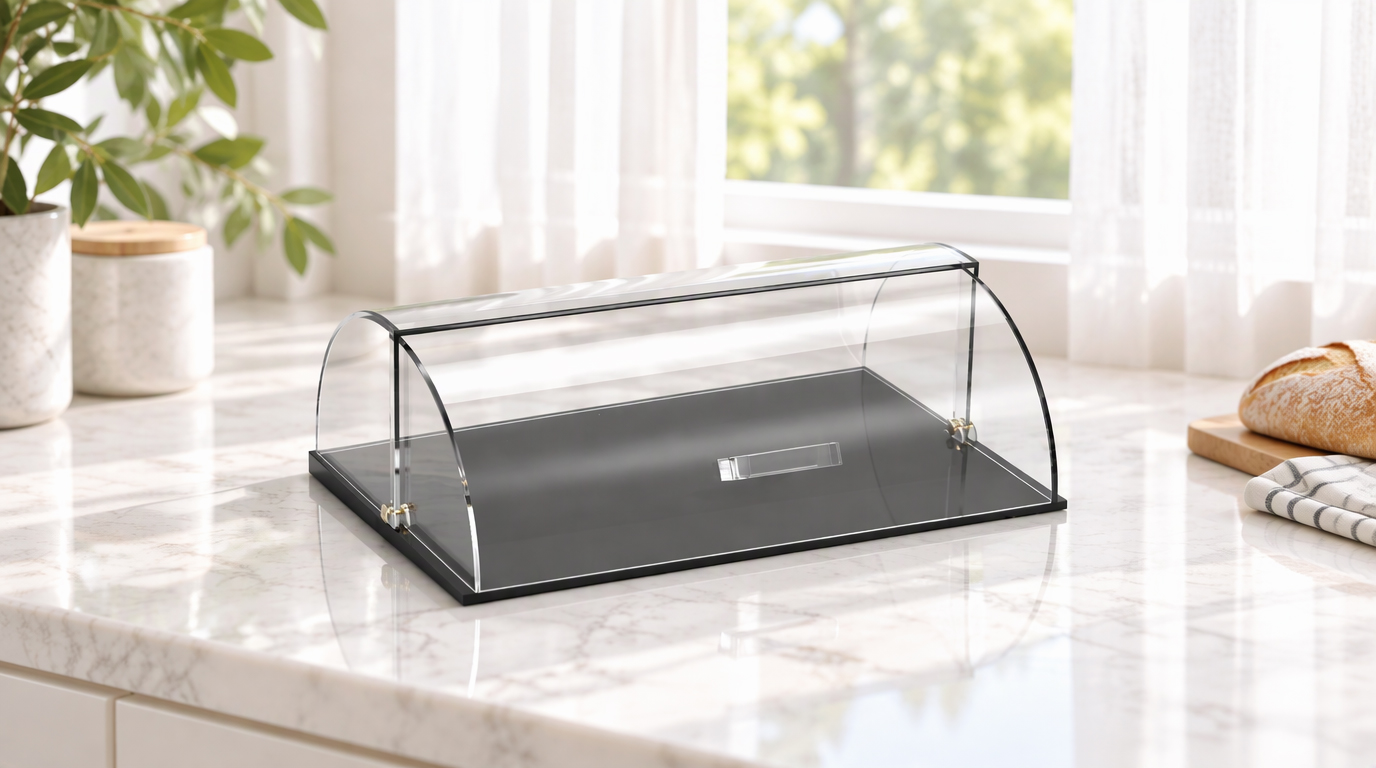
An acrylic bakery display case lets customers see your pastries clearly, keeps them clean and fresh, and costs less than glass while standing up to busy shop traffic. It turns everyday breads, croissants, tarts, and cakes into visible, easy-to-pick products at your counter.
In this guide, we look at how real bakeries put these cases to work: the most common case styles, how to arrange pastries inside, how acrylic compares with glass and plastic, and what to check before you order. Whether you run a neighborhood bakery, a café with a pastry corner, or an artisan cake shop, the goal is the same: make every item look fresh and easy to buy.
Why Acrylic Bakery Display Cases Are a Top Pick for Modern Bakeries
Crystal-Clear Visibility to Highlight Fresh Pastries
Acrylic transmits light almost as well as glass, so your croissants' golden crust and the fruit on top of tarts show up true to color. A clear front lets customers browse before they reach the counter, which usually means more impulse picks and fewer questions about what is inside.
Lightweight, Durable Build for High-Traffic Countertops
Acrylic weighs roughly half as much as glass of the same thickness, making a countertop case easier to place, reposition, and refill. It is also far more impact-resistant, so a bumped tray or an accidental knock is less likely to crack a panel. That matters in small bakeries where staff and customers share tight space.
Food-Safe Acrylic Built for Direct Food Contact
Food-grade acrylic can be used in direct contact with baked goods, provided the sheet and adhesives meet local food-contact requirements. Reputable suppliers can share compliance documentation such as food-contact test reports. Always confirm the grade before you place food directly on the base.
Low Maintenance and Easy Sanitization for Bakery Environments
A smooth acrylic surface wipes down quickly, which fits the daily cleaning rhythm of a bakery. Because panels are molded and bonded rather than sealed with many small joints, there are fewer hard-to-reach gaps where crumbs and grease can collect. Regular wiping keeps the case looking fresh all day.
Common Types of Bakery Countertop Display Cases for Pastry Merchandising
A bakery countertop display case does not have one fixed shape. The right type depends on what you sell, how customers serve themselves, and how deep your counter is. Most shops choose one of the four layouts below.
|
Case Type
|
Best For
|
Typical Features
|
|---|---|---|
|
Slanted front countertop case
|
Croissants, danishes, rolls, cookies
|
Angled front lifts the back row so customers see every tray; hinged back or top lid for staff refill.
|
|
Stackable tiered pastry stands
|
Cookies, muffins, small buns, self-serve picks
|
Multiple levels use vertical counter space; often open at the front for quick hand-pick service.
|
|
Enclosed dustproof case
|
Cakes, tarts, decorated pastries, cream items
|
Full enclosure with lid and side panels to block dust, insects, and accidental touching; often paired with a sneeze guard.
|
|
Open-style acrylic food riser
|
Wrapping bread, baguettes, packaged items
|
Low barrier with raised tiers to lift products off the counter; keeps goods visible without blocking the service line.
|
Many bakeries combine two: an enclosed case for cream cakes near the register, and open tiered stands for daily breads by the door. If your counter has an unusual length or depth, a made-to-order Custom Acrylic Counter Displays piece can be cut to fit the exact footprint instead of forcing a standard size onto your layout.
Practical Ways Bakeries Arrange Pastries Inside a Pastry Display Case
Once the case is on the counter, layout decides whether your pastry display case actually sells. The most effective arrangements are simple to scan from the front and easy for staff to refill without disturbing the whole case.
Color and Category Grouping to Guide Customer Eyes
Group items by type rather than mixing everything: breads on one side, sweet pastries in the middle, cookies and muffins on the other. Matching colors next to each other create natural blocks that look organized, and customers can move from one category to the next without hunting.
Tiered Layout to Maximize Limited Counter Space
Put taller or higher-priced items on the back tier so they are not hidden behind the front row. Place fast-moving, lower-priced picks within easy reach in the front. This keeps the case full-looking even near closing time and helps you show more SKUs on a small counter.
Separate Zones for Allergen-Specific Pastries
Use clear acrylic dividers to separate nut-containing pastries, gluten-free items, and regular baked goods. A physical divider is clearer than a paper note and reduces the risk of cross-contact between items. Label each zone directly on the case frame or on a small card holder.
Signage Integration for Pricing and Labels
Most cases can carry small label slots, card holders, or printed price strips along the front edge. Clear pricing removes friction at the register and lets customers decide before they order. Consistent labeling also makes the display look more professional than loose stickers on the acrylic.
Key Benefits of Acrylic Food Display Compared to Glass and Plastic Alternatives
When buyers compare materials for an acrylic food display, the usual alternatives are glass and cheaper general-purpose plastic. The table below sums up where acrylic wins and where it has trade-offs.
|
Factor
|
Acrylic
|
Glass
|
Regular Plastic
|
|---|---|---|---|
|
Clarity
|
Very clear, close to glass
|
Excellent clarity
|
Often cloudy or hazy
|
|
Impact resistance
|
High; flexes instead of shattering
|
Low; breaks and shards
|
Moderate, but can bend
|
|
Weight
|
Light, easy to move
|
Heavy, fixed placement
|
Light
|
|
Cost
|
Lower than glass, higher than thin plastic
|
Higher material and shipping cost
|
Lowest upfront cost
|
|
Scratch resistance
|
Moderate; needs soft cloths and the right cleaner
|
High scratch resistance
|
Low; scratches easily
|
|
Custom shaping
|
Easy to cut, bend, print, and brand
|
Limited shaping, expensive fabrication
|
Moldable but weaker finish
|
For a busy retail counter, acrylic usually offers the best balance: it looks nearly as clear as glass, survives daily bumps, and can be shaped to your counter.
Customization Options for Your Acrylic Bakery Countertop Display Case
Standard sizes work for many shops, but custom cases let you match the display to your counter depth, product mix, and branding. Most suppliers can adjust the following elements without changing the core acrylic construction.
• Custom dimensions: Width, depth, and height cut to your counter footprint, including narrow cases for tight corners or long cases for wide service counters.
• Functional add-ons: Hinged or sliding lids, rear staff access, sneeze guards, internal dividers, tiered shelves, and utensil ledges.
• Branding: Laser-engraved logos or UV-printed graphics on the front panel or base strip, in colors that match your shop identity.
• Finish choices: Clear acrylic for maximum visibility, frosted or matte panels for side accents, and colored bases to tie into your interior design.
Cleaning and Best Practices to Extend the Life of Acrylic Pastry Displays
Safe Cleaning Solutions That Won't Scratch Acrylic
Use a soft microfiber cloth and mild dish soap diluted in warm water, or a cleaner labeled safe for acrylic. Avoid window sprays with ammonia, alcohol-heavy formulas, or abrasive scrub pads. Wipe in light strokes, and rinse the cloth often so crumbs do not grind into the surface.
Daily Sanitation Routine for Food Display Compliance
Empty the case at closing, remove crumbs and residue, wipe all panels and shelves, and let the air dry before restocking. Keep a written cleaning log so health inspections can see the routine. Between services, spot-wipe sticky patches around cream and fruit pastries.
Common Mistakes That Cloud or Crack Acrylic
Do not stack heavy items on top of a lid, and do not lean sharp tools against the panels. Never use paper towels that leave fine scratches, and do not place the case directly under a heat lamp or near an oven vent, since prolonged heat can warp acrylic.
How to Select the Right Acrylic Bakery Display Case for Your Shop
Before you request a quote, walk through this short checklist so the supplier can send you a case that fits the real shop, not just a generic catalog model.
1. Measure your counter: Record width, depth, and the space customers and staff need to reach the case.
2. Match style to your product mix: Enclosed for cream and decorated goods, open tiered for breads and cookies, risers for packaged items.
3. Confirm food-grade material: Ask for food-contact compliance documentation and confirm the adhesive and finish are also food-safe.
4. Balance budget, lead time, and branding: Standard cases ship faster and cost less; custom sizes and printed logos add lead time but improve the in-store look.
How Different Bakery Formats Use Acrylic Countertop Displays
The same basic case design works across bakery formats, but each group emphasizes a different goal. The patterns below reflect common merchandising practice rather than a single measured case study.
Small Neighborhood Bakeries Boosting Impulse Purchases
Local bakeries often place a compact slanted case near the register, so customers waiting to pay see cookies, muffins, and small pastries. A clear case makes these add-on items easy to notice, and the small footprint leaves room for staff to pack orders.
Café-Bakery Combos Streamlining Self-Service Stations
Cafés that let customers pick their own pastry use open tiered stands with low side guards. The layout keeps breads and pastries visible while protecting them from contact, and staff restock from the back without stepping into the customer line.
Artisan Cake Shops Elevating Premium Product Presentation
Cake shops favor enclosed cases with clean lines, neutral bases, and branded front strips. The enclosure protects decorated cakes and tarts, and the clear panels put texture, icing detail, and fresh fruit on display as the main selling point.
Frequently Asked Questions

Is acrylic safe for direct contact with baked food?
Yes, when it is food-grade acrylic. Bakery-grade PMMA can be placed in direct contact with baked goods, but confirm the sheet grade, adhesive, and finish meet your local food-contact rules. Ask your supplier for food-contact test reports before ordering. Avoid cases made from general-purpose acrylic meant only for dry goods or signage.
Can I order a custom-size acrylic pastry display case?
Yes, custom sizes are standard for acrylic displays. Suppliers can cut the case to your counter width, depth, and height, and add dividers, lids, sneeze guards, or logo printing. Measure the counter and list your product types before requesting a quote, so the inside shelves match what you actually sell.
How do I keep acrylic from scratching or turning cloudy?
Clean with a soft microfiber cloth and mild soap water, and skip harsh sprays. Avoid ammonia, alcohol-heavy cleaners, and abrasive pads, which leave fine marks that turn the panel cloudy over time. Wipe gently, lift crumbs instead of grinding them, and keep sharp tools away from the panels.
Are enclosed acrylic display cases dust- and bug-proof?
A fully enclosed case blocks most dust and insects, though no case is airtight. Lid seals and tight panel joints reduce exposure, while a sneeze guard adds another layer against customer contact. Keep lids closed between refills, and check that hinges fit snugly against the frame.
Conclusion
An acrylic bakery display case does more than hold pastries: it shows off freshness, protects food, and guides customers toward items they might otherwise miss. The right case balances visibility, layout, food safety, and the look of your shop, and custom sizing lets you fit that display to a real counter instead of adapting your layout to a catalog piece.
If you are comparing suppliers for a bakery countertop display case, JAYI Acrylic works is a custom acrylic display case manufacturer with over 20 years of experience in retail and food display fabrication. We can build counter cases, tiered stands, dividers, and branded pieces to your dimensions, with food-grade material support and compliance documentation available on request. Tell us your counter size, product mix, and logo needs, and we can recommend the right acrylic food display setup for your shop.

Cathy Qin works at Jayi Acrylic Industry Limited, focusing on custom acrylic product management and SEO-driven content marketing for B2B wholesale and retail applications. Her work includes designing display solutions, managing customization projects, and optimizing website content to promote Jayi’s high-quality acrylic products across global digital channels.