
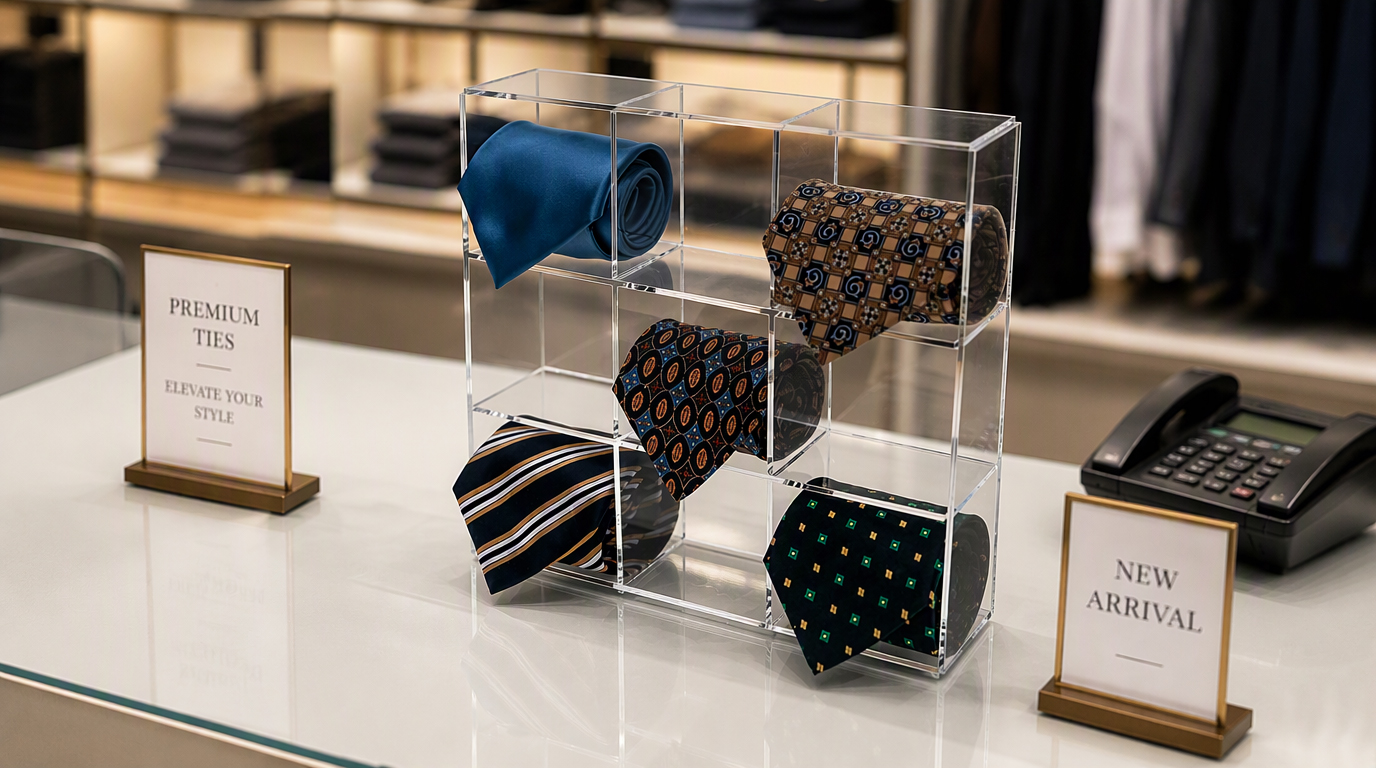
If you’re a retail store owner, brand marketer, or shop manager planning in-store upgrades, you’ve probably wondered about the real custom acrylic counter display price range.
Many business owners hesitate to order custom displays due to unclear pricing, fearing overspending or poor value for money. Unlike generic ready-made racks, custom acrylic displays fit your products, brand style, and counter space perfectly.
This guide breaks down every pricing detail, key influencing factors, hidden fees, and practical money-saving tips to help you budget accurately.
In this guide, you’ll learn the core essentials:
• Exact 2026 market price ranges for single and bulk custom acrylic counter display orders
• Key material, design, and craft factors that change acrylic display cost greatly
• Hidden extra fees most buyers overlook during quotation
• Real pricing cases for common retail industry scenarios
• Pro tips to cut costs without lowering display quality and durability
Average Cost of Custom Acrylic Counter Displays (2026 Market Rates)
Custom acrylic countertop display pricing is not fixed. It mainly depends on the degree, materials, and order quantity. Below are the standard 2026 market price tiers for different types of custom acrylic displays, covering budget, standard, and premium options for your quick reference.
Low-End Budget Custom Displays (Basic Models)
Budget acrylic display stands suit small shops, pop-up stores, and temporary promotional events. They use standard transparent acrylic, simple cutting, and no complex printing or structures. The price for a single piece usually ranges from $15 to $40. These basic custom retail display stands focus on practicality, with simple edge polishing and a single-layer structure, meeting basic product placement needs perfectly.
Mid-Range Standard Custom Displays (Most Popular)
This is the most chosen option for most physical retail brands. Priced between $40 and $120 per piece, these displays use high-quality virgin acrylic, complete edge polishing, and support simple logo engraving or UV printing. Most cosmetic, accessory, and small electronic product stores pick this tier. It balances appearance, durability, and cost, offering the best cost performance for long-term store use.
High-End Premium Custom Displays (Commercial Grade)
Premium commercial-grade displays are for high-end boutiques, brand flagship stores, and luxury product displays. Priced from $120 to $300+, they support multi-layer structures, special-shaped cutting, full-color printing, and matte or frosted surface treatment. Some models add LED lights and rotating bases to enhance display effects. These custom retail display stands focus on brand texture and high-end visual presentation.
Core Factors That Determine Custom Acrylic Counter Display Prices
Many details affect the final quote of a custom acrylic counter display. The following five factors are the core standards manufacturers use for pricing, and adjusting these details can flexibly control your overall budget.
Acrylic Material Quality & Thickness
Material is the foundation of pricing, and acrylic quality varies hugely in the market. Virgin acrylic is pure, transparent, not easy to turn yellow, and has a smooth texture, with a higher cost. Recycled acrylic has slight impurities and is prone to yellowing after long-term use, with a much lower price.
Besides material purity, thickness also affects costs. Thin 2mm–3mm acrylic is light and cheap, suitable for lightweight product display. 5mm–8mm thick acrylic is sturdy and wear-resistant, ideal for daily retail use. Thicker 10mm+ acrylic is used for high-end displays, with a significantly increased unit material cost. Colored, matte, and frosted acrylic also has a 10%–20% premium over ordinary transparent materials.

Custom Size & Structural Complexity
Standard fixed-size displays have mature production processes and low costs. Once you customize exclusive sizes according to your counter space and product size, the production difficulty increases. Irregular sizes require independent cutting and debugging, raising labor and machine costs.
Structural design is another key point. Simple single-layer flat displays are the cheapest. Multi-layer partitions, detachable assembly, and nested structures require precise cutting and seamless bonding, increasing production time and cost. Displays with special-shaped arcs and hollow-out designs also have higher prices than regular square and rectangular models.
Custom Printing & Branding Finishes
Plain transparent acrylic displays have no extra branding cost. To highlight brand recognition, most merchants will add logos, slogans, or product patterns, and different printing processes have different prices. Laser engraving is the most affordable, with clear and wear-resistant effects, suitable for simple logo customization.
Silk screen printing is suitable for single-color large-area patterns, with moderate cost. UV full-color printing can present gradient colors and delicate patterns, with the highest printing cost. Full-wrap printing and embossing branding will further increase the process fee. The more complex the branding effect, the higher the customization cost of the custom retail display stand.
Additional Functional Customizations
Basic display stands only support product placement, while functional customization can improve practicality and display effect but also brings extra costs. Common value-added functions include built-in LED soft lights, electric rotating bases, lockable storage cabinets, anti-slip bottom pads, and adjustable shelf heights.
LED lighting and rotating structures involve circuit installation and accessory matching, with the highest functional cost. Anti-slip and adjustable structures have low added costs but greatly improve the usability of the display stand. You can choose matching functions according to product attributes to avoid unnecessary cost waste.
Manufacturing & Craft Requirements
Different production crafts bring different quality and price gaps. Ordinary machine cutting has rough edges and low cost, suitable for temporary use. Fine laser cutting + manual polishing makes edges smooth and burr-free, with higher craft costs.
Seamless bonding technology can eliminate glue traces, making the overall display more integrated and high-end, which is a high-grade craft for premium displays. Ordinary glue bonding is cheap but easy to leave traces and affects the appearance. Higher craft requirements mean more manual labor and time costs, directly raising the final acrylic display cost.
Extra Hidden Costs You Need to Consider
Many buyers only focus on the unit price of the display stand but ignore hidden fees, leading to going over budget in the final settlement. Here are all the hidden costs that need to be included in the budget assessment.
Custom Design & Artwork Fee
If you have complete design drawings, most manufacturers waive design fees. If you only have ideas and need the factory to design exclusive styles and typesetting according to your needs, you need to pay a design fee of $30–$100. Regular cooperative manufacturers or large-batch orders can usually get free design services.
Mold Opening Fee for Special-Shaped Displays
Conventional square and rectangular displays do not need a mold opening. Special-shaped, curved, and fully customized irregular displays need to open exclusive molds, with a one-time mold fee of $80–$200. The good news is that the mold can be reused for subsequent reorders, so the average cost will be greatly reduced for repeated batch orders.
Shipping & Packaging Cost
Acrylic products are fragile, so they need professional foam, carton, and wooden frame packaging to avoid damage during transportation. Custom packaging and long-distance logistics will incur extra fees. Bulk orders have lower average shipping costs per piece, while single-piece orders have a relatively high packaging and logistics proportion.
Sample Production Fee
If you need to confirm quality, color, and effect in advance, you can apply for sample production. The sample fee is usually 1.5–2 times the unit price of the formal product. Most manufacturers will deduct the sample fee from subsequent bulk orders, which can effectively avoid large-scale quality problems.
After-sales & Replacement Cost
Individual damaged parts during transportation or use need replacement and maintenance. Reputable manufacturers provide free after-sales maintenance within the warranty period, while small workshops charge extra repair fees. Choosing formal factories can save on long-term after-sales hidden costs.
Real Custom Acrylic Display Price Cases (Common Retail Scenarios)
To help you estimate the budget more intuitively, we sorted out the actual pricing of custom acrylic counter displays in four common retail scenarios, combining real manufacturer quotation standards.
|
Retail Scenario
|
Display Features
|
Single Unit Price Range
|
Applicable Store Type
|
|---|---|---|---|
|
Cosmetic Counter Display
|
Multi-layer partition, logo printing, frosted surface
|
$50–$150
|
Beauty stores, cosmetic specialty stores
|
|
Electronic Product Display
|
Anti-slip design, fixed card slot, transparent high-definition
|
$45–$120
|
Digital stores, accessory shops
|
|
Snack & Beverage Display
|
Thickened material, waterproof and dustproof, simple structure
|
$30–$80
|
Supermarkets, convenience stores
|
|
Jewelry High-End Display
|
LED light, rotating base, seamless bonding
|
$130–$300+
|
Jewelry boutiques, luxury stores
|
How to Reduce Custom Acrylic Display Costs Without Sacrificing Quality
Many merchants want to save costs but worry about low-quality displays affecting store image. The following practical methods can effectively reduce the acrylic display cost while ensuring display effect and durability.
Optimize design structure: Abandon overly complex special-shaped structures and redundant functions. Simplify the design on the premise of meeting display needs, which can greatly reduce process and production time costs.
Match reasonable material thickness: Do not blindly pursue ultra-thick materials. Light products can use 3mm–5mm acrylic, and only heavy products need 8mm+ thick plates to avoid material waste.
Adopt bulk ordering: Unify store display styles and place bulk orders. Wholesale discounts can effectively reduce the unit price and average shipping cost of custom acrylic counter displays.
Reduce unnecessary customization: Choose laser engraving with high cost performance for simple brand logos, and avoid expensive full-color printing and embossing if not necessary.
Cooperate with direct manufacturers: Cut off middle agents and cooperate with acrylic display factories directly to get factory-direct prices and free design and after-sales services.
FAQ

How long is the service life of custom acrylic counter displays?
High-quality virgin acrylic displays can be used for 3–5 years in indoor retail environments. They are resistant to oxidation and yellowing. Recycled materials may turn yellow and deform within 1–2 years. Daily clean maintenance can further extend the service life of custom retail display stands.
Can custom acrylic displays be reused and modified?
Most detachable acrylic display structures support disassembly and repeated use. If you need to update logos or patterns, you can reprint and replace local parts without replacing the whole display stand, which saves long-term replacement costs for merchants.
Are acrylic displays better than wood and PVC display stands?
Acrylic has higher transparency, better texture, and stronger wear resistance than PVC. Compared with wood displays, it is waterproof, moisture-proof, not prone to mildew, and easier to clean. It has higher cost performance in long-term retail scenarios.
Can I get pre-production samples for bulk orders?
Formal manufacturers support sample confirmation before bulk production. You can verify the material, craftsmanship, color, and size effect first and start mass production only after confirmation, which effectively avoids large-scale quality errors and order losses.
Conclusion
The price of a custom acrylic countertop display is flexible, affected by material, size, craftsmanship, branding, and functional customization.
The core of budget control is to match the most suitable configuration to your actual retail scenario, instead of blindly pursuing high-end configurations or overly low-cost, inferior products.
Understanding hidden fees and bulk pricing rules can help you maximize cost performance and get high-quality custom retail display stands.
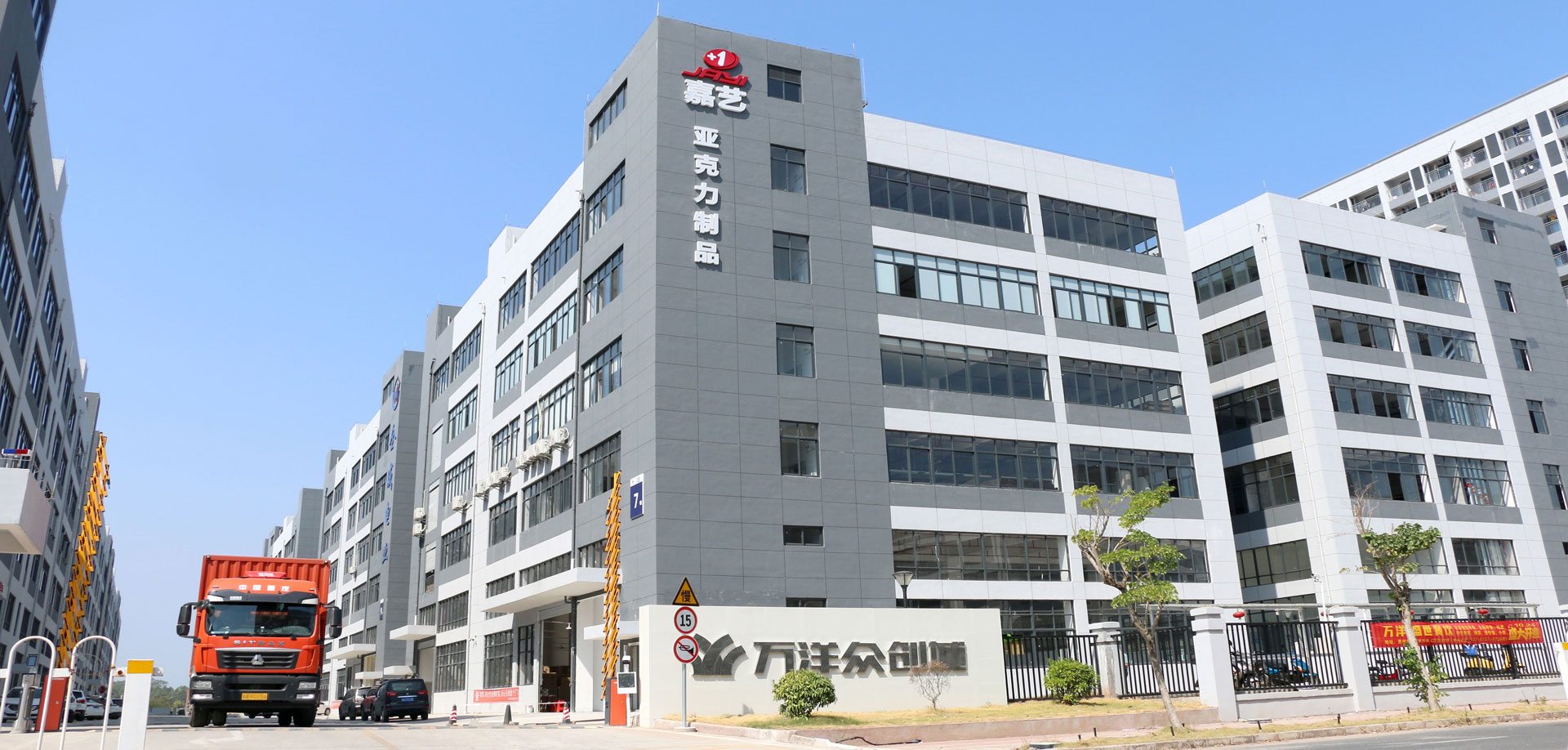
For retail brands pursuing stable quality, exquisite appearance, and cost-effective customization, choosing a professional and reliable manufacturer is the key to successful ordering. JAYI Acrylic is a professional custom acrylic display stand factory focusing on custom retail display solutions. We provide design, proofing, factory-direct pricing, and perfect after-sales service.
Whether you need single-piece personalized customization or chain store bulk wholesale, JAYI Acrylic can tailor exclusive acrylic display cost schemes for different budgets and scenarios, helping your in-store products show better brand charm and sales conversion effects.

Cathy Qin works at Jayi Acrylic Industry Limited, focusing on custom acrylic product management and SEO-driven content marketing for B2B wholesale and retail applications. Her work includes designing display solutions, managing customization projects, and optimizing website content to promote Jayi’s high-quality acrylic products across global digital channels.
Post time: Oct-05-2026