
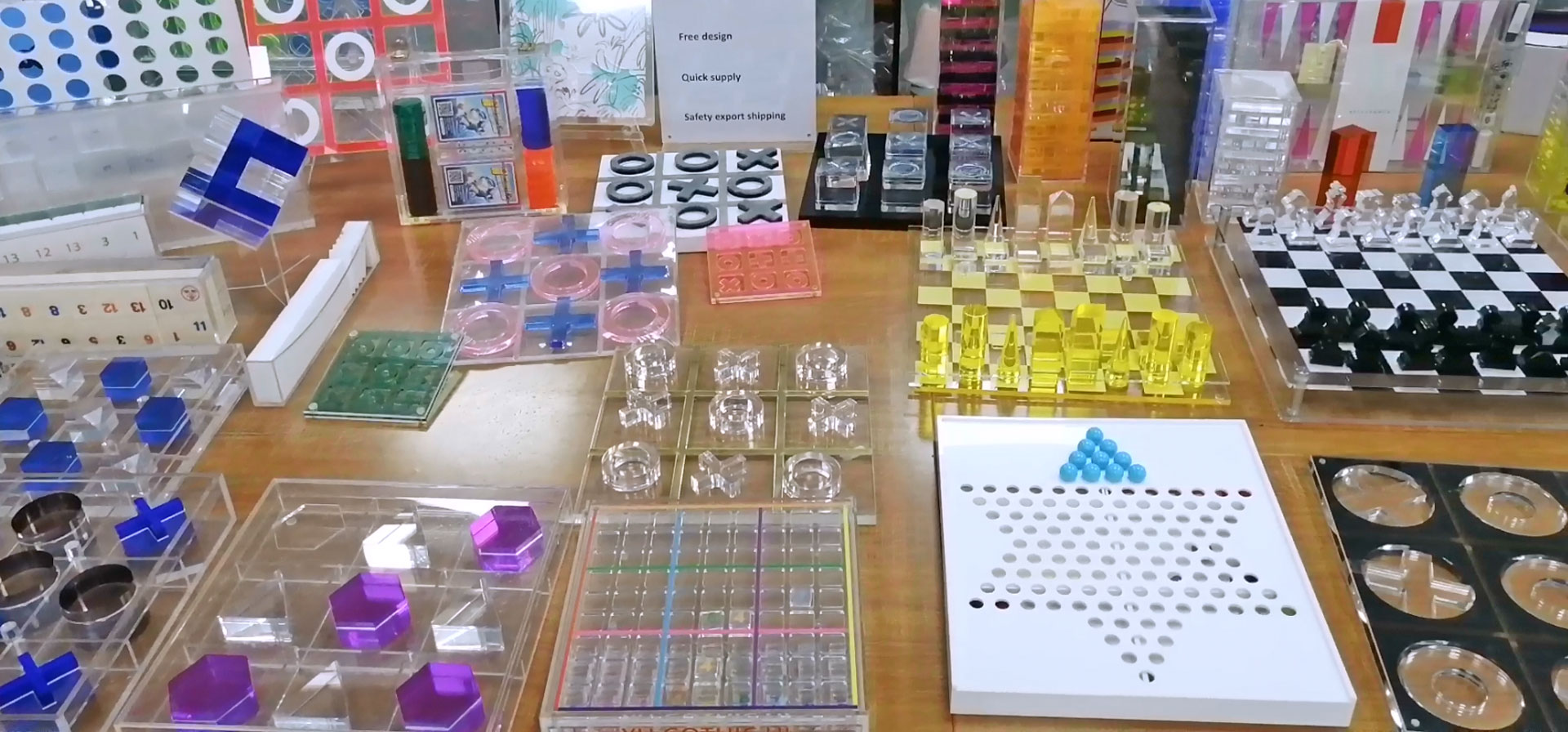
Distributors seeking growth opportunities in game products find acrylic board game collections offer compelling expansion potential.
Curated product collections create selling opportunities that single products cannot match, enabling higher transaction values and stronger customer relationships. Understanding how successful distributors approach collection development helps you capture similar advantages.
Collection strategies transform product portfolios from collections of individual items into cohesive offerings with clear customer value propositions.
Distributors who master collection development build competitive advantages that pure product competitors cannot easily replicate. This article examines proven approaches to acrylic game collection development and distribution.
Understanding Collection Value Proposition
Customers respond to collections differently from individual products, perceiving bundled offerings as representing distinct value compared to equivalent separate purchases. Collections simplify purchasing decisions by providing curated selections that remove overwhelming choice complexity. This simplification creates convenience value that supports premium pricing expectations.
Effective collections communicate clear themes that help customers understand why products belong together. Thematic coherence might derive from skill level categories, age group suitability, price positioning, or gameplay complexity. Collections without clear themes feel arbitrary rather than curated, failing to generate perceived value premiums.
Consider how collections serve different customer segments through tailored value propositions. Corporate buyers may value collections for team-building program diversity. Retail customers may appreciate themed gift collections for gifting occasions. Event planners may seek a variety that accommodates diverse participant preferences.
Strategic Collection Development Approaches
Collection development requires balancing breadth against depth to create offerings that satisfy diverse needs without becoming unwieldy. Broad collections address wide customer segments but require more inventory investment and create management complexity. Deep collections in narrower segments enable focused expertise but limit addressable market size.
Successful distributors often develop tiered collection structures that serve different customer segments at corresponding price points. Entry-level collections attract new customers and enable trial experiences. Mid-tier collections provide growth opportunities as customers increase commitment. Premium collections serve established customers seeking best-in-class offerings.
Consider how collections align with your existing capabilities and customer relationships. Collections requiring cold chain handling or specialized storage create operational challenges that may not suit your distribution infrastructure. Select collection strategies that leverage existing strengths rather than requiring capability development from scratch.
Sourcing and Supplier Partnerships
Collection development creates unique sourcing requirements that individual product purchasing does not address. You need suppliers capable of providing complementary products that share consistent quality standards and aesthetic coherence. Single-supplier collections simplify sourcing but may limit opportunities for differentiation.
Evaluate supplier capabilities for supporting collection strategies through volume commitments, exclusive offerings, or custom development. Suppliers who understand your collection objectives can proactively suggest products and customization that strengthen collection coherence. These partnerships evolve beyond transactional purchasing into collaborative development.
Consider how collection development influences supplier relationship dynamics. Collection strategies may concentrate purchasing with fewer suppliers who can meet collection requirements comprehensively. This concentration creates leverage for better pricing and priority treatment but increases dependency risks.
Pricing and Margin Optimization
Collections typically command higher total transaction values than individual product purchases, enabling distributors to achieve more efficient economics. However, collection pricing requires careful calibration that balances customer value perception against margin requirements. Pricing too high limits customer adoption, while pricing too low erodes profitability without proportional volume benefits.
Bundle pricing psychology suggests that customers evaluate collections against perceived component value rather than the sum of individual prices. Structure collection discounts that create compelling value perception while maintaining healthy margins. The discount from the component sum should feel substantial without eliminating profit contribution.
Consider how collections affect overall business economics beyond direct transaction margins. Collections may increase customer lifetime value by strengthening relationships and driving repeat purchases. Collections can also reduce per-customer acquisition costs by enabling larger initial orders. Evaluate collection strategies based on total economics rather than isolated transaction margins.
Marketing and Presentation Strategies
Collection success depends heavily on marketing approaches that communicate value propositions effectively. Product photography should showcase collections as unified offerings rather than collections of individual items. Lifestyle imagery demonstrating collection use contexts helps customers visualize ownership benefits.
Develop collection-specific marketing materials that tell coherent stories about the theme and purpose. Generic product descriptions fail to convey the curation intelligence that justifies collection premiums. Position collections as expert selections that save customers research time and provide confidence in purchasing decisions.
Consider channel-specific marketing approaches that optimize for different distribution contexts. E-commerce marketing can leverage detailed collection content to educate customers before purchase. Retail displays require simplified messaging that communicates collection value quickly. Trade show presentations should enable hands-on exploration of a variety.
Inventory Management Considerations
Collection strategies introduce inventory complexity that single-product distribution does not require. Maintaining collection availability requires all component products to be stocked simultaneously. A stockout on any single component can prevent collection sales that would otherwise occur.
Evaluate inventory management systems and processes that accommodate collection requirements. Component tracking enables visibility into collection completeness status. Demand forecasting for collections must consider both individual product demand and collection attachment rates. Replenishment triggers should account for collection-level constraints.
Consider inventory risk implications of collection strategies. Concentrated inventory investment in collection components increases exposure to demand forecasting errors. Diversified collections with more components spread risk but increase management complexity. Balance risk and opportunity based on your business risk tolerance.
Customer Relationship Enhancement
Collections create opportunities to deepen customer relationships through expanded product engagement. First collection purchases often lead to follow-on collection or component product purchases as customers develop preferences within themes. This expanded engagement supports customer lifetime value growth.
Develop customer communication strategies that leverage collected knowledge to personalize outreach. Customers who purchase strategy game collections may respond to content about new strategy game additions. Personalization based on collection history demonstrates understanding that strengthens brand relationships.
Consider loyalty program integration that rewards collection and purchasing. Points or tier advancement tied to collection purchases incentivize consolidated buying behavior. These programs can drive incremental purchasing while generating valuable customer data about collection preferences.
FAQ

What collection sizes work best for acrylic game distribution?
Optimal collection sizes typically include 4 to 12 products, depending on complexity and price positioning. Larger collections risk overwhelming customers, while too few products may not justify collection marketing investment.
How do distributors source diverse products for cohesive collections?
Working with capable suppliers who offer comprehensive product ranges simplifies collection sourcing. Some distributors develop relationships with multiple specialized suppliers and manage aesthetic coherence internally through specification requirements.
What margin improvements can distributors expect from collection strategies?
Collection strategies typically improve gross margins by 5 to 15 percentage points compared to equivalent individual product sales. Actual improvement depends on pricing strategy and customer response to collection value propositions.
How should distributors handle collection component substitutions?
Establish clear policies about component availability and substitution options before launch. Some customers prefer no-substitution policies, while others accept reasonable substitutions with appropriate discounts.
Conclusion
Collection strategies offer distributors compelling opportunities to expand acrylic game sales through enhanced value propositions and customer relationships.
Develop collections with clear themes that justify curation premiums and simplify customer decision-making.
Balance collection breadth against operational complexity, ensuring that inventory and fulfillment capabilities support collection commitments.
Leverage supplier partnerships that enable collection development and ongoing product refreshment.
Measure collection performance holistically, considering lifetime value and relationship depth alongside transaction economics.
JAYI: TOP Acrylic Games Manufacturer and Supplier in China

JAYI Acrylic is a top professional custom acrylic games manufacturer and supplier based in China.
With over 20 years of experience, we specialize in custom & wholesale acrylic board game sets, including mahjong, chess, backgammon, tumbling tower, and more.
We support OEM, ODM, and personalized printing, with strict quality control, ISO9001, and SEDEX certifications.
Serving global wholesalers, retailers, and brand clients, we offer stable lead time, competitive factory prices, and one-stop customized sourcing solutions.

Cathy Qin
Cathy Qin works at Jayi Acrylic Industry Limited, focusing on custom acrylic game product management and SEO-driven content marketing for B2B wholesale and retail applications. Her work includes designing display solutions, managing customization projects, and optimizing website content to promote Jayi’s high-quality acrylic products across global digital channels.
Post time: May-05-2026