
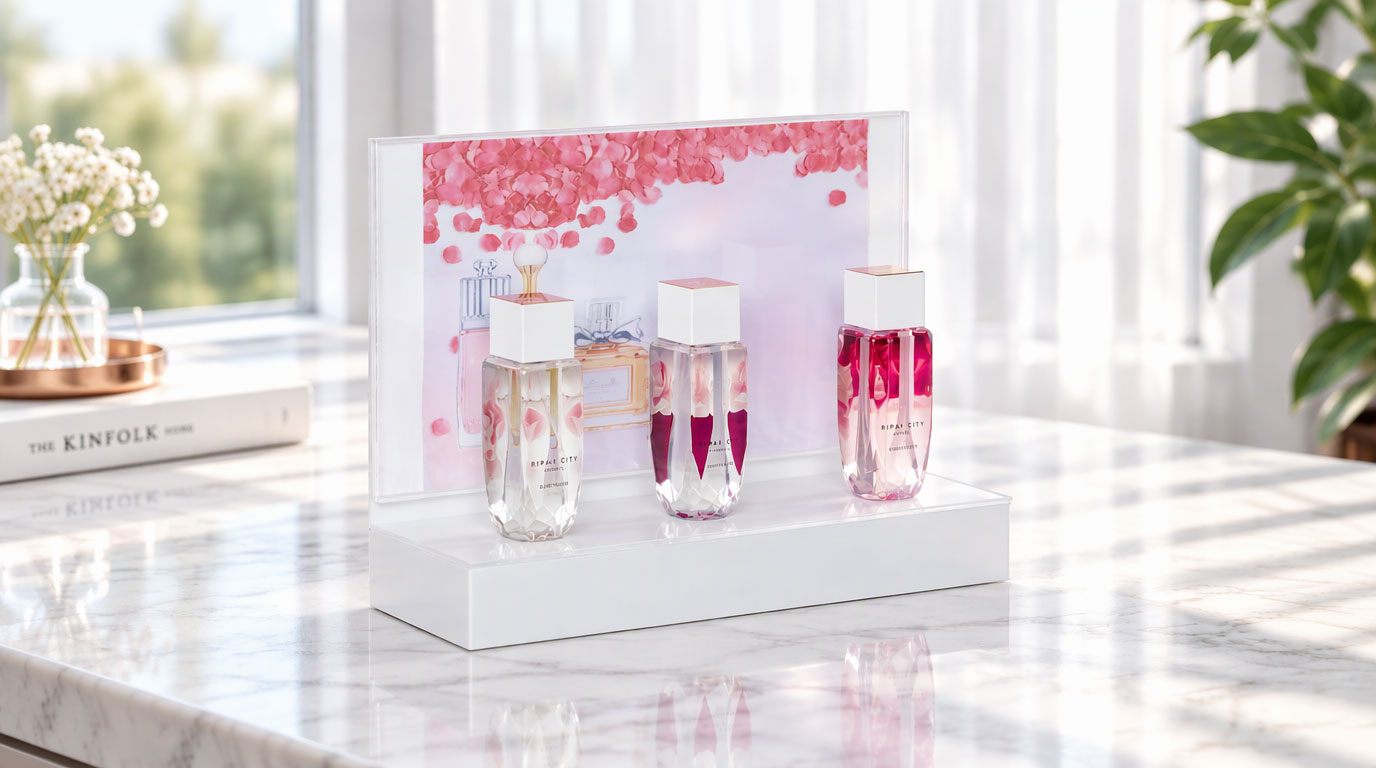
Most custom acrylic countertop displays cost **$15–$35 per unit** for a simple clear stand, **$35–$75** for a bent or printed mid-range design, and **$75–$150+** for thick, multi-tier, lockable or LED-lit builds — all based on an order of roughly 50–100 pieces. At 500+ pieces, unit pricing often drops 20%–35%.
So there is no single "list price" for custom acrylic countertop display pricing. The number you get depends on four things you control before you send an inquiry: sheet thickness, design complexity, finishing (print, polish, hardware), and order quantity. Below is what each of those actually does to your quote, plus real quote examples so you can sanity-check a supplier's number before you commit.
Average Price Range for Custom Acrylic Countertop Displays
Prices below reflect typical FOB China pricing for cast acrylic (PMMA) displays at 50–100 pcs, packed for export.
| Tier | Typical spec | Unit price (50–100 pcs) | Best for |
|---|---|---|---|
| Low-budget basic | 3–5 mm clear sheet, flat cut, glued edges, no print | $15–$35 | Brochure stands, single-item risers, pop-up retail |
| Mid-range custom | 5–8 mm sheet, bent or multi-piece build, 1–2 color print | $35–$75 | Cosmetics, jewelry, vape and card displays |
| High-end premium | 8–12 mm sheet, multi-tier, lockable, LED, laser engraving | $75–$150+ | Pokémon/card cases, watch and eyewear showcases |
A quick calibration: a plain 5 mm clear countertop stand is essentially "cut and glue" work, so you are paying mostly for material and labor time. Once a design needs heat bending, flush-polished edges, or a printed brand panel, machine time and hand-finishing double, and that is what moves a quote from the $20s into the $60s.
Low-Budget Basic Acrylic Countertop Displays
These are flat panels, simple L-shapes, or a small riser with one or two glued joints. There is no polishing beyond a sanded edge, no print, and often a standard stock thickness. If your goal is a clean, transparent holder for a price card or a single product sample, this tier is enough — most buyers overpay here by adding print they do not need.
Mid-Range Custom Acrylic Countertop Displays
This is where most brand projects land. Expect a real design file review, heat-bent curves, 5–8 mm material, and one or two printed or engraved logo areas. The jump in price comes from setup: a bending jig, a screen or UV print setup, and a QC step to check that the tiers sit level. Order volume matters more at this tier because setup cost is spread across units.
High-End Premium Acrylic Countertop Displays
Multi-tier card or collectible cases, lockable showcases, LED-lit cosmetic stands, and eyewear risers sit here. Thick sheet (8–12 mm), tight tolerances, battery or USB wiring, metal hardware, and hand polishing all add up. A premium unit can cost 4–8 times a basic stand, but it also carries the brand—for a flagship retail launch, that is usually the right spend.
For spec details and size options, see the Acrylic Countertop Displays product page.
Key Factors That Affect Acrylic Countertop Display Cost
Every quote you receive is a stack of these seven cost drivers. Knowing which ones you are actually paying for is the fastest way to compare suppliers fairly.
Acrylic Material Thickness & Grade
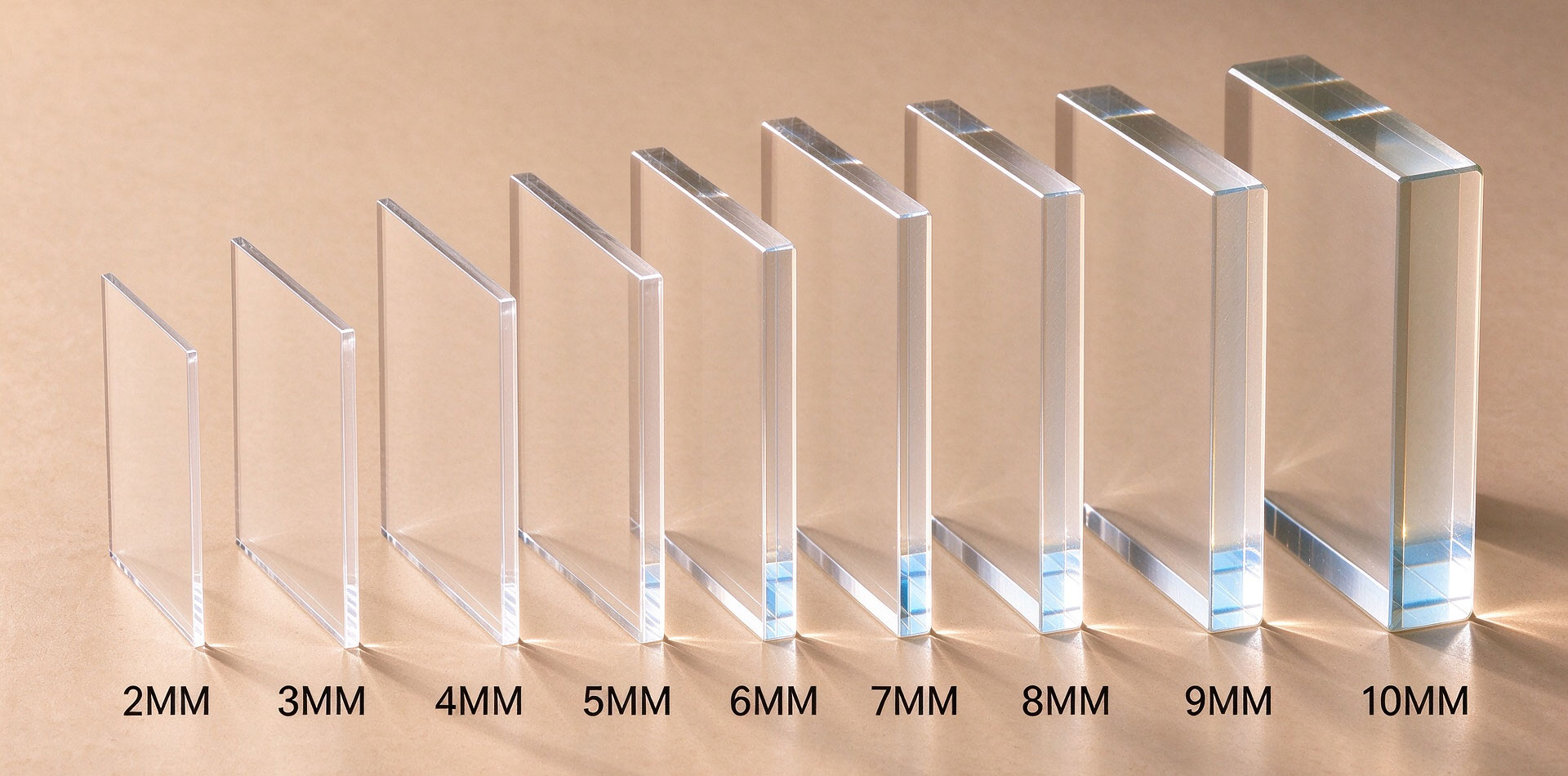
Thickness is the single biggest material lever. Going from 3 mm to 5 mm sharply raises sheet cost; 8 mm and up is a different product class. Cast acrylic (PMMA) costs more than extruded but machines cleaner, polishes brighter, and resists crazing — which matters for anything with a bent curve or a glued load-bearing joint.
Custom Size, Shape & Complexity
Counter displays are small, so sheet yield is efficient — but complexity is not free. Curved profiles, internal compartments, stepped tiers, and interlocking parts all add cutting paths, jigs, and assembly time. A design that fits standard sheet sizes with minimal waste is meaningfully cheaper than one that leaves large offcuts.
Fabrication Processes: Cutting, Bending, Gluing & Polishing
Laser cutting gives clean edges and tight tolerances; CNC routing is better for thick sheet and rounded corners. Heat bending needs a jig per radius. Gluing with acrylic solvent (or UV glue for clear seams) is skilled handwork. Edge polishing — flame or diamond — is often the most labor-heavy step, and it is the difference between a display that looks premium and one that looks like a school project.
Printing, Engraving, Logo & Color Finishes
UV printing adds color and gradients; screen printing is cheaper at high volume for flat solids; laser engraving gives a frosted, premium mark with no ink to wear off. Each method carries a setup fee, so a 3-color logo on 50 units costs far more per unit than the same logo on 500 units.
Add-On Features: LED Lights, Compartments, Risers & Hardware
LED strips, USB or battery power, dimmers, locks, metal hinges, and removable risers all pull in third-party parts and extra assembly. Lighting in particular changes packaging too — you are now shipping electronics, which means more protection and sometimes different compliance paperwork.
Order Quantity & MOQ Requirements
Setup costs are fixed; material discounts are tiered. Moving from 50 to 500 pieces commonly cuts unit price by 20%–35% because jigs, programming, and print setup are amortized. Most custom acrylic factories set MOQ around 50–100 pcs per design; mixed colors within one PO are usually acceptable if the total quantity meets MOQ.
Packaging, Shipping & Lead Time Rush Fees
Export packing for acrylic is not trivial — surface protection film, foam, individual cartons, and a master carton sized to avoid volumetric weight penalties. Sea freight is cheapest per unit but needs 25–35 days door-to-door; air or express can triple freight per unit. Rush production (compressing a 20-day lead time to 10) usually adds 15%–30% to the unit price.
Quick reference — what moves your number most:
| Factor | Cost impact | Where you can save |
|---|---|---|
| Thickness | High (often 20%–40% of unit cost) | Step down one gauge where strength allows |
| Polishing | Medium–high (labor) | Polish only visible edges |
| Print/engrave | Medium (setup-heavy) | One color, one panel, larger runs |
| LED/hardware | Medium–high | Drop lighting on non-hero displays |
| Quantity | Very high | Consolidate designs into one PO |
| Packing/freight | Medium | Right-size cartons, ship by sea |
Custom Acrylic Countertop Display Pricing Examples
These are indicative quote structures, not fixed prices — they show how a supplier builds a number so you can check the line items.
Simple Countertop Sign & Stand Quote Example
A 4 mm clear L-stand, 150 × 100 mm, sanded edges, no print, 100 pcs. Typical breakdown: material about 25% of unit cost, cutting 15%, gluing and assembly 20%, packing 10%, overhead and margin the rest. Expect roughly $15–$25/unit FOB. If a quote comes in at $45 for this spec, ask what process is driving it.
Multi-Tier Retail Merchandising Display Quote Example
An 8 mm three-tier cosmetic stand with a printed header panel, 300 × 250 mm, 200 pcs. Added cost: bending jig, tier alignment QC, one-color UV print setup, and stronger cartons. Expect $55–$85/unit. The print setup alone may be $80–$150 one-time, so at 200 pcs, it is already diluted to under $1 per unit.
Lockable Acrylic Countertop Showcase Quote Example
A 10 mm lockable card or collectible case with a hinged lid, latch, and optional LED, 300 pcs. Hardware, precise lid fit, and hand polishing dominate. Expect **$95–$160/unit** depending on lighting and packaging. At this price level, always request a pre-production sample — one millimeter of lid misalignment ruins the perceived value.
Matching design, tooling, and material to your real retail need is exactly what a factory-side design review is for: see Custom Acrylic Displays for how custom builds are scoped.
How to Get an Accurate Quote for Your Acrylic Countertop Display
The fastest way to get a real number instead of a guess is to send a complete brief in one message. Suppliers quote from what you give them; vague inquiries get vague ranges.
Information to Prepare Before Sending Your Inquiry
Send these seven items together:
(1) a dimensioned drawing or a clear reference photo with sizes,
(2) sheet thickness or the load the display must hold,
(3) material type — clear, colored, frosted, or mirrored,
(4) finishing spec (print colors, engraving, polish),
(5) quantity per design and total,
(6) target market and any compliance documents needed,
(7) delivery deadline and Incoterm.
With all seven, a good factory can return a firm unit price in one round.
Why Custom Quotes Are Better Than Generic Price Lists
A published price list cannot know your thickness, print count, or packing needs, so it either overprices simple work or underquotes complex work — and the gap shows up later as a "revised" invoice or a cheaper substitute material. A custom quote itemizes material, process, and setup, which also gives you a benchmark to compare two suppliers on the same spec rather than on headline price.
Tips to Reduce Custom Acrylic Countertop Display Costs Without Sacrificing Quality
Cost cutting works best at the design stage, before tooling exists. Four moves cover most of the savings.
Optimize Design to Cut Fabrication Fees
Keep curves to one or two radii so a single jig serves the whole build. Design parts to nest on standard sheet sizes. Replace a multi-piece assembly with a folded or interlocked form where the load allows. And keep the polished area to the faces a shopper actually sees — polishing hidden internal edges is pure cost.
Balance Order Volume & Unit Price
Combine seasonal SKUs into one purchase order to clear MOQ once instead of three times. If you cannot commit to volume, ask for a two-step program: a small first batch at a higher unit price, then a price break at a stated reorder quantity. Written tiered pricing protects you both ways.
Choose Cost-Effective Finishing Options
Laser engraving one panel usually beats a four-color print for brand marks and never wears off. One-color screen print is far cheaper than UV full-color at volume. Frosted or tinted sheet can replace printed backgrounds entirely. And skip LED unless the display is the hero of the shelf — lighting rarely pays back on a secondary counter unit.
Frequently Asked Questions

Is custom acrylic more expensive than standard pre-made displays?
Yes, usually. A custom unit typically costs 30%–60% more than a stock display of similar size, because you are paying for design review, tooling, and small-batch setup. You get exact fit, brand printing, and no compromise on dimensions. If a stock size already fits your product and your shelf, buy stock; go custom when fit, branding, or function genuinely requires it.
Does clear acrylic cost less than colored acrylic?
Usually yes. Clear cast sheet is the highest-volume SKU, so it is the cheapest per kilo. Colors, frost, mirror, and textured finishes often carry a minimum order quantity per sheet and a higher unit cost — and patterned sheets can leave unusable offcuts. Expect a 10%–25% material premium for specialty finishes.
Are there hidden costs for custom acrylic countertop displays?
The common ones are one-time setup (jigs, print screens, programming), sample fees, export packing upgrades, and rush production. Ask for a quote that separates one-time tooling from the per-unit price, and confirm what the sample fee is and whether it is credited against the bulk order. That single clarification removes most of what surprises buyers later.
What is the minimum order quantity for custom acrylic displays?
Most custom acrylic factories work from about 50–100 pieces per design, and mixed colors or sizes within one order usually count toward that total. Below MOQ, suppliers either decline or quote a much higher unit price to cover setup. If you need fewer, ask about stock sizes or a paid sample run before committing to a mold and jig.
Does a lower unit price always mean a better deal?
No. A cheap quote often reflects thinner sheet, extruded instead of cast material, minimal polishing, or thinner cartons that arrive cracked. Compare on the same spec sheet, ask for the material grade in writing, and check the packaging spec. Landed cost per usable unit — after damage and rework — is the number that actually matters.
Final Thoughts on Custom Acrylic Countertop Display Cost
The honest summary of custom acrylic countertop display costs is this: $15–$35 for simple clear stands, $35–$75 for most branded mid-range designs, and $75–$150+ for thick, multi-tier, lockable or LED showcases, at 50–100 pcs — with real savings at higher volume. Thickness, polishing, print setup, and quantity do almost all of the work, so fix those four before you compare quotes.
If you want a number you can plan a launch around, JAYI Acrylic is a custom acrylic display factory with over 20 years of OEM/ODM production experience, working from drawing to export-packed carton for retail, card, cosmetic, and collectible displays. Send your dimensions, thickness, print spec, and quantity in one message, and the team will come back with an itemized unit price — plus a sample before you commit.

Cathy Qin works at Jayi Acrylic Industry Limited, focusing on custom acrylic product management and SEO-driven content marketing for B2B wholesale and retail applications. Her work includes designing display solutions, managing customization projects, and optimizing website content to promote Jayi’s high-quality acrylic products across global digital channels.