
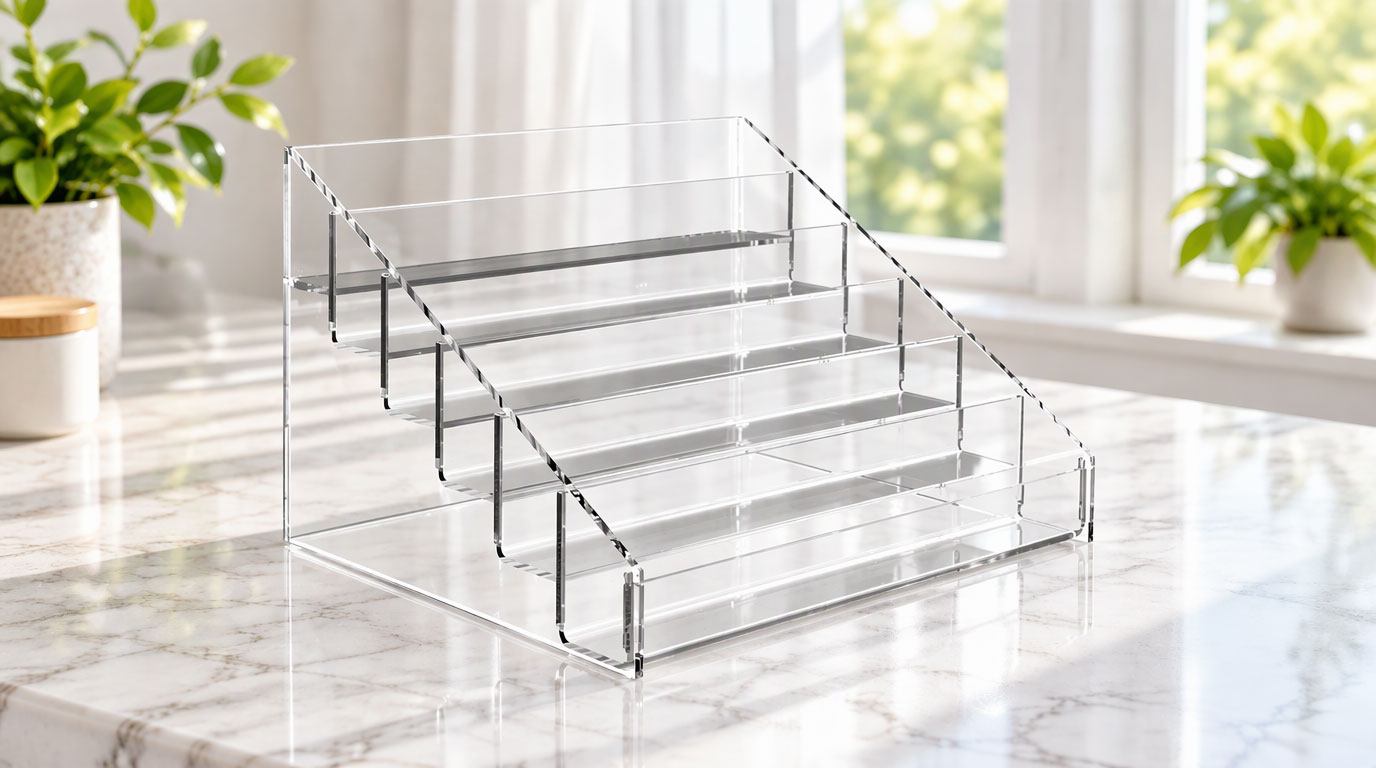
Before you buy acrylic countertop displays, lock down five things first — material grade and thickness, edge finish, load capacity, customization options, and supplier terms (sample, MOQ, lead time). Get those five right and the rest is detail. Get them wrong, and you end up with stands that crack, yellow, or collapse under a full product load.
Acrylic countertop displays sit right where customers make a decision: the cash wrap, the cosmetics counter, the jewelry case. They are small, cheap to ship, and easy to get wrong. A display that looks crisp in a photo can arrive with cloudy edges, wobble on a marble top, or lose its clarity in a sunny window within a year.
Most bad purchases trace back to one cause: buying on price per unit alone. Clear acrylic PMMA looks identical in a thumbnail whether it is 3mm extruded sheet or 5mm cast sheet. That is why you need a fixed checklist — so every supplier is measured on the same terms.
With this checklist, you will know exactly what to look for in acrylic displays, what to ask before you pay a deposit, and how to keep your reorders consistent.
1. Your Display Purpose and Product Type
What items will you showcase?
Start with the product, not the stand. A 200g cosmetic jar, a 40g bracelet, and a 1.5kg collectible box each need different floor space, tier height, and lip depth. Write down the item's length, width, height, and weight before you request a quote.
Static display vs interactive or LED-lit display
Passive stands are the cheapest and simplest. If you need lighting, a rotating turntable, or a lockable case for high-value goods, say so upfront — retrofitting a plain stand later usually costs more than building it in.
Brand goal: upsell, highlight new arrivals, or organize merchandise
A tiered riser pushes add-on purchases. A single-item pedestal creates focus. A multi-slot organizer solves clutter. Tell the supplier the commercial goal in one sentence; good factories will suggest a structure that serves it.
2. Exact Size and Countertop Footprint
Measure your counter space before ordering
Measure the actual clear space, not the counter. Leave 10–15cm of breathing room around the display so customers can reach past it without knocking it over. Note any backsplash, drawer lip, or cash register that limits depth.
Weight and dimension limits for your products
The stand must fit inside your shipping carton and inside your counter's weight tolerance. Heavy items on a thin base plate will bow the sheet over time — this is the single most common failure point in cheap countertop units.
Stackable or multi-tier layout requirements
If you plan to stack units, confirm the base dimensions match so they sit flush. Mixed footprints look messy fast, especially on a small retail counter.
3. Acrylic Material Grade and Thickness
Cast acrylic vs extruded acrylic
Cast and extruded acrylic behave differently in the same application. Cast sheet is stronger, clearer, and better for machining and deep cutouts. Extruded sheet is cheaper and fine for simple flat pieces.
| Factor | Cast acrylic | Extruded acrylic |
|---|---|---|
| Clarity | Excellent, low haze | Good, slightly lower |
| Strength | Higher, better for thick sections | Lower, best for thin flat parts |
| Machining | Cuts and polishes cleanly | Can gum up when laser cut |
| Cost | Higher | Lower |
| Best for | Premium retail, jewelry, deep cutouts | Simple risers, budget programs |
Recommended thickness for countertop stands
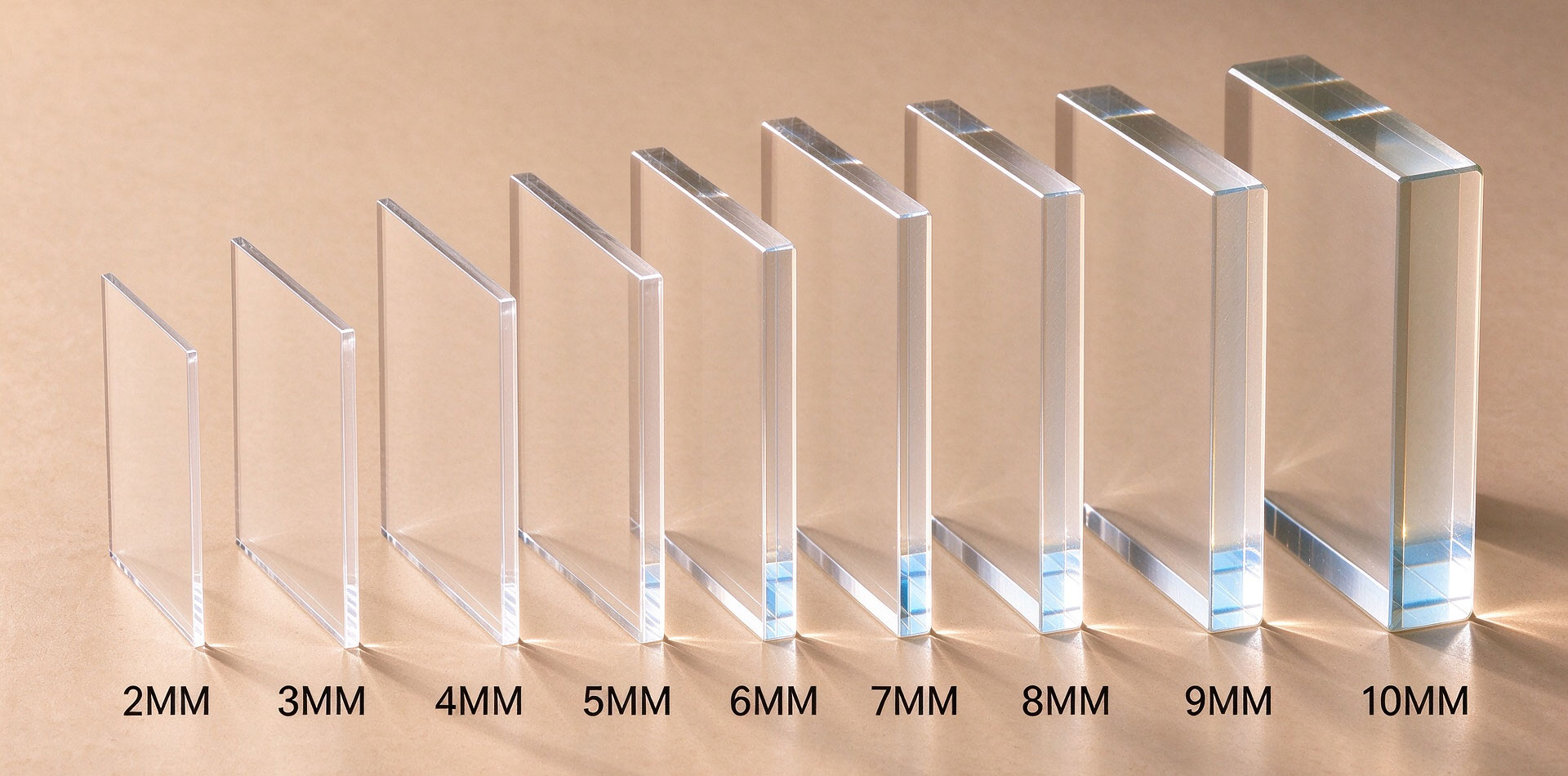
| Display use | Suggested thickness |
|---|---|
| Small card or jewelry riser | 3mm |
| Standard cosmetic or retail stand | 4–5mm |
| Multi-tier stand with product weight | 5–8mm |
| Heavy collectibles or lockable case | 8–10mm with reinforced base |
Clear, frosted, colored or mirrored acrylic
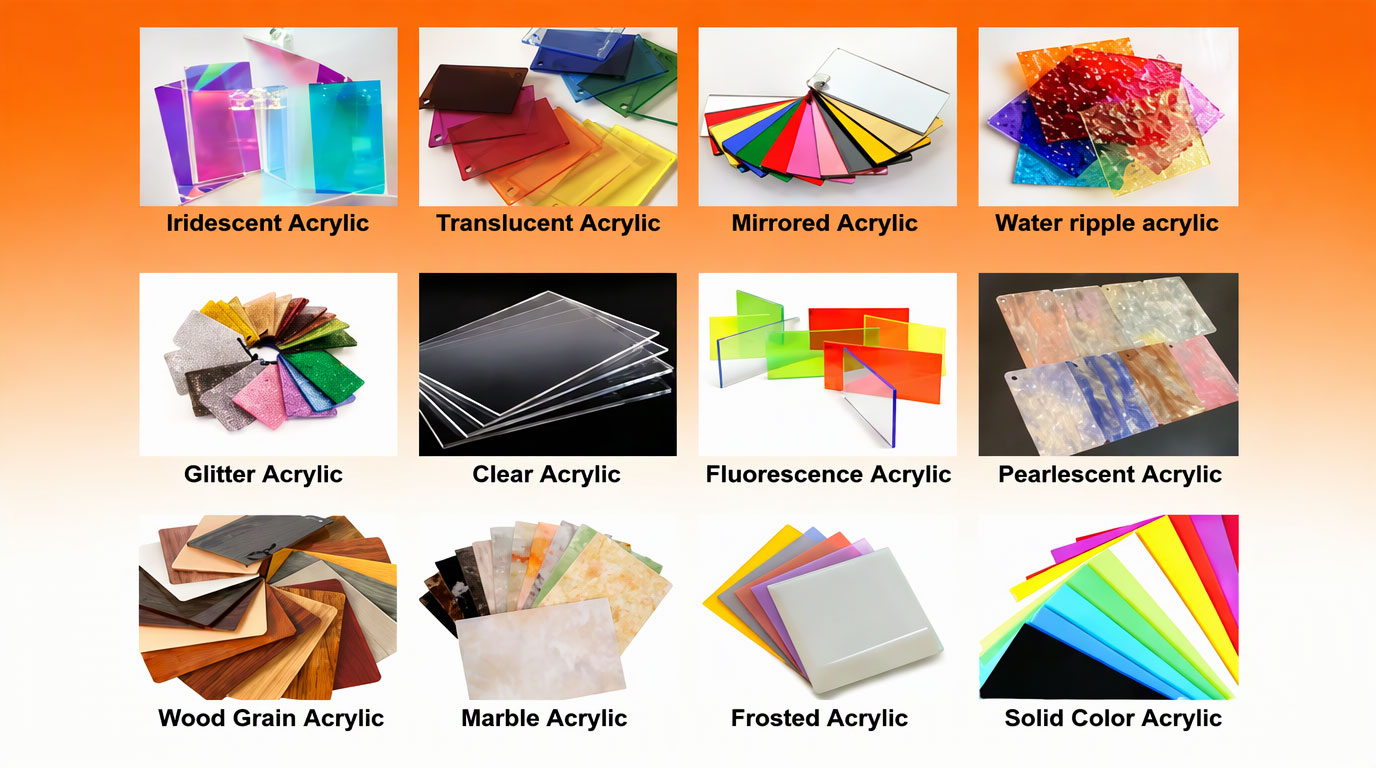
Clear acrylic lets the product carry the color. Frosted softens LEDs and hides fingerprints. Black and white opaque acrylic supports a clean brand look. Mirrored acrylic doubles product visibility but shows every smudge — reserve it for low-traffic, high-margin counters.
4. Finish Quality and Edge Treatment
Polished flame edges vs cut raw edges
A flame-polished or diamond-polished edge looks like glass and reads as premium. A raw CNC edge looks matte and slightly dull. On a countertop display, the edge is what customers touch, so this is not a cosmetic detail — ask for a close-up photo of the actual edge finish.
Anti-scratch and anti-glare coating options
Busy retail counters get wiped dozens of times a day. A hard-coat or anti-glare surface reduces micro-scratches and reflections that hide the product. If your store has downlights directly above the counter, anti-glare is worth the extra cost.
Yellowing resistance for long-term indoor use
Standard acrylic can yellow under UV and heat. Ask whether the sheet is UV-stabilized, and keep displays away from direct sun and hot spotlights. For window displays, UV-stabilized material pays for itself within a couple of seasons.
5. Customization Options
Logo printing: UV print vs laser engraving
UV printing gives full color and gradients on a flat surface. Laser engraving cuts into the material for a permanent, frosted-white mark that never peels. For brand marks on a clear stand, engraving usually looks more premium; for multi-color logos, UV print wins.
Custom cutouts, compartments and dividers
Shaped slots hold rings, cards, or testers in place and stop them sliding when a customer lifts the stand. Send a drawing or a sample product photo so the factory can size the cutout to the real item.
Modify shape, angle and structure
Tier height, tilt angle, lip depth, and base shape are all adjustable. This is where a stock item becomes a real brand asset — see our Custom Acrylic Displays capability for cut-to-shape, cut-to-size, and multi-part assemblies.
6. Assembly and Installation Style
Glued one-piece displays
Solvent-glued assemblies arrive ready to use and look seamless — no visible joints, no customer handling risk. They are the better choice for premium retail and for any stand that must survive constant lifting.
Flat-pack, tool-free assembly stands
Flat-pack units cut freight cost and storage space. Confirm the assembly is genuinely tool-free and that the joints lock firmly; a stand that shifts during assembly will not stay square on the counter.
Stability and non-slip base design
Ask for the base footprint and whether pads or feet are included. On glass or polished stone counters, a plain acrylic base slides. A slightly larger base plus rubber feet solves most wobble complaints.
7. Load-Bearing Capacity
Check weight capacity for heavy products
Get the rated capacity in writing, per tier and for the whole unit. Then add 30% headroom — a tester bottle is lighter than the full retail unit, and customers will put the heavy one down.
Reinforced structure for high-load use cases
Thicker sheet, a wider base, and internal ribs or a support spine all raise capacity. For anything above roughly 2kg per tier, do not accept a single flat sheet as the base.
Risk of bending or sagging over time
Acrylic creeps under constant load, especially in warm rooms. A stand that looks fine at delivery can sag within months at 5mm thickness. Specify thickness against load, not against price.
8. Compliance and Safety Certifications
SGS, REACH and RoHS compliance
If you sell into the EU, UK, or US retail chains, ask for SGS test reports covering REACH and RoHS. Material certificates should match the actual sheet used in production, not a generic factory document.
Food-safe acrylic for food and beverage displays
For bakery, candy, or beverage counters, confirm food-contact suitability and that no solvent residue remains on glued edges. This matters for both compliance and smell.
Non-toxic material for retail and gift shops
Ask for a written statement on material composition. Toy-adjacent and children's retail channels often demand extra documentation — raise it before sampling, not after the PO.
9. Supplier MOQ, Lead Time and Sample Policy
Sample availability and sample lead time
Always order a sample of the exact thickness and finish you plan to buy. A sample is the cheapest risk check in this whole process. Typical sample lead time runs 5–7 days, depending on customization.
Minimum order quantity for standard vs custom items
| Order type | Typical MOQ | Notes |
|---|---|---|
| Stock countertop displays | 50–100 pcs | Mixed models often allowed |
| Custom logo only (same shape) | 100–300 pcs | Setup fee may apply |
| Fully custom shape or assembly | 300 pcs+ | Tooling and drawing approval needed |
Production and shipping timeline for bulk orders
Plan backwards from your in-store date. Add production, QC, carton packing, and sea or air transit, then add a buffer. A supplier who cannot state a firm production window in writing is a scheduling risk.
10. After-Sales Support and Warranty
Damage replacement during transit
Acrylic breaks in transit when packing is thin. Confirm the packing method (foam wrap, individual cartons, edge protection) and who covers breakage — the factory or the freight insurer.
Repair service for acrylic displays
Ask whether the factory can re-glue, re-polish, or replace a single tier rather than the whole unit. This extends the life of a display program considerably.
Long-term reorder and repeat customization support
Store your approved drawing, color code, and logo file with the supplier. Good factories keep a production file so that reorders three years later match the first batch exactly.
Final Checklist Summary
Here is the full acrylic display buying checklist on one screen. Run every new quote through it before you compare prices.
| # | Check | What to confirm |
|---|---|---|
| 1 | Purpose and product type | Item size, weight, lighting needs |
| 2 | Size and footprint | Clear counter space, base size, stackability |
| 3 | Material grade and thickness | Cast vs extruded, mm per load |
| 4 | Edge finish | Polished edge, anti-scratch, UV stability |
| 5 | Customization | Logo method, cutouts, shape changes |
| 6 | Assembly | Glued vs flat-pack, non-slip base |
| 7 | Load capacity | Rated kg per tier plus 30% headroom |
| 8 | Compliance | SGS, REACH, RoHS, food contact |
| 9 | Commercial terms | Sample, MOQ, lead time, packing |
| 10 | After-sales | Breakage policy, repair, reorder file |
Two reminders before you send a PO: never approve production from a photo alone, and never compare quotes at different thicknesses. Those two habits cause most of the rework in this category.
If you want to skip the specification stage entirely, start from a proven base model on our Acrylic Countertop Displays page and customize from there.
Frequently Asked Questions

What thickness do I need for a countertop acrylic display?
5mm is the safe default for retail countertop stands holding normal products. Go down to 3mm only for light risers with cards or jewelry, and up to 8mm or more once a tier carries real weight. Thickness is a load decision, not a cost decision.
Is cast acrylic worth the extra cost over extruded?
Yes, if the stand is thick, deep-cut, or premium-facing. Cast sheet is clearer, stronger, and machines better. For simple flat risers in a budget program, extruded sheet is perfectly acceptable.
How do I stop acrylic displays from yellowing or scratching?
Choose UV-stabilized sheet and keep the stand out of direct sun and hot spotlights. For scratches, specify a hard-coat surface and clean with a soft cloth and mild soap — never paper towels or alcohol-based cleaners.
Can I get a custom logo on a small countertop display?
Yes. Laser engraving gives a permanent frosted mark; UV printing gives full color. Expect a modest MOQ for logo-only customization, usually 100–300 pieces, plus a one-time setup charge.
How do I avoid breakage and customs problems when ordering?
Insist on individual foam-wrapped cartons and get the breakage responsibility in writing. For customs, confirm HS code, material declaration, and SGS/REACH reports before shipment — missing documents delay clearance more often than duty rates do.
Conclusion
Ten points sound like a lot, but they collapse into one question: can the supplier prove each item on the list, in writing, before you pay? A quote that answers thickness, edge finish, load rating, compliance, and lead time in one document is a supplier you can build a display program on. A quote that only states a unit price is a future problem.
That is the standard JAYI Acrylic works to. We have been building custom acrylic displays since 2004, with over 20 years of OEM and ODM production for retail, cosmetics, jewelry, and collectible brands. Cutting, diamond polishing, solvent gluing, UV printing, and laser engraving all happen in one factory, so the sample you approve is the batch you receive — and a reorder three years later still matches the first run. Every order ships with SGS, REACH, and RoHS documentation, individual foam-wrapped cartons, and a stated production window.

Cathy Qin works at Jayi Acrylic Industry Limited, focusing on custom acrylic product management and SEO-driven content marketing for B2B wholesale and retail applications. Her work includes designing display solutions, managing customization projects, and optimizing website content to promote Jayi’s high-quality acrylic products across global digital channels.