
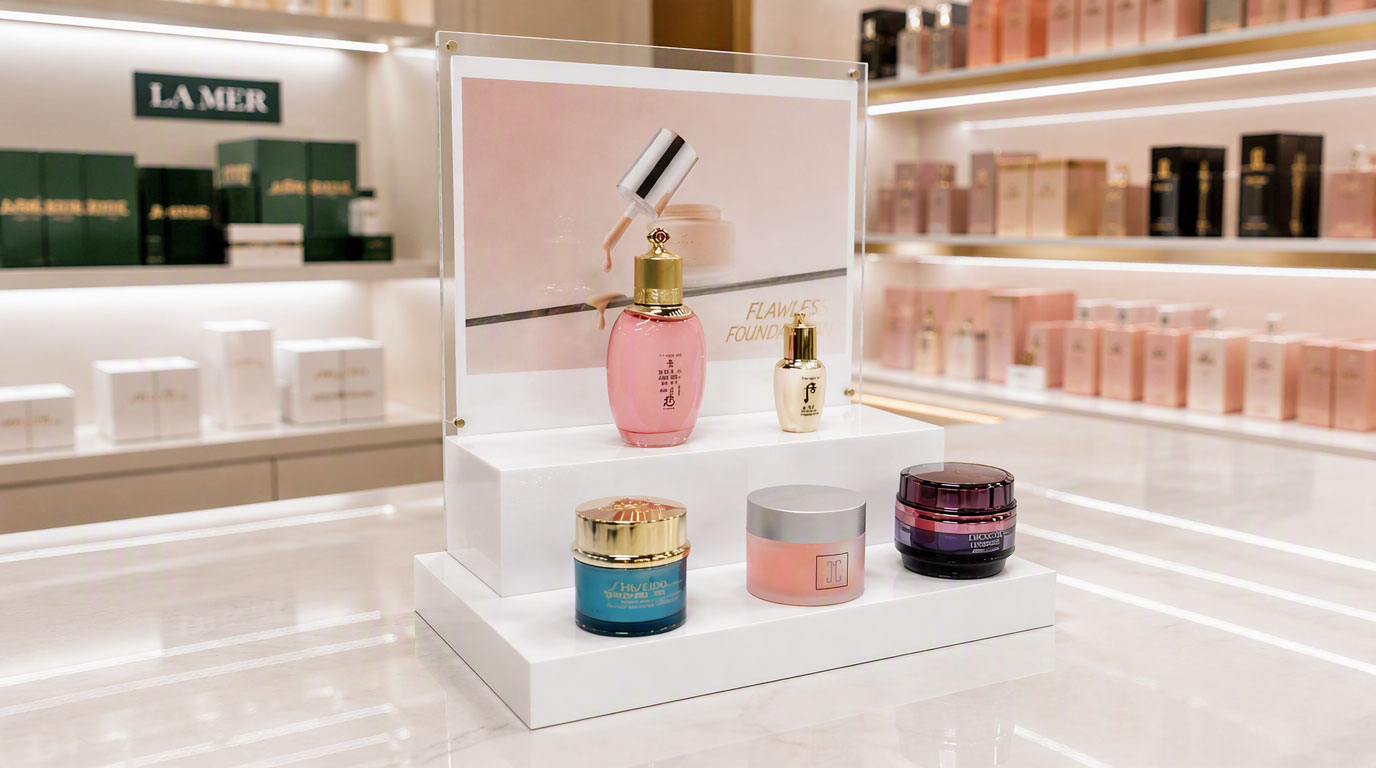
Most beauty brand owners, wholesale buyers, and retail store managers face a common costly mistake: mixing up retail counter cosmetic display and trade show acrylic display designs.
Choosing incorrect custom acrylic cosmetic displays often results in flimsy structures, premature damage, unnecessary repeated purchases, poor product presentation, and reduced customer conversion rates. Retail in-store environments and temporary exhibition booths have completely different requirements for durability, portability, structure, and visual design.
This practical selection guide clarifies all core differences, customization standards, scenario-based rules, and professional tips to help you pick the most cost-effective and suitable display solution for your business needs.
Key Takeaways of This Guide:
• Clear scenario boundaries for retail permanent use and trade show temporary use
• Key material, structure, and craftsmanship differences of custom acrylic cosmetic displays
• Practical customization steps for different beauty product lines
• Cost-saving tips to avoid over-design or low-quality display solutions
• Answers to the most frequently asked bulk purchasing questions
1. Why Retail and Trade Show Displays Cannot Be Interchanged
A large number of first-time buyers mistakenly believe that all acrylic cosmetic displays are universal for all scenarios. This simple misunderstanding leads to most display failures and budget waste every year.
A sturdy, fully integrated display built for long-term retail use is usually bulky, heavy, and extremely inconvenient to transport and assemble for frequent trade show participation. On the contrary, an ultra-light, detachable trade show acrylic display lacks structural stability and wear resistance, unable to withstand long-term daily friction, customer touch, and long placement in retail stores.
The core operational goals of the two scenarios are fundamentally different. Retail counter displays focus on long-term stability, neat daily display, consistent store style, and continuous in-store sales conversion. Trade show displays prioritize instant visual appeal, quick brand exposure, easy transportation, and fast on-site assembly and disassembly.
These essential goal differences determine every customized detail, from acrylic plate thickness and structural design to surface craftsmanship and logo processing methods.
2. Core Differences: Retail Counter VS Trade Show Displays
To help you quickly distinguish and select the right custom acrylic cosmetic displays, we sorted out all core differences in a comparative table below.
|
Comparison Item
|
Retail Counter Cosmetic Display
|
Trade Show Acrylic Display
|
|---|---|---|
|
Usage Duration
|
Long-term permanent use (1–5 years)
|
Temporary repeated use (short-term exhibition days)
|
|
Material & Thickness
|
Thicker acrylic (3–5mm), high wear resistance
|
Light acrylic (2–3mm), portable and lightweight
|
|
Structure Design
|
Integrated fixed structure, stable and anti-shake
|
Detachable assembly structure, easy to pack and carry
|
|
Design Focus
|
Space matching, daily practicality, store style unity
|
Visual impact, brand highlight, quick customer attraction
|
|
Cost Orientation
|
Long-term cost performance, durable investment
|
Controllable short-term cost, lightweight customization
|
3. Retail Counter Cosmetic Display: Complete Selection Guide
3.1 Core Usage Goals
A professional retail counter cosmetic display is designed for long-term daily in-store operation. Unlike temporary exhibition displays, it must maintain tidy, standardized product placement throughout daily opening hours. It must match the store’s interior decor tone, create a high-end, tidy beauty retail atmosphere, and effectively highlight the texture and benefits of cosmetics such as skincare products, lipsticks, eyeshadows, and liquid foundations.
Durability and stability are the top priorities for retail display customization. In physical stores, customers frequently touch, pick up, and place back cosmetic products, which brings continuous friction and external force to the display stands. Therefore, scratch-resistant surfaces, firm overall structure, and compression deformation resistance are indispensable core indicators for qualified retail acrylic displays.
3.2 Customization Key Parameters
Acrylic Thickness: 3mm to 5mm is the most cost-effective choice. It avoids deformation under long-term placement of foundations, lipsticks, and skincare bottles.
Surface Craft: Polished edge finishing and anti-scratch coating are necessary to maintain long-term gloss.
Size Matching: Custom inner slots according to product height and diameter to prevent shaking and slipping.
3.3 Common Customization Mistakes to Avoid
The most common mistake in retail display customization is excessive cost-cutting by adopting ultra-thin acrylic plates. Although this reduces upfront procurement costs, thin acrylic panels are prone to bending, sinking, and deformation under the long-term pressure of bottled skincare products and heavy cosmetic palettes. Deformed displays will affect product placement and store aesthetics, requiring frequent replacement and bringing higher long-term comprehensive costs.
Another common error is over-customized and overly complicated logo and pattern printing. Excessive decorative elements and colorful printing will make the retail counter cluttered, distracting customers’ attention from cosmetic products. Simple, high-grade, and low-key brand presentation can better highlight the premium sense of beauty products and fit long-term store display style.
4. Trade Show Acrylic Display: Complete Selection Guide
4.1 Core Usage Goals
The core competitiveness of a trade show acrylic display lies in on-site attraction and mobile practicality. Exhibition halls are crowded with numerous brand booths, and audience traffic flows fast. Your display must present a strong visual impact in a short time, quickly capture visitors’ attention, attract potential distributors and wholesale customers, and leave a deep brand impression.
In addition to visual effects, portability is another key demand. Exhibitors often need to transport displays across cities or even countries, assemble them quickly before exhibitions, and disassemble and pack them for storage after the event. Therefore, lightweight design, detachable splicing structure, small packaging size, and shock resistance during transportation are essential attributes for qualified trade show custom acrylic cosmetic displays.
4.2 Practical Design Requirements
Detachable Structure: Adopt a splicing assembly design; no professional tools are needed for installation.
Visual Highlight: Custom full-color logo, frosted contrast, or LED light strips to enhance brand recognition.
Lightweight Optimization: Proper hollow design reduces weight while ensuring overall structural stability.
4.3 Exhibition Display Customization Taboos
Integrated one-piece acrylic displays are completely unsuitable for trade show scenarios. Such integrated structures are large in size and heavy in weight, leading to high logistics costs. More importantly, integrated displays cannot be split and packed, and they are extremely easy to crack, scratch, or break during long-distance transportation and handling, resulting in direct economic losses.
Meanwhile, blindly choosing ultra-thick acrylic plates for trade shows is also an unreasonable customization choice. Thick materials do not bring obvious improvement to short-term display effects, but will greatly increase display weight and transportation costs. It is a typical over-design and waste of budget for temporary exhibition scenarios.
5. Step-by-Step Guide to Customize Suitable Displays
Whether you are a chain retail brand needing long-term in-store display upgrades or a beauty enterprise participating in global offline exhibitions, standardized customization steps can help you avoid unsuitable display solutions. Follow these five scientific steps to customize exclusive acrylic cosmetic displays that balance effect, quality, and budget.
Step 1: Confirm core usage scenario
Clarify whether it is for permanent in-store use or temporary exhibition use. This determines all material and structural solutions.
Step 2: Match product size and quantity
Reserve reasonable spacing according to your cosmetic inventory size. Avoid tight placement that affects customer picking.
Step 3: Select acrylic grade and thickness
Choose thickened high-transparency acrylic for retail and standard lightweight acrylic for trade show use.
Step 4: Confirm brand customization details
Select laser engraving for durable retail logos and full-color printing for eye-catching exhibition brand presentation.
Step 5: Balance budget and practicability
Prioritize durability for long-term retail investment and control costs for short-term exhibition display needs.
6. FAQ

Can I use trade show acrylic displays for permanent retail counter use?
It is not recommended to use a trade show acrylic display for long-term permanent retail use. Exhibition-grade displays adopt thin acrylic materials and detachable splicing structures designed for temporary use. After long-term placement and daily use, the splicing gaps will loosen gradually, the surface will develop irreversible scratches, and the overall structure will become unstable and shaky. It can only serve as a temporary emergency substitute for 1 to 2 months at most, not a long-term retail solution.
What acrylic thickness is most cost-effective for retail vs trade show displays?
For retail counter cosmetic displays, 3–5mm thickness is the best choice for daily durability. For trade show scenarios, 2–3mm lightweight acrylic fully meets temporary display needs and saves on logistics and customization costs.
Is full-color printing or laser engraving better for cosmetic display branding?
Laser engraving features wear resistance and no fading, perfect for long-term retail store displays. Full-color printing has richer colors and a stronger visual impact, which is more suitable for trade show displays to attract on-site traffic quickly.
How to make trade show acrylic displays lightweight without losing stability?
Adopt a local thickening + hollow splicing structure. Thickened support corners ensure stability, while hollowed-out main panels reduce overall weight. Standard modular splicing also improves assembly accuracy and structural firmness.
What is the usual MOQ and lead time for custom acrylic cosmetic displays?
Most professional manufacturers set a flexible MOQ for customized displays, with the conventional starting quantity of 50 pieces for personalized custom styles. For mass retail orders with unified specifications, the production cycle is about 15–20 working days, including design confirmation, cutting, polishing, printing, and quality inspection. For urgent trade show demands with simple structures, the production cycle can be shortened to 3–5 working days to meet sudden exhibition schedules.
How to avoid size mismatch between displays, products and space?
Size mismatch is one of the most common customization problems. To avoid cramped placement or empty and awkward display effects, you need to provide complete cosmetic product size parameters and on-site counter or booth size drawings before production. Professional manufacturers will reserve 5–10mm flexible spacing according to product types and optimize the overall layout to ensure perfect matching between displays, products, and on-site space.
Conclusion
The core logic of selecting qualified custom acrylic cosmetic displays is scenario priority matching, rather than blind pursuit of low price or fancy appearance. Retail counter cosmetic displays take durability, structural stability, and long-term store style matching as the core. Trade show acrylic displays focus on portability, visual attractiveness, and flexible disassembly and assembly to adapt to frequent exhibition activities.
Blind cost reduction will lead to frequent display replacement and hidden maintenance costs, while excessive over-design will cause unnecessary budget waste. Only by clarifying your core usage scenarios and business demands can you customize targeted materials, structures, and craftsmanship to maximize long-term cost performance and display effect.
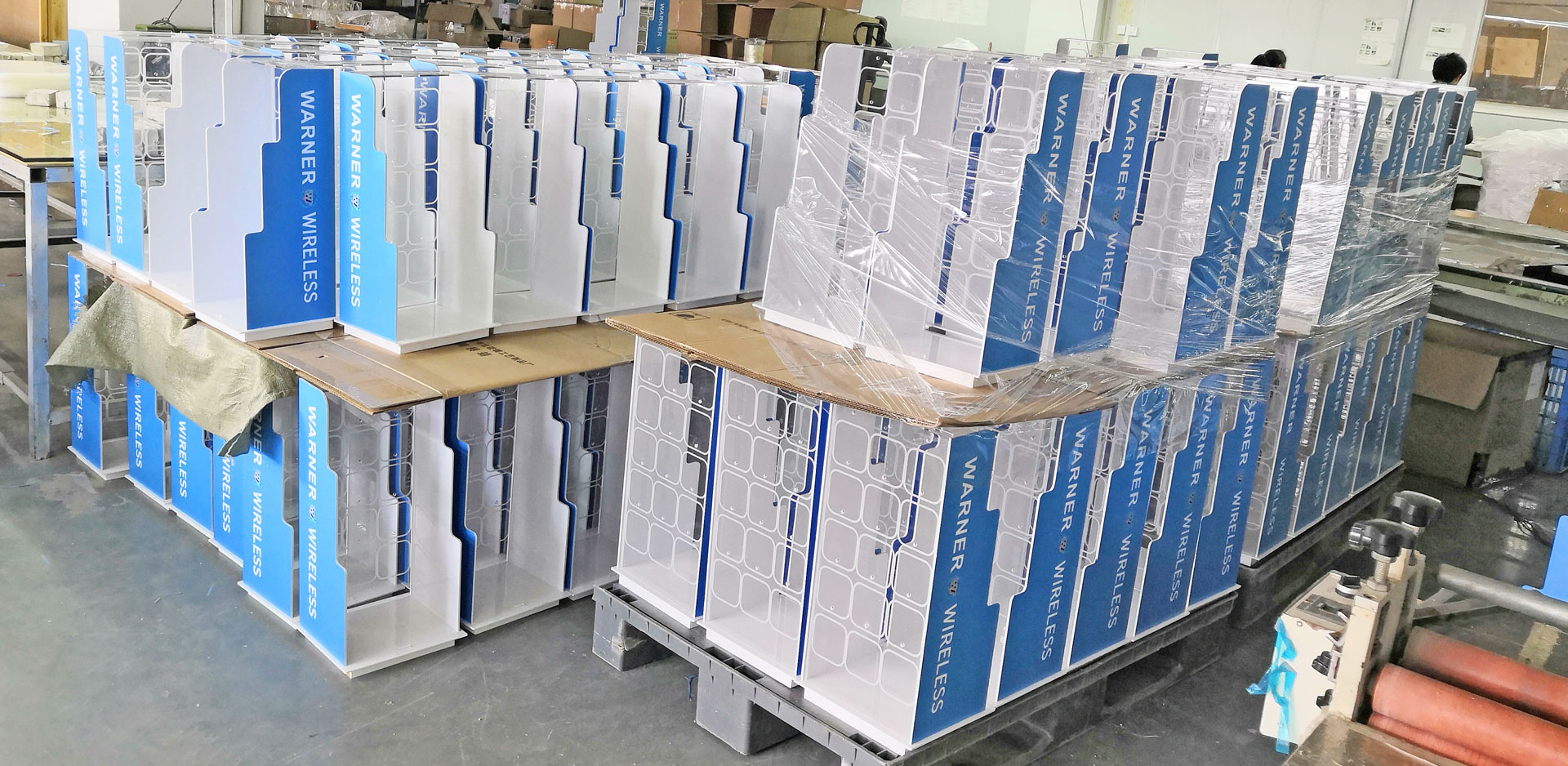
If you are looking for a professional and reliable acrylic display factory to customize standardized retail and trade show cosmetic displays, JAYI Acrylic is your trustworthy partner.
With more than 20 years of focused experience in customized acrylic displays, we have served countless beauty brands and wholesale buyers worldwide. We provide one-stop full services including free professional design, precision production, strict quality inspection, and global door-to-door shipping.
We tailor stable and durable retail counter cosmetic display solutions for physical stores, and lightweight, high-appeal trade show acrylic display solutions for exhibition events, helping brands enhance product display texture and build a professional brand image in front of terminal customers and distributors.

Cathy Qin works at Jayi Acrylic Industry Limited, focusing on custom acrylic product management and SEO-driven content marketing for B2B wholesale and retail applications. Her work includes designing display solutions, managing customization projects, and optimizing website content to promote Jayi’s high-quality acrylic products across global digital channels.
Post time: Sep-22-2026