
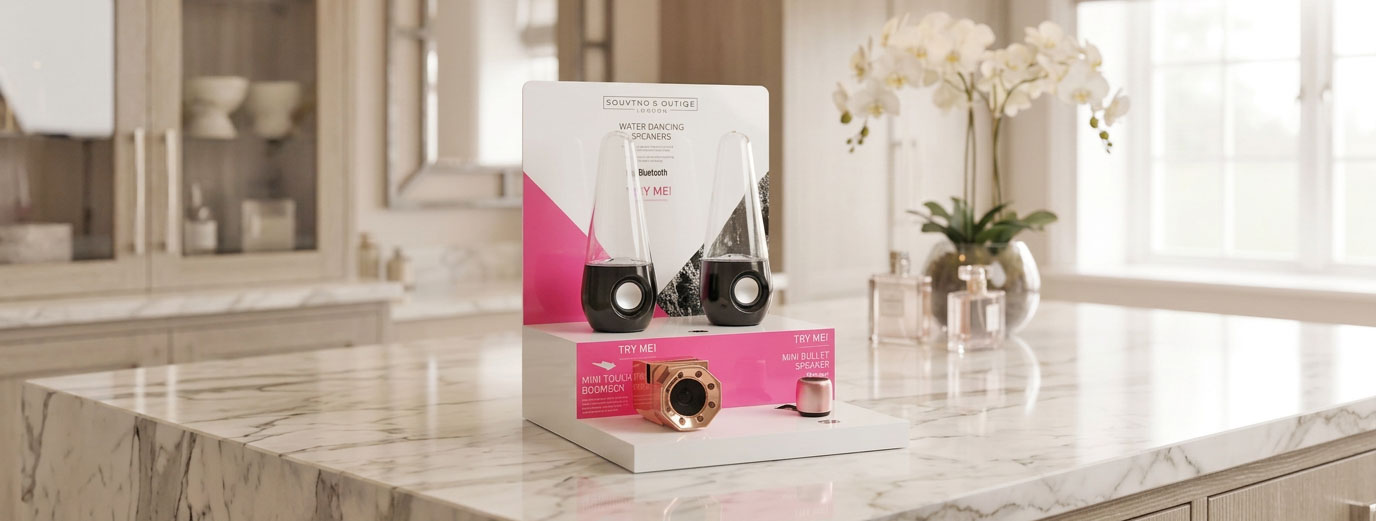
Your retail counter display shapes how customers perceive your brand and drives impulsive in-store sales. The right display makes products look premium and organized, while a poor choice can downgrade your entire store vibe. Most retail buyers struggle to choose between acrylic and wood fixtures, as both deliver unique visual and functional benefits. This guide breaks down every key factor to help you select the perfect custom retail display for your business.
What You’ll Learn In This Guide:
• Clear aesthetic and functional differences between acrylic vs wood counter display options
• Durability, maintenance, and real-world performance in retail environments
• Budget breakdown for standard and bulk custom orders
• Exact store and product categories each material fits best
• Expert quick-selection rules for fast, confident purchasing decisions
1. Aesthetic Style: Acrylic VS Wood Counter Display
Acrylic Counter Display: Modern & Sleek Minimalism
Acrylic is a transparent, lightweight plastic material with a smooth, glossy finish. It delivers a clean, uncluttered look that keeps products as the focal point instead of the fixture itself.
This style feels modern, high-tech, and upscale, perfect for brands chasing a minimalist and contemporary store atmosphere. Clear acrylic does not block store lighting, making small counters look brighter and more spacious.
Wood Counter Display: Warm & Natural Textured Look
Wood features unique natural grain, warm tones, and solid tactile texture that synthetic materials cannot replicate. It brings a cozy, authentic, and premium natural vibe to any retail space.
Wood fixtures easily create a vintage, rustic, or eco-friendly brand image. Each wooden display has slight texture differences, adding exclusive handmade charm to your store layout.
Aesthetic Quick Comparison
|
Material
|
Visual Style
|
Best Brand Vibe
|
|---|---|---|
|
Acrylic
|
Sleek, transparent, modern, uniform
|
High-end, minimalist, futuristic
|
|
Wood
|
Warm, textured, natural, unique
|
Organic, vintage, lifestyle, eco-friendly
|
2. Durability & Daily Retail Performance
Scratch, Wear & Impact Resistance
Acrylic boasts strong impact resistance, far sturdier than ordinary glass. It rarely breaks even with frequent customer bumps or daily moving.
However, uncoated acrylic is prone to fine scratches over time. Sharp objects like keys or metal products can leave faint marks on the surface.
Solid wood is hard and scratch-resistant under normal use. Yet it is vulnerable to hard impacts, which may cause dents or edge chipping on display units.
Environmental Adaptability
Acrylic is super easy to maintain. Simply wipe dust and stains with a soft microfiber cloth and mild water. No special cleaning tools are required.
Wood needs regular maintenance. You need to avoid long-term water contact and apply oil or wax regularly to protect the surface and extend service life.
Service Life
High-quality acrylic retail counter displays can last 5–8 years with daily use. Coated anti-yellowing acrylic maintains its transparency for years.
Well-finished wooden displays can serve 6–10 years with proper care. Poor maintenance will drastically shorten their usable lifespan.
3. Retail Functionality & Customization
Customization Flexibility
Acrylic supports ultra-flexible customization. Factories can bend, cut, drill, and UV-print acrylic into any shape, size, or logo pattern you need.
It perfectly fits unique store layouts and personalized brand designs, ideal for brands pursuing differentiated in-store visuals.
Wood customization is also available but limited by material characteristics. Complex curved structures are harder and more costly to process than acrylic.
Display & Lighting Effect
Transparent acrylic allows full light penetration. It maximizes product exposure and works perfectly with spotlight lighting to highlight product details.
Wood blocks light and creates soft, warm shadows. It focuses on building an overall store atmosphere rather than highlighting single products.
Portability & Layout Adjustment
Acrylic displays are lightweight and easy to assemble. Retailers can quickly move, replace, or rearrange units for seasonal promotions or pop-up events.
Wood fixtures are heavy and solid. They suit fixed store layouts but are inconvenient for frequent disassembly and movement.
4. Cost & Bulk Order Budget Analysis
Unit Price & Bulk Cost
Standard acrylic displays feature stable pricing and lower entry cost. Bulk orders enjoy obvious discounts, making it budget-friendly for chain store rollouts.
High-grade solid wood displays have higher material and processing costs. Custom wooden structures further raise the overall order budget.
Production Lead Time
Acrylic processing is simple and fast. Standard orders finish in 3–7 days, and custom retail display orders can be delivered within 10 days.
Wood processing involves cutting, polishing, painting, and drying, requiring longer production cycles of 10–20 days for custom orders.
Long-Term ROI
Acrylic requires almost no daily maintenance fees. Its stable performance reduces replacement costs, yielding consistent long-term returns.
Wood has a longer theoretical lifespan but requires ongoing maintenance costs. Improper use leads to early scrapping and increased operating expenses.
5. Best Retail Scenarios For Each Material
Ideal Scenarios for Acrylic Counter Displays
Acrylic is the top pick for modern, high-brightness retail spaces. It fits categories that need to highlight product texture and details.
• Beauty, skincare, and cosmetic retail stores
• Electronics, eyewear, and jewelry shops
• Fast fashion accessories and duty-free stores
• Pop-up stores and seasonal promotional counters
Ideal Scenarios for Wood Counter Displays
Wood aligns with lifestyle and eco-friendly brand positioning, suitable for stores that emphasize texture and a sense of quality.
• Organic skincare and natural product stores
• Coffee shops, tea stores, and gourmet snack retail
• Home goods, handicrafts, and vintage lifestyle stores
• Slow-lifestyle and eco-conscious brand spaces
Hybrid Material Matching Strategy
Many mid-to-high-end brands now adopt hybrid designs: wooden frames for warm texture plus acrylic shelves for transparent display effects.
This method balances brand texture and practicality, avoiding the single cold feel of acrylic or the heavy visual sense of pure wood.
6. Final Verdict: Which Material Is Better?
There is no absolute winner in the acrylic vs wood counter display competition. The best choice depends entirely on your brand positioning, product type, store environment, and budget.
Choose acrylic if you need a modern, low-maintenance, cost-effective display with flexible customization and strong light transmission.
Choose wood if your brand focuses on natural texture, warm atmosphere, eco-image, and high-end lifestyle positioning.
FAQ

Which material is more cost-effective for long-term store operation, acrylic or wood?
Acrylic delivers better overall cost performance. It has lower upfront costs, zero daily maintenance fees, and stable performance. Wood has lower long-term cost advantages due to regular maintenance needs and environmental restrictions.
Are acrylic displays easy to scratch and turn yellow in long-term use?
Ordinary low-quality acrylic may scratch and yellow, but premium anti-UV-coated acrylic resists yellowing and daily scratches effectively. Choosing factory-grade acrylic materials ensures a long-term clear and new appearance.
Do wooden counter displays get moldy or deformed in humid coastal store environments?
Untreated solid wood is prone to mold and deformation in high humidity. But high-grade sealed and painted wooden displays can effectively resist moisture, suitable for most coastal retail environments.
Which material supports more personalized custom logos and special shapes for brand differentiation?
Acrylic is more flexible for personalized customization. It supports UV printing, laser engraving, bending, and special-shaped cutting. Wood is limited in complex shapes and mainly suits logo engraving and surface printing.
Which display material is more suitable for pop-up stores and frequent store layout updates?
Acrylic is the better choice. It is lightweight, easy to assemble and disassemble, and low-cost for batch replacement. It perfectly adapts to short-term pop-up stores and seasonal layout adjustments.
Are acrylic and wood displays environmentally friendly? Which is more in line with sustainable retail brand concepts?
FSC-certified wood is naturally eco-friendly and renewable. High-quality recyclable acrylic is also sustainable. For green brand positioning, wood is more intuitive; for circular, low-waste operations, recyclable acrylic is highly practical.
Conclusion
Selecting the right retail counter display is a simple but powerful way to upgrade your in-store branding and boost product sales. Acrylic excels in modern visuals, low maintenance, and flexible customization, while wood stands out for natural texture and a warm brand atmosphere.
If you are tired of choosing between generic fixtures and need professional custom retail display solutions tailored to your brand, turn to JAYI Acrylic (jayiacrylic.com). As a professional custom acrylic display factory, we provide one-stop services from design, customization, production, to bulk wholesale.
We deliver high-quality, anti-yellowing, scratch-resistant acrylic displays with precise logo customization and fast lead times. Whether you need single-store fixtures or chain store bulk orders, JAYI Acrylic can create the most suitable display solutions to elevate your retail brand image.

Cathy Qin works at Jayi Acrylic Industry Limited, focusing on custom acrylic product management and SEO-driven content marketing for B2B wholesale and retail applications. Her work includes designing display solutions, managing customization projects, and optimizing website content to promote Jayi’s high-quality acrylic products across global digital channels.
Post time: Aug-20-2026